
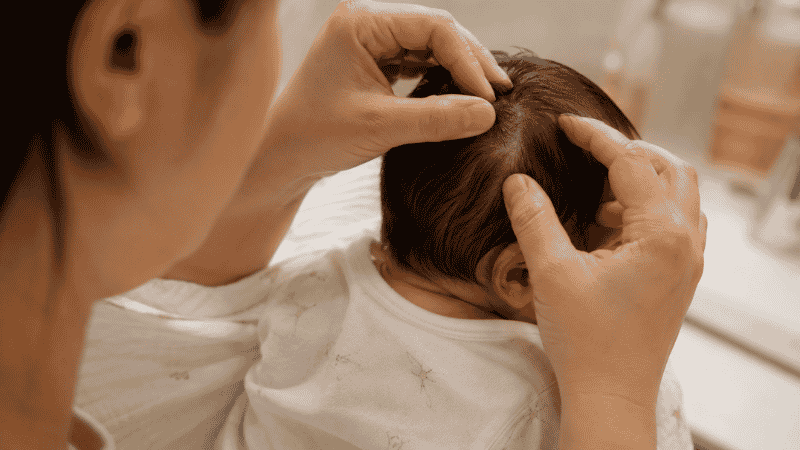
You’re doing what every new parent does — studying your baby’s face during a quiet moment — and you notice it. A patch of yellow, flaky, slightly greasy-looking crust on their scalp. Maybe just a small area near the crown. Maybe spreading further than you’d like. You touch it gently, and some of it lifts away. Your stomach drops a little.
Is it a rash? An infection? Something you did wrong in bath time?
Here’s the reassurance you need right now: it’s almost certainly cradle cap, and it is one of the most common and harmless skin conditions in infancy. Estimates suggest that up to 70% of babies develop cradle cap in their first months of life. It doesn’t hurt your baby. It isn’t caused by poor hygiene. It isn’t contagious. And in most cases, it goes away on its own.
What this guide gives you is a clear explanation of what cradle cap actually is, why it happens, the exact steps to treat it safely at home, what to avoid, and the signs that it’s time to call your pediatrician. Everything here is grounded in guidance from the AAP, Mayo Clinic, and pediatric dermatology — written for the version of you who just wants a straight answer.
Key Takeaways
- Cradle cap (infantile seborrheic dermatitis) affects up to 70% of babies and is completely harmless — it does not indicate poor hygiene, illness, or an allergic reaction.
- It is not itchy or painful for your baby in most cases — the distress is usually the parent’s, not the infant’s.
- The most effective at-home treatment is a simple three-step routine: soften scales with oil → loosen gently with a soft brush → wash away thoroughly with mild baby shampoo.
- Never pick or scratch at cradle cap scales — this creates open skin that can become infected.
- Most cases resolve on their own by 8 to 12 months of age; persistent or spreading cases warrant a conversation with your pediatrician.
What Is Cradle Cap? Understanding What You’re Seeing
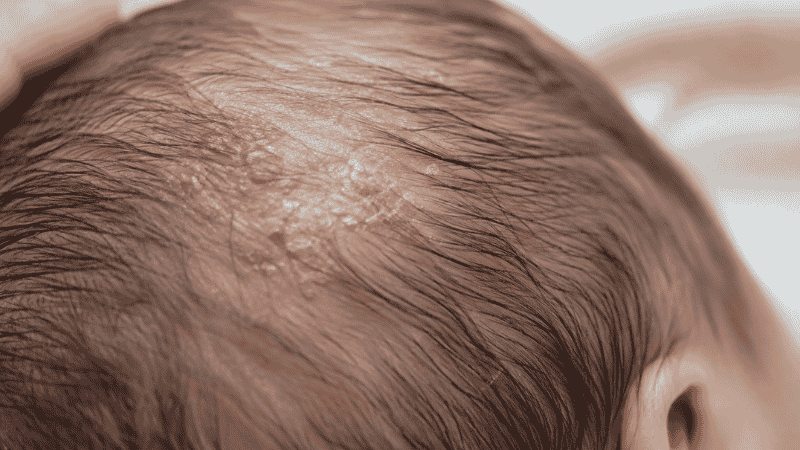
Cradle cap is the common name for infantile seborrheic dermatitis — a skin condition that causes a buildup of waxy, scaly patches on a baby’s scalp. The patches can range from fine, dry flakes similar to dandruff to thicker, yellowish, greasy-looking crusts that cover larger areas of the scalp.
It gets its name from the scalp (“cradle” for the head, “cap” for where it appears), but it can also occur on the face, ears, neck folds, armpits, and diaper area — though the scalp is by far the most common location.
The medical term — seborrheic dermatitis — is the same condition that causes dandruff in adults. In adults it can be uncomfortable and persistent. In babies, the version is typically milder, doesn’t cause itching or discomfort, and almost always resolves within the first year.
What Does Cradle Cap Look Like?
The appearance varies between babies:
- Dry and flaky: Fine white or grayish flakes, similar to dandruff, that lift off easily. This is the milder presentation.
- Thick and waxy: Yellowish or brownish patches that feel slightly greasy to the touch and adhere more firmly to the scalp. This is the more dramatic-looking version.
- Reddened scalp underneath: Some babies have visible redness beneath or around the patches, which can look alarming but is typically part of the condition rather than an infection.
Both presentations are normal. The thicker, waxier version tends to concern parents more, but medically speaking, it’s the same condition.
Why Does My Baby Have Cradle Cap? The Real Causes
The exact cause of cradle cap isn’t fully understood, but several contributing factors are well-established:
Maternal hormones. Before birth, hormones from the mother cross the placenta and stimulate the baby’s oil glands (sebaceous glands). After birth, those hormones remain active for weeks to months, causing the glands to overproduce sebum — the natural oil that moisturizes skin. This excess oil can cause dead skin cells to stick together on the scalp rather than shedding normally.
A naturally occurring yeast called Malassezia. This yeast lives on everyone’s skin and is normally harmless. In infants with cradle cap, it appears to interact with the excess oil in a way that contributes to the scaling and inflammation. This is why antifungal shampoos are sometimes prescribed for persistent cases — not because there’s an “infection,” but because reducing this yeast reduces the symptoms.
What cradle cap is NOT caused by:
- Poor hygiene or infrequent bathing
- Allergic reactions (to formula, breast milk, laundry products, etc.)
- Contagious illness — it cannot spread to other babies or family members
- Anything you did or didn’t do
This bears repeating because many parents assume they’ve done something wrong. You haven’t. Cradle cap is simply a temporary result of the hormonal transition from womb to world.
How to Treat Cradle Cap at Home: The Step-by-Step Method
The standard at-home approach recommended by the AAP, Nemours KidsHealth, and Johns Hopkins Medicine involves three steps. Done consistently — once daily during a mild phase, every couple of days for maintenance — this routine typically shows visible improvement within one to two weeks.
Step 1: Soften the Scales with Oil
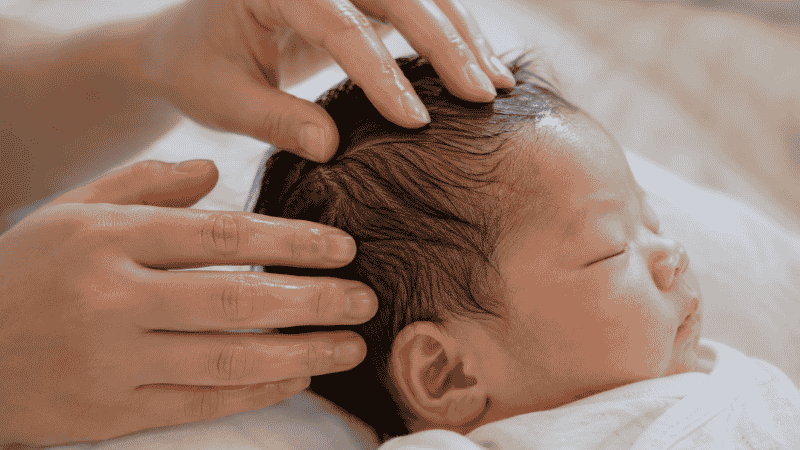
Apply a small amount of mineral oil, petroleum jelly (Vaseline), or baby oil to the affected areas of the scalp. Massage it in gently with your fingertips. Then let it sit for a minimum of 15 minutes — or up to several hours for stubborn, thick patches. Some parents apply it before bed and let it soak overnight.
Why this works: The oil softens the bond between the scales and the scalp, making them much easier to loosen without pulling or scraping.
Important note about leaving oil on: Never leave oil on the scalp without washing it out thoroughly afterward. Residual oil left on the scalp after treatment can contribute to further scale buildup by trapping more dead skin cells. Soften, then always wash.
Oil options:
- Mineral oil — the most commonly recommended option; inert and non-sensitizing
- Petroleum jelly — equally effective, slightly thicker
- Coconut oil — often used by parents who prefer natural options; some pediatricians recommend it, though evidence is less robust than for mineral oil
- Olive oil — some research suggests it may disrupt the skin barrier; less recommended than mineral oil or petroleum jelly
Step 2: Loosen the Scales Gently
After the oil has had time to soften the scales, use one of these tools to gently loosen them:
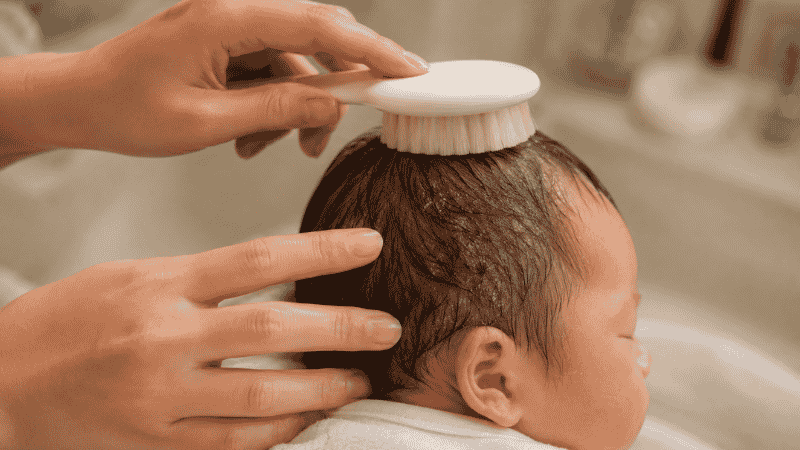
- A soft baby brush — the kind designed specifically for newborn scalp care, with very soft, widely-spaced bristles
- A soft-bristled toothbrush (unused, designated for this purpose)
- A fine-tooth baby comb
- Your fingertips — gentle circular massage
Work in gentle, circular motions. The goal is to coax loosened scales toward the edge of the patches, not to scrape or force them off. You will likely see flakes lifting — this is exactly what you want.
The most important rule: do not pick or scratch. It is deeply tempting when you can see a thick patch that looks ready to come off. Resist. Picking removes scales before the skin underneath is ready, which can leave raw, irritated skin that is vulnerable to infection. Let the oil do the work and only remove what comes off easily.
Step 3: Wash Thoroughly with Mild Baby Shampoo
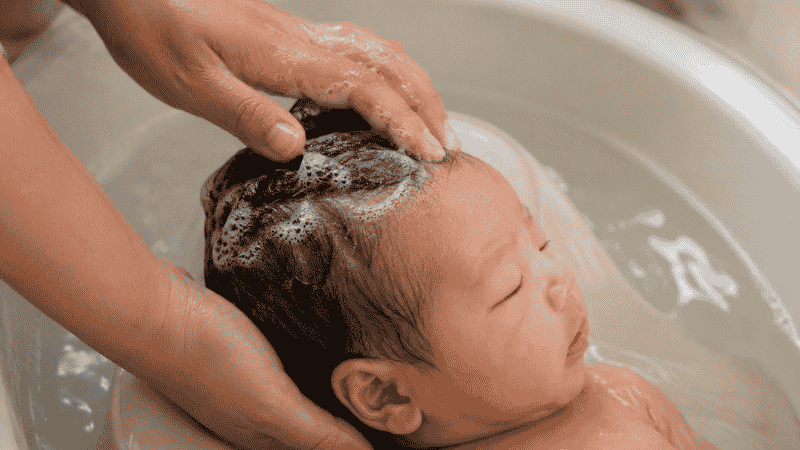
Immediately after loosening the scales, wash your baby’s scalp with a mild, fragrance-free baby shampoo. Work it into a lather, massage gently, and rinse completely. The shampoo removes both the loosened scales and any remaining oil — which is essential.
During this step, continue using a soft brush or your fingertips to help guide away any scales that have loosened but not yet separated.
How often: During active cradle cap, washing daily or every other day is appropriate. Once it begins to resolve, washing every 2 to 3 days with a soft brush maintains results and helps prevent recurrence.
The 10-Minute Version (For When You’re Short on Time)
If your baby’s cradle cap is mild and you’re in a busy period:
- At bath time, massage a small amount of mineral oil or petroleum jelly into the scalp
- Let it sit for the duration of the bath (5 to 10 minutes minimum)
- Use a soft brush to gently loosen scales while shampooing
- Rinse thoroughly
This condensed version won’t produce overnight results, but done consistently at every bath it will show gradual improvement. The longer the oil soaks, the more effective — but even a short soak is better than none.
What If Home Treatment Isn’t Working?
If you’ve been consistent with the oil-brush-wash routine for 2 to 4 weeks and the cradle cap is not improving — or is getting worse — a few next steps are worth considering before reaching for stronger products:
Try extending the oil soak time. For thick, stubborn patches, the difference between a 15-minute soak and an overnight soak can be significant. Leave the oil on longer before washing.
Increase washing frequency. If you’ve been washing every 2 to 3 days, try daily for two weeks. More frequent washing removes excess sebum and gives the scaling less time to build up.
Try a cradle cap brush or comb. Some parents find a dedicated cradle cap brush (designed with finer, denser bristles than standard baby brushes) more effective than a regular soft brush for loosening scale without irritating the scalp.
Talk to your pediatrician. If home care isn’t resolving it, your doctor may recommend a medicated shampoo — typically one containing ketoconazole (antifungal) or low-concentration hydrocortisone — for a short course. These are not first-line treatments and should be used under guidance, not purchased over-the-counter without advice.
Cradle Cap Beyond the Scalp: What to Know
When seborrheic dermatitis appears on areas other than the scalp — face, ears, neck folds, armpits, diaper area — the same underlying process is occurring but the treatment approach differs slightly.
Face and ears: Gentle washing with a soft cloth and mild baby wash. Do not apply oil near the eyes. For red, inflamed patches on the face that don’t improve, your pediatrician may recommend a very mild topical cream.
Diaper area and skin folds: These areas require different care because the warm, moist environment can cause seborrheic patches to become secondarily infected. If you see redness, warmth, swelling, or discharge in these areas alongside the typical scaling, call your pediatrician — this is one situation where “wait and see” isn’t appropriate.
Cradle Cap vs. Eczema: How to Tell the Difference
Cradle cap and baby eczema (atopic dermatitis) can look similar, particularly on the scalp and face. Knowing the difference helps you manage them correctly.
| Cradle Cap | Baby Eczema | |
|---|---|---|
| Appearance | Yellow/white, waxy or flaky scales | Red, dry, inflamed patches |
| Texture | Greasy or flaky | Rough, dry |
| Itchiness | Rarely itchy | Often itchy — baby rubs or scratches |
| Location | Scalp first, then face/body | Cheeks and forehead first, later elbow/knee creases |
| Timeline | Usually resolves by 12 months | Often persists or recurs |
| Baby’s response | Typically unbothered | May seem uncomfortable |
If your baby seems itchy, the patches are spreading significantly, or they’re not improving by 3 months of age despite consistent care, mention it at your next well-visit — your pediatrician can confirm whether it’s cradle cap, eczema, or something else.
Warning Signs: When to Call Your Pediatrician
Most cradle cap can be managed at home without medical intervention. Call your pediatrician if:
- The patches are spreading rapidly beyond the scalp to multiple body areas
- The affected skin looks red, swollen, feels warm to the touch, or is oozing fluid — these suggest possible infection
- The scalp has an unusual smell
- Your baby seems uncomfortable, itchy, or in pain related to the scalp
- Home treatment for 3 to 4 weeks has produced no improvement
- Your baby is losing significant hair in the affected areas (some hair loss with scales is normal; patchy bald spots are worth checking)
- The condition hasn’t resolved by 12 months of age
FAQ: What Parents Ask About Cradle Cap
Does cradle cap hurt my baby? In the vast majority of cases, no. Cradle cap is not itchy or painful — babies typically don’t notice it at all. The discomfort is almost entirely the parent’s. If your baby seems to be scratching at their head or appears distressed related to the scalp, that’s worth mentioning to your pediatrician as it may suggest something else is going on.
Will my baby lose hair from cradle cap? Some hair may come away with scales as you treat cradle cap — this is normal and the hair grows back. Significant patchy hair loss that continues after the cradle cap resolves is worth a mention to your pediatrician.
Can I use head & shoulders or adult dandruff shampoo? No. Adult anti-dandruff shampoos (including those containing selenium sulfide, coal tar, or salicylic acid) are not appropriate for infant skin and should never be used on babies without specific instruction from a pediatrician. Use only mild baby shampoo unless your doctor has specifically prescribed a medicated option.
How long does cradle cap last? Most cases begin to improve with consistent home care within a few weeks and fully resolve by 8 to 12 months of age. Some babies have a briefer course; a small number may have persistent seborrheic dermatitis that benefits from medical treatment.
Can cradle cap come back after it clears? Yes, occasionally. Once it clears, continuing to wash your baby’s hair regularly (every 2 to 3 days) with gentle shampoo and using a soft brush helps prevent recurrence by keeping sebum from accumulating.
Is coconut oil safe for cradle cap? Coconut oil is widely used by parents and considered safe in most cases. The evidence base is thinner than for mineral oil or petroleum jelly, but it’s a reasonable alternative if you prefer it. Use it the same way — apply, let soak, brush gently, wash thoroughly.
Cradle Cap Is Part of the Journey
Seeing crusty, yellowish patches on your baby’s perfect scalp is unsettling in a way that’s hard to explain to anyone who hasn’t experienced it. It just doesn’t look the way you expected your baby’s skin to look.
But cradle cap is one of those things that is far more alarming to parents than it is significant to babies. Your baby isn’t uncomfortable. Their skin isn’t damaged. This is their body working through a normal hormonal transition, and with consistent, gentle care — oil, soft brush, mild shampoo — it will resolve.
You’re not doing anything wrong. You’re doing exactly what a caring parent does: paying close attention and taking good care of your child.
What to Read Next
- Newborn Baby Care: The Complete Guide for First-Time Parents — Cradle cap is one part of the bigger newborn care picture — this guide covers bathing, feeding, skin care, and more
- Baby Dry Skin: Why It Happens, What Actually Helps & What to Stop Doing — If your baby has both cradle cap and dry skin elsewhere on their body, this guide covers the full skin care approach
- Newborn Skin Peeling: What’s Normal, What Helps & When to Call Your Doctor — Another very common newborn skin condition explained clearly, so you know what you’re dealing with
References
- American Academy of Pediatrics. What Is Cradle Cap? HealthyChildren.org, 2023. https://www.healthychildren.org/English/ages-stages/baby/bathing-skin-care/Pages/Cradle-Cap.aspx
- Mayo Clinic. Cradle Cap — Diagnosis and Treatment. Updated 2024. https://www.mayoclinic.org/diseases-conditions/cradle-cap/diagnosis-treatment/drc-20350400
- Nemours KidsHealth. Cradle Cap (Seborrheic Dermatitis) in Infants. https://kidshealth.org/en/parents/cradle-cap.html
- Johns Hopkins Medicine. Seborrheic Dermatitis (Cradle Cap). https://www.hopkinsmedicine.org/health/conditions-and-diseases/seborrheic-dermatitis-cradle-cap
- Cleveland Clinic. How To Get Rid of Cradle Cap at Home. Health Essentials, 2026. https://health.clevelandclinic.org/cradle-cap-treatment
This article is for informational purposes only and does not constitute medical advice. Always consult your pediatrician with specific concerns about your baby’s skin.