
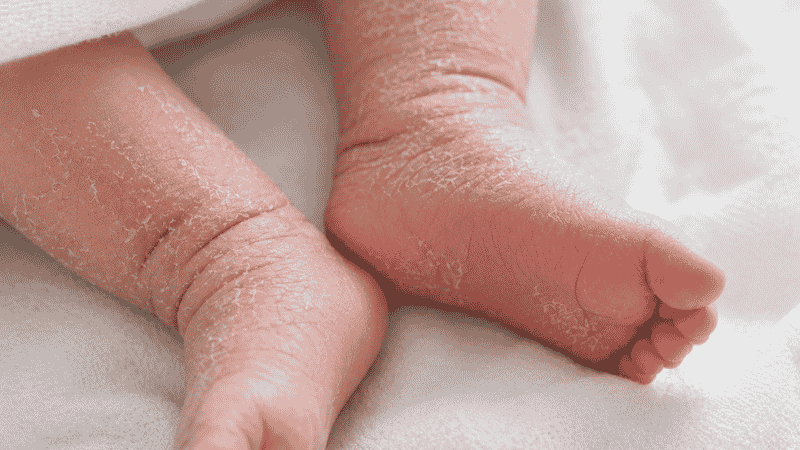
You spent nine months imagining your baby’s perfect, soft skin. And then, somewhere around day three or four at home, you notice it: fine flakes lifting from their hands, patches of dry-looking skin on their arms and legs, maybe even some peeling around the ankles. Your stomach drops a little.
Is something wrong? Did you do something wrong? Should you put lotion on it — or would that make it worse?
Here’s the reassurance you need right now: newborn skin peeling in the first two weeks of life is not only normal — it’s universal. Every baby goes through some version of it. The degree varies, the timing varies, but the process itself is completely expected biology. Your baby’s skin is making a significant transition, and peeling is simply part of that adjustment.
What this guide will give you is a clear understanding of why it happens, what normal peeling looks like versus what warrants a closer look, exactly how to care for peeling newborn skin at home, and the specific signs that mean it’s time to call your pediatrician. No guesswork, no panic — just the information you actually need.
Key Takeaways
- Newborn skin peeling in the first 1 to 2 weeks of life is a normal, expected part of every baby’s transition from womb to world — it does not indicate dry skin, illness, or anything you did wrong.
- Babies born at or after their due date typically peel more than early arrivals, because they had less vernix (the protective waxy coating) and more amniotic fluid exposure by the time of birth.
- The most important rule: never pick, peel, or exfoliate the flaking skin. It is protecting the fresh skin underneath and will fall off on its own.
- Gentle moisturizing with a fragrance-free, hypoallergenic baby lotion can help with comfort and dryness, but is not medically required.
- Peeling that persists beyond 2 to 3 weeks, appears alongside redness, inflammation, or oozing, or seems to cause your baby discomfort warrants a call to your pediatrician.
Why Is My Newborn’s Skin Peeling? The Real Explanation
To understand why newborn skin peels, it helps to picture where your baby was just days ago — suspended in amniotic fluid for nine months, their skin protected by a thick waxy coating called vernix caseosa.
Vernix is remarkable stuff. It forms around the 20th week of pregnancy, coating the fetus’s skin and serving multiple functions: it acts as a waterproof barrier against the amniotic fluid, helps regulate temperature, and has documented antibacterial properties. Research published in the Journal of Perinatology found that vernix supports skin barrier development and may reduce the risk of infection in the newborn period.
Here’s what changes at birth: when your baby is delivered and cleaned (or the vernix begins to absorb naturally), that protective layer is gone. The outermost layer of skin — which has been essentially preserved in place by the vernix throughout pregnancy — now needs to shed. The skin underneath is fresh, healthy, and ready to take over. The peeling you see is simply that outer layer releasing.
Why Some Babies Peel More Than Others
The amount of peeling your baby experiences is directly related to how much vernix they had at birth — and that depends largely on gestational age.
Babies born earlier (preterm or even slightly early) tend to arrive with more vernix still intact, because the coating is thicker earlier in pregnancy and thins out in the final weeks. Babies born at 40 weeks or beyond often arrive with very little vernix remaining — meaning their skin has been in more direct contact with amniotic fluid for longer. More fluid exposure, less protective coating, more peeling after birth.
This is why post-term babies (those born after 41 or 42 weeks) often have notably more peeling skin. It’s a sign of extended time in the womb, not of anything wrong with their skin.
What Does Normal Newborn Skin Peeling Look Like?
Knowing what to expect helps you feel confident about what you’re seeing. Normal newborn skin peeling:
- Typically appears between days 2 and 7 after birth, often becoming more visible once you’re home from the hospital
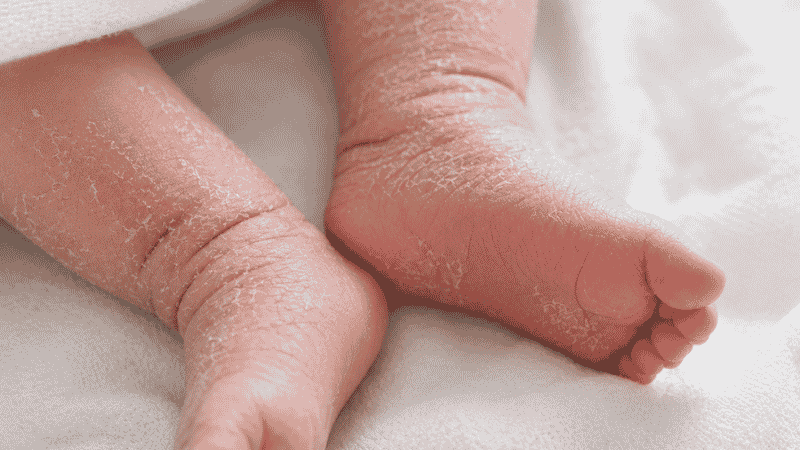
- Affects the hands, feet, ankles, and wrists most noticeably — these areas tend to peel first and most visibly
- Can also appear on the arms, legs, belly, back, and chest, though usually more lightly
- Looks like fine flakes or dry skin lifting, similar to mild sunburn peeling or flaking — not raw, red, or weeping
- Generally resolves on its own within 1 to 2 weeks with no intervention needed
- Does not seem to bother your baby — peeling skin in the newborn period is not typically itchy or painful
The skin underneath the peeling layer is perfectly healthy. It may look slightly pinker or more sensitive than the peeling outer layer, but this is normal — it’s simply new skin seeing daylight for the first time.
Normal Peeling vs. Signs of a Skin Condition
Most newborn peeling is entirely normal. But a small number of cases involve an underlying skin condition, and knowing the difference helps you decide when to wait and watch versus when to make a call.
Cradle Cap (Seborrheic Dermatitis)
If the peeling or flaking is primarily on your baby’s scalp — appearing as yellowish, crusty, or greasy patches — it’s most likely cradle cap rather than general newborn peeling. Cradle cap is very common, harmless, and usually resolves on its own within a few months. It does not affect the rest of the body in the same way.
Baby Eczema (Atopic Dermatitis)
Eczema rarely appears in the first days of life but can develop in the first few months. Unlike normal newborn peeling, eczema tends to present with red, inflamed, itchy-looking patches — most commonly on the face, cheeks, and scalp, and later in the elbow and knee creases. The skin may look weepy or crusty during flare-ups and flaky as it heals. If your baby seems uncomfortable, scratching, or the rash is persistent and spreading, mention it to your pediatrician. About 60% of eczema cases develop before the first birthday, according to Cleveland Clinic.
Ichthyosis
Ichthyosis is a rare genetic condition in which an extra layer of skin forms. As this membrane peels and cracks, it can look more dramatic than normal newborn peeling and may cover more of the body. Severe cases are typically identified in the hospital or NICU. Mild forms may be subtler. If your baby’s peeling is extensive, thick, or accompanied by scaling that resembles fish scales, this warrants pediatric evaluation.
Psoriasis
Psoriasis is uncommon in infancy but can occasionally appear. It presents as raised, red, scaly patches — distinct from the flat, dry flaking of normal newborn skin peeling. If your baby has what looks like severe cradle cap that isn’t improving or seems to be spreading beyond the scalp, mention it to your doctor.
The key distinction for all of these: normal newborn peeling is flat, flaky, and doesn’t seem to cause discomfort. Peeling that is accompanied by redness, raised skin, apparent itching, oozing, or doesn’t improve by 2 to 3 weeks deserves a professional look.
How to Care for Peeling Newborn Skin: What Actually Helps
The good news: caring for peeling newborn skin doesn’t require special products or complicated routines. It mostly requires restraint — resisting the urge to intervene more than necessary.
The Most Important Rule: Don’t Pick or Peel It
This is the one thing every source agrees on, from Cleveland Clinic to the AAP. When you see a loose flap of skin, the instinct is to help it along — to peel it off gently, exfoliate, or scrub it during bath time.
Don’t. The peeling outer layer is still attached to the skin beneath it and is providing a degree of protection to the fresh skin underneath. Pulling it prematurely can cause micro-tears, increase the risk of irritation, and potentially introduce bacteria. Let it fall off naturally, in its own time. It will.
Moisturize Gently After Baths
While moisturizing is not medically required for normal newborn peeling, it can help with comfort — particularly if the skin looks or feels dry beneath the peeling layer. The right approach:
- Apply moisturizer immediately after bath time, while the skin is still slightly damp — this locks in moisture most effectively
- Choose a fragrance-free, hypoallergenic baby lotion or cream — fragrance is the most common trigger for newborn skin irritation
- Use a small amount and massage in gently with flat, soft strokes — no rubbing or friction
- Avoid products containing alcohol, retinoids, essential oils, or any ingredient list you can’t easily read — newborn skin absorbs topical products more readily than adult skin
Good ingredient choices include ceramides (which support the skin barrier), colloidal oatmeal (soothing for sensitive skin), and basic petrolatum or gentle mineral oil for very dry patches.
Reduce Bath Frequency
If you’re bathing your baby daily and noticing significant dryness or peeling, this is worth revisiting. The AAP recommends 2 to 3 baths per week for newborns — not daily. Frequent bathing strips the skin of its natural oils and can worsen dryness. A warm, brief sponge bath every other day or so is sufficient, with daily wipe-downs of the face, neck folds, and diaper area as needed.
When you do bathe, keep the water lukewarm — not hot — and limit bath time to 5 to 10 minutes. Use only a tiny amount of mild, fragrance-free baby wash, and pat (never rub) skin dry with a soft towel.
Protect from Extreme Temperatures and Dry Air
Central heating in winter significantly dries out indoor air, which can worsen newborn skin peeling and dryness. A cool-mist humidifier in your baby’s room — set to keep humidity between 40% and 60% — can make a meaningful difference. Keep your baby away from direct heat sources (radiators, heating vents) and out of cold, dry outdoor air for extended periods during the first weeks.
Skip the Olive Oil and Coconut Oil
Many parents reach for natural oils — olive oil, coconut oil, sunflower oil — for baby skin, assuming they’re gentler than lotions. The research on this is actually mixed. A 2013 study in the Archives of Disease in Childhood found that olive oil applied to newborn skin disrupted the skin barrier compared to unfragranced emollient cream. Sunflower seed oil may be a safer natural option if you prefer oils, but a fragrance-free baby lotion or cream is generally the most evidence-supported choice for moisturizing newborn skin.
If You Only Have 10 Minutes: The Quick Routine
After bath time, while skin is still slightly damp:
- Pat (don’t rub) dry with a soft towel — leave skin slightly damp
- Apply a small amount of fragrance-free baby lotion to hands, feet, arms, and any other areas that look dry
- Massage in gently with soft strokes
- Dress in soft, breathable cotton — nothing with scratchy tags or tight cuffs
That’s it. The whole process takes about 3 minutes and provides meaningful moisture support for peeling or dry newborn skin.
Warning Signs: When to Call Your Pediatrician
Contact your pediatrician if:
- Peeling has not improved or resolved by 2 to 3 weeks after birth
- The skin beneath the peeling layer looks red, raw, inflamed, or weepy
- Your baby seems uncomfortable — scratching, rubbing the affected areas, or clearly irritated
- You notice thick, scaly, or crusty patches that look different from simple flaking — particularly if widespread
- Peeling is accompanied by fever, changes in feeding, or your baby seems unwell
- The peeling extends into the diaper area with redness and doesn’t improve with standard diaper rash care
- You are worried about anything you’re seeing — there is no threshold of concern required to call your pediatrician
FAQ: What Parents Ask About Newborn Skin Peeling
Is it normal for a newborn to have peeling skin all over the body? Yes. Peeling can occur across the entire body — hands, feet, arms, legs, belly, back. The hands and feet tend to peel most visibly. Peeling across the whole body in the first two weeks is completely expected and not a sign of a skin condition.
My newborn’s skin looks dry underneath the peeling. Should I put lotion on it? You can, and it may help with comfort. Choose a fragrance-free, hypoallergenic baby lotion and apply it after baths while skin is slightly damp. But if your baby seems unbothered and the skin underneath looks healthy (not red or inflamed), it’s also fine to simply let the process complete on its own.
When does newborn skin peeling stop? For most babies, peeling is largely complete by 2 weeks of age. Some babies finish sooner; babies born late (post-term) may take a little longer. If peeling continues past 3 weeks or the skin doesn’t seem to be improving, mention it at your next pediatric appointment.
Can I use baby oil for newborn skin peeling? Baby mineral oil is generally well-tolerated by newborn skin, but fragrance-free lotion or cream is usually the better choice — it tends to stay on the skin longer and provides more sustained moisture. Avoid fragranced baby oils, which can be irritating to newborn skin.
My newborn’s hands and feet are peeling badly. Is this different from normal? No — hands and feet are typically the most visibly affected areas, especially the palms and soles. This is normal and related to the fact that these areas tend to have more vernix (and later, more amniotic fluid exposure) and begin peeling first. It looks more significant than it is.
Will moisturizing make the peeling go away faster? Moisturizing supports skin comfort and barrier function, but it doesn’t significantly accelerate the peeling process — that timeline is set by your baby’s biology. What it does do is make the skin underneath look and feel better as the peeling completes. Think of it as supportive care rather than a fix.
My baby’s scalp is flaking but the rest of the skin looks fine. Is this the same thing? Isolated scalp flaking in a newborn is usually cradle cap (seborrheic dermatitis), not general newborn skin peeling. Cradle cap looks like yellowish, greasy, or crusty patches on the scalp. It’s very common, harmless, and typically resolves on its own. If you’re unsure, your pediatrician can confirm at your next visit.
Your Baby’s Skin Is Doing Exactly What It Should
The peeling you’re watching isn’t damage — it’s adaptation. Your baby’s skin is completing a transition that began in the womb, shedding the outermost layer that was formed in a fluid environment so that the fresh, healthy skin underneath can take over its job in the outside world.
It doesn’t look the way you expected. But it is completely, biologically normal.
The most helpful thing you can do is resist the urge to fix something that isn’t broken, keep bath time gentle and brief, moisturize when it seems to help, and trust that this phase ends — usually within a couple of weeks — on its own.
What to Read Next
- How to Bathe a Newborn: A Calm, Step-by-Step Guide for First-Time Parents — Gentle bathing technique makes a real difference for peeling skin — here’s the full approach
References
- Cleveland Clinic. If Your Newborn Has Peeling Skin, Here’s What That Means. Health Essentials, 2023. https://health.clevelandclinic.org/newborn-skin-peeling
- Visscher MO, et al. Vernix caseosa in neonatal adaptation. Journal of Perinatology, 2005. doi:10.1038/sj.jp.7211305
- Danby SG, et al. Effect of olive and sunflower seed oil on the adult skin barrier: implications for neonatal skin care. Pediatric Dermatology, 2013. doi:10.1111/j.1525-1470.2012.01865.x
- American Academy of Pediatrics. Caring for Your Baby’s Skin. HealthyChildren.org, 2023. https://www.healthychildren.org
- National Eczema Association. Baby Eczema. https://nationaleczema.org/eczema/children/baby/
This article is for informational purposes only and does not constitute medical advice. Always consult your pediatrician with specific concerns about your newborn’s skin.