

The first time you bathe your newborn at home, you will probably spend ten minutes arranging everything perfectly, five minutes talking yourself into actually starting, and then approximately forty-five seconds wondering how something so small can be so slippery.
This is completely normal. Bathing a newborn is one of those tasks that looks simple from the outside and feels genuinely terrifying the first few times you do it. Your baby is tiny, their head needs support every single second, and they have absolutely no interest in making the process easy for you.
Here’s the reassurance you need before we get into the steps: you do not need to bathe your newborn every day. You do not need special techniques or expensive equipment. You need warm water, a gentle touch, everything within arm’s reach, and a clear understanding of what you’re doing and why. This guide gives you all of that — the full sponge bath walkthrough for the newborn weeks, the transition to a baby tub, the safety rules that are non-negotiable, and what to do when your baby screams through the whole thing.
Key Takeaways
- The American Academy of Pediatrics (AAP) and WHO recommend delaying your baby’s first bath at least 24 hours after birth — vernix, the waxy coating on newborn skin, is protective and worth preserving.
- Until the umbilical cord stump falls off (usually 1 to 3 weeks), give only sponge baths — never submerge the cord area in water.
- Newborns do not need daily baths. The AAP recommends 2 to 3 times per week in the first year — more frequent bathing dries out delicate newborn skin.
- Water temperature should be warm, not hot — between 37°C and 38°C (98–100°F). Test it with your elbow or inner wrist, not your hand.
- Never leave your baby unattended in or near water — not even for a second. Infant drowning can occur in very shallow water, very quickly.
When to Give Your Newborn the First Bath
If you’re reading this before your baby arrives, or in those first hours after birth: wait. The AAP and WHO both recommend delaying the first bath for at least 24 hours — or a minimum of 6 hours if cultural practices make a full day’s delay difficult.
The reason is vernix — the white, waxy substance that covers your baby’s skin at birth. It’s not something to wash off quickly. Vernix acts as a natural moisturizer, has documented antibacterial properties, and helps regulate your newborn’s temperature in those first vulnerable hours. Leaving it in place gives your baby’s skin an early layer of protection it won’t have again.
Beyond the vernix, early bathing can interfere with skin-to-skin contact and breastfeeding initiation in the first hour — both of which have significant health benefits for your newborn. There is no medical benefit to bathing sooner; there are documented benefits to waiting.
At home, for the first 1 to 3 weeks (until the umbilical cord stump dries up and falls off), your baby needs sponge baths only — no submersion in water.
How Often Should You Bathe a Newborn?
Less often than you might think. The AAP recommends bathing newborns 2 to 3 times per week, not daily. Newborn skin is genuinely delicate — it has a thinner outer barrier than adult skin and a naturally acidic pH that protects against infection. Daily bathing strips away the natural oils that maintain that barrier, leading to dryness, irritation, and sometimes eczema flares.
Between baths, a quick wipe-down of the face, neck folds, hands, and diaper area with a warm damp cloth is all you need to keep your baby clean and comfortable. Pay particular attention to the creases — under the chin, behind the ears, in the elbow and knee folds — where milk residue and moisture collect.
As your baby becomes more mobile, starts solid foods, and gets genuinely dirty, you can increase bath frequency. For now, less is more.
How to Give a Newborn Sponge Bath: Step by Step
A sponge bath means washing your baby on a flat surface without submerging them in water — keeping the umbilical cord stump dry while still getting your baby clean. Here’s how to do it confidently.
Step 1: Gather Everything Before You Start
This is the most important preparation step, and it’s worth doing slowly. Once your baby is undressed, you cannot leave them to get something you forgot. Lay out within arm’s reach:
- A soft towel or changing pad for baby to lie on
- A second towel (hooded works well) for wrapping up afterward
- Two or three warm, damp washcloths
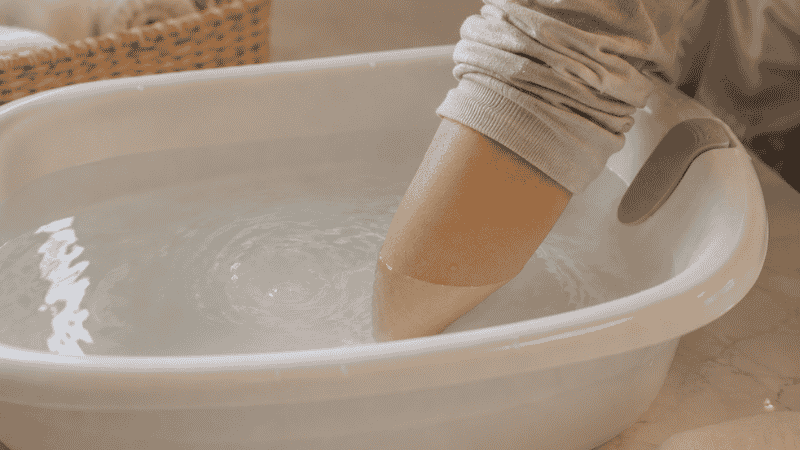
- A small basin of warm water — test it with your elbow or inner wrist, not your fingertips
- Fragrance-free, mild baby wash or shampoo (optional for newborns — warm water is usually sufficient)
- A clean diaper and change of clothes, already laid out in order
Make sure the room is warm — above 24°C / 75°F is ideal. Newborns lose body heat rapidly when undressed, and a cold room makes bath time more stressful for both of you.
Step 2: Undress Your Baby — But Not All at Once
Remove your baby’s clothes but leave the diaper on for now. Lay them on the towel and cover them loosely with the second towel, lifting only the section you’re actively washing. This keeps your baby warmer and calmer throughout the process.
Step 3: Start with the Face — Always First
Using a clean, damp washcloth with no soap, gently wipe:
- Each eye from inner corner to outer corner — use a fresh section of cloth for each eye to avoid cross-contamination
- The face, forehead, around the nose and mouth
- Behind the ears and in the ear folds (never inside the ear canal)
- The neck folds — lift the chin gently to access the creases underneath
Wipe gently and pat dry as you go, keeping that area covered with the towel before moving on.
Step 4: Wash the Hair
Support your baby’s head securely — your non-dominant hand cradles the back of their head and neck throughout. You can “football hold” your baby with their body along your forearm to bring them over a small basin or sink if you prefer to rinse the hair.
Use a damp washcloth or small amount of water to wet the scalp, add a tiny drop of fragrance-free baby shampoo if desired, massage gently with your fingertips (it is safe to wash over the soft spots — the fontanelles — with gentle pressure), then rinse thoroughly. Pat dry immediately.
Step 5: Work Down the Body
Moving from cleanest to least clean areas — face, then chest and arms, then legs, then diaper area last:
- Lift one section of the covering towel at a time
- Wash with a warm damp cloth, paying attention to all the folds and creases
- Pat dry before covering again and moving to the next section
Keep the umbilical cord stump completely dry throughout. If you accidentally get it damp, pat it dry gently with a clean cloth and let it air dry fully.
Step 6: Diaper Area Last
Remove the diaper now. For girls, always wipe front to back to avoid introducing bacteria from the rectal area toward the urethra. For boys, point the penis downward when putting on the fresh diaper to prevent leaks, and take care around the circumcision site if applicable — your hospital or pediatrician will give you specific guidance for circumcision care.
Step 7: Wrap Up Quickly
A baby who has just been bathed loses heat very fast. Have your hooded towel ready and wrap your baby immediately, covering the head. Take a moment — this is often one of the loveliest parts. Then dress and diaper as quickly as you comfortably can.
When Can You Start Full Baths? Transitioning to a Baby Tub
Once the umbilical cord stump has fallen off and the area is fully healed — typically 1 to 3 weeks after birth — you can transition from sponge baths to a baby tub or infant bath seat in the sink or tub.
Setting up the tub bath:
- Use only 2 inches of water — this is the AAP recommendation for infant baths. More water is not safer; it’s riskier.
- Water temperature should be 37–38°C (98–100°F). An inexpensive bath thermometer removes the guesswork entirely.
- Place the baby tub in the sink or in the adult tub — wherever is most comfortable for you to maintain a secure grip on your baby without straining your back.
- Keep one hand on your baby at all times. If you need to use both hands briefly, use your forearm or body to support.
The bath sequence is the same as sponge baths: face first, hair, then body top to bottom, diaper area last. The difference is that you can gently pour warm water over your baby rather than using only a washcloth, which many babies find soothing.
Keep the bath brief — 5 to 10 minutes is enough. Longer doesn’t mean cleaner, and prolonged water exposure dries out newborn skin.
What to Do When Your Baby Hates Bath Time
Some babies genuinely dislike baths in the early weeks. If your newborn cries through every sponge bath, you are not doing anything wrong — some babies find the temperature change or the sensation of being undressed distressing. A few things that can help:
Try a different time of day. Avoid bathing right before or right after feeding — a very hungry baby or a very full one is more likely to be upset. Some babies calm down with a warm bath before a feed; others do better after. Experiment with timing.
Keep more of their body covered. Lifting only the section you’re actively washing, rather than undressing completely, dramatically reduces the distress some babies feel.
Talk and sing throughout. Your voice is the most reliable calming tool you have. Maintain eye contact, keep your tone warm and unhurried, and narrate what you’re doing.
Try a “co-bathing” sponge bath. Sit on the floor or a low surface with your baby on a folded towel in your lap — the closeness can help.
Go back to sponge baths if needed. If the transition to a baby tub is causing significant distress, there is no harm in staying with sponge baths a little longer. Some babies take a few more weeks to enjoy water immersion. This is not a problem.
Newborn Bath Safety: The Rules That Are Non-Negotiable
Never leave your baby unattended near water. This is the most important safety rule. Infant drowning can occur in as little as one inch of water, in under two minutes. If your phone rings, if you forgot the towel, if anything pulls your attention — pick your baby up and bring them with you. There is no exception to this rule.
Never use bath seats as a substitute for supervision. Infant bath seats provide a position, not safety. They have been associated with drowning deaths when parents stepped away. Your hand on your baby is the only real safety device in the bath.
Check the water temperature every time. Hot water tap temperatures vary, and what felt fine last time may be dangerously hot this time. Always test with your elbow or inner wrist before placing your baby in water.
Never use soap inside the ears, nose, or mouth. A damp cloth on the outside of the ear is all that’s needed. Cotton swabs inside the ear canal can perforate the eardrum.
Skip the baby powder. The AAP no longer recommends baby powder — talc-based powders carry inhalation risks, and cornstarch-based powders can encourage yeast growth. If skin irritation is a concern, speak to your pediatrician.
Warning Signs: When to Contact Your Pediatrician
Contact your pediatrician if you notice:
- The umbilical cord stump area becomes red, swollen, or develops a foul smell — these can be signs of omphalitis (umbilical infection), which requires prompt medical attention
- Your baby’s skin develops a rash, persistent redness, or appears infected after bathing
- The circumcision site shows signs of unusual redness, swelling, or discharge beyond normal healing
- Your baby has dry, cracked, or peeling skin that isn’t improving with gentle moisturizing — this may indicate a skin condition that benefits from pediatric guidance
- You have any concern about your baby’s skin, umbilical cord, or bath safety — there is no question too small to ask your pediatrician
FAQ: What New Parents Ask About Newborn Baths
How long after birth can I bathe my newborn? The AAP and WHO recommend waiting at least 24 hours. Vernix — the white coating on newborn skin — is protective and beneficial. Hospital staff should offer you the option to delay the first bath; if not, you can request it.
Can I give my newborn a bath every day? The AAP recommends 2 to 3 times per week, not daily. Daily bathing is not necessary and can dry out and irritate newborn skin. Between baths, clean the face, neck, hands, and diaper area with a warm damp cloth.
What temperature should the bath water be? Between 37°C and 38°C (98–100°F). Test with your elbow or inner wrist — the water should feel warm, not hot. An inexpensive bath thermometer gives you a precise reading and is worth having.
Can I wash over my baby’s soft spot? Yes. The fontanelles (soft spots on the skull) can be washed with gentle pressure from your fingertips. They are covered by a tough membrane and are not fragile in the way many parents assume.
My baby’s skin looks dry and peeling after baths. Is that normal? Some peeling in the first 1 to 2 weeks is normal — newborn skin is adjusting from the fluid environment of the womb. Reduce bath frequency, avoid soap unless necessary, and apply a small amount of fragrance-free baby moisturizer after baths while the skin is still slightly damp. If peeling is severe or accompanied by redness or cracking, mention it at your next pediatric appointment.
Do I need to use baby shampoo or soap? For the first few weeks, warm water is usually sufficient. When you do use soap or shampoo, choose fragrance-free, pH-balanced products formulated for newborn skin. Use the smallest amount possible.
What do I do if water gets in my baby’s ears? A small amount of water in the outer ear during a bath is not a medical concern. Gently tilt your baby’s head to the side after the bath to allow water to drain, then pat the outer ear dry with a soft cloth. Never insert a cotton swab or any object into the ear canal.
Bath Time Gets Easier
The first few baths are the hardest. By the fourth or fifth time, you’ll have a rhythm — a sequence of steps, the right amount of water, how your baby likes to be held, which temperature feels right on your elbow. What feels terrifying at day two becomes routine by week three.
Give yourself permission to be slow and careful in the beginning. There is no prize for bathing a newborn quickly. Move at your baby’s pace, talk them through it, and remember that even a bath that ends with both of you feeling frazzled is a bath that got done.
What to Read Next
- Newborn Skin Peeling: What’s Normal and When to Worry — If you’ve noticed your baby’s skin flaking after baths, this guide explains exactly what’s happening and how to help
- Baby Dry Skin: Causes, Remedies and What to Avoid — How to moisturize newborn skin safely after baths, and which ingredients to look for and avoid
- Newborn Umbilical Cord Care: Step-by-Step Guide — Everything you need to know about keeping the cord stump clean and dry during the sponge bath weeks
References
- American Academy of Pediatrics. Bathing Your Baby. HealthyChildren.org, 2023. https://www.healthychildren.org/English/ages-stages/baby/bathing-skin-care/Pages/Bathing-Your-Newborn.aspx
- World Health Organization. Recommendations on newborn health: Delayed bathing. WHO, 2022. https://www.who.int/tools/your-life-your-health/life-stage/newborns
- Mayo Clinic. Baby bath basics: A parent’s guide. Updated 2024. https://www.mayoclinic.org/healthy-lifestyle/infant-and-toddler-health/in-depth/healthy-baby/art-20044438
- American Academy of Dermatology. How to bathe a newborn safely. AAD, 2023. https://www.aad.org/public/everyday-care/skin-care-basics/care/newborn-bathing
- Visscher MO, et al. Vernix caseosa in neonatal adaptation. Journal of Perinatology, 2005. doi:10.1038/sj.jp.7211305
This article is for informational purposes only and does not constitute medical advice. Always consult your pediatrician with specific concerns about your newborn’s skin, cord care, or bathing routine.