

Your baby hasn’t pooped in two days. Or three. You’ve been watching every diaper change with increasing anxiety, wondering whether something is wrong. They’re grunting, straining, going red in the face — and then nothing. Or they go, but it looks hard and comes out with what appears to be real effort.
Is this constipation? Is something wrong? What do you do?
Here’s the reassurance you need before anything else: many babies — especially breastfed ones — go several days without a bowel movement and are perfectly fine. Newborn bowel patterns vary more than most parents expect, and what looks like constipation is often just a normal variation in your baby’s digestive rhythm. The definition of constipation in infants isn’t about frequency alone. It’s about the consistency and comfort of what comes out.
This guide will help you accurately identify whether your baby is genuinely constipated, understand why it’s happening based on how they’re fed, and give you a clear set of home remedies that are actually evidence-based — plus the signs that mean it’s time to call your pediatrician.
Key Takeaways
- Baby constipation is defined by hard, dry, difficult-to-pass stools — not by how many days between bowel movements.
- Breastfed babies can go up to 7 to 10 days without a bowel movement and be completely healthy, as long as stools are soft when they finally arrive.
- Formula-fed babies are more prone to constipation than breastfed babies because formula proteins are harder to digest than breast milk.
- The most effective at-home newborn constipation relief options include tummy massage, bicycle legs, a warm bath, and — for babies over 1 month — a small amount of apple or pear juice per AAP guidance.
- Never use laxatives, suppositories, or any over-the-counter remedies without your pediatrician’s guidance.
Is My Baby Actually Constipated? How to Tell
This is the most important question — and the most frequently misdiagnosed. Many parents worry about constipation when their baby is not constipated at all.
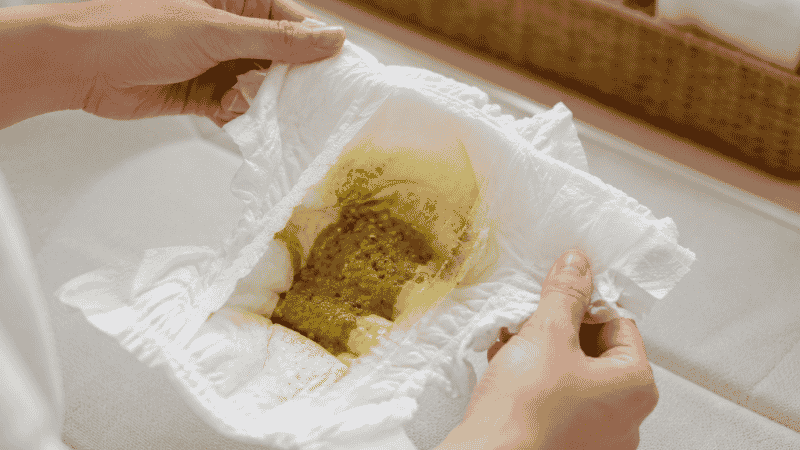
True baby constipation looks like this:
- Stools that are hard, dry, and pellet-like — similar to rabbit droppings
- Your baby strains visibly and seems to be in pain during a bowel movement
- Stools are difficult to pass even when they arrive
- Your baby’s belly feels hard or distended
- Your baby is fussier than usual and seems generally uncomfortable
- Blood on the surface of the stool (from straining that causes tiny tears)
What is NOT constipation:
- Going several days without a bowel movement when the stool, when it comes, is soft and passes easily
- Grunting, going red, and straining during a bowel movement — this is completely normal infant behavior. Babies are learning to coordinate abdominal muscles against a relaxed pelvic floor, and this process looks dramatic even when everything is working normally. Pediatricians call this infant dyschezia, and it resolves on its own.
- A change in stool color (yellow to green, green to brown) as feeding patterns change
The key distinction: constipation is about the texture and difficulty of the stool, not just the frequency. A baby who poops every 5 days with soft, comfortable stools is not constipated. A baby who poops every day with hard, painful pellets is.
Normal Bowel Movement Patterns: What to Actually Expect
One of the most consistent sources of constipation anxiety is simply not knowing what “normal” looks like — and the range is genuinely wide.
Breastfed Babies
Breast milk is remarkably well-absorbed. Because so little waste is produced, some breastfed babies go several days — even up to a week or more — between bowel movements after the first few weeks of life. According to pediatric nurse practitioner Lisa Santo Domingo of Johns Hopkins Hospital’s Pediatric Chronic Constipation Clinic, a breastfed baby who hasn’t pooped in 7 to 10 days but is comfortable, feeding well, and producing soft stool when they finally go is not constipated.
In the first month, most breastfed babies poop frequently — sometimes after every feed. After 4 to 6 weeks, this often slows dramatically. This shift worries parents but is normal.
Important note for breastfeeding parents: In the newborn weeks, infrequent stools can sometimes indicate inadequate feeding volume rather than constipation. If your newborn under 4 weeks is not producing at least 3 to 4 dirty diapers per day, mention it to your pediatrician — it may be worth assessing whether feeding is going well.
Formula-Fed Babies
Formula-fed babies typically poop more frequently than breastfed babies in the later newborn period — roughly once or twice a day on average. Formula proteins are harder to digest than breast milk, which means stools tend to be firmer and transit time is slower.
Formula-fed babies are genuinely more prone to constipation. Going 2 to 3 days without a bowel movement is common and often not concerning if stools are soft when they arrive, but formula-fed babies are more likely to have genuinely hard, difficult stools than breastfed babies.
A note on formula iron: Many parents worry that iron-fortified formula causes constipation. The AAP specifically states that the amount of iron in standard infant formula does not cause constipation. Do not switch to low-iron formula for this reason.
When Solid Foods Are Introduced
The transition to solid foods — typically around 6 months — is one of the most common triggers for true constipation in previously comfortable babies. The digestive system is adjusting to processing fiber, starch, and protein in new forms, and this transition period can cause temporary constipation in many babies.
Why Is My Baby Constipated? The Real Causes
Formula composition. The protein structure in formula is more complex and harder to digest than the whey-dominant proteins in breast milk. This is the most common cause of constipation in formula-fed babies.
Starting solid foods. As soon as pureed foods enter the picture, the gut has to adjust. Rice cereal — once a standard first food — is particularly associated with constipation and is no longer recommended as a first food by the AAP. Constipation-prone first foods include banana, cooked carrots, and anything with significant starch content.
Dehydration. Babies under 6 months get all the fluid they need from breast milk or formula — water is not needed and should not be given. After 6 months, as solid foods are introduced and water becomes appropriate, inadequate fluid intake can contribute to constipation.
Formula switching. Changing formulas frequently — or switching between brands with different protein structures — can temporarily upset the digestive system and trigger constipation.
Medical causes (less common). Hirschsprung’s disease (a rare condition affecting nerve cells in the colon), hypothyroidism, and a few other conditions can cause severe or persistent constipation. These are uncommon, but are the reason persistent constipation that doesn’t respond to home treatment warrants medical evaluation.
How to Relieve Baby Constipation at Home: What Actually Works
Tummy Massage
Gentle abdominal massage encourages the bowel to move. The technique is the same as for gas relief: use two or three fingers to make small, clockwise circles starting just below the belly button, gradually expanding. Apply gentle but firm pressure. Do this for 3 to 5 minutes, two to three times a day.
The clockwise direction matters — it follows the natural path of the large intestine, nudging content toward the rectum.
Bicycle Legs
Lay your baby on their back and move their legs in a slow pedaling motion — one leg pushing gently toward the belly while the other extends, then alternating. This physical movement stimulates intestinal activity and can help move hardened stool forward. Do this for 2 to 3 minutes, several times per day.
You can combine bicycle legs with tummy massage for a more effective session.
A Warm Bath
A warm bath relaxes the abdominal muscles and can trigger the bowel to become more active. This works particularly well for babies who seem to be holding tension in their bodies. Keep the water comfortably warm (not hot), and do a gentle tummy massage while your baby soaks.
Dietary Adjustments: Juice (for Babies Over 1 Month)
The AAP recommends that for babies over 1 month with hard stools, a small amount of 100% apple juice or pear juice can help soften stools by drawing water into the intestine. The guideline: 1 ounce per month of age, up to 4 months (so a 2-month-old would get 2 ounces maximum). Use 100% juice only — not juice drinks, not concentrate, not diluted formula.
This is the most commonly cited home remedy with genuine evidence behind it. Don’t start juice before 1 month of age, and always discuss with your pediatrician before trying it.
For Babies on Solids (6+ Months): High-Fiber Foods
If your baby has started solid foods, increasing fiber-rich foods can provide significant constipation relief:
- Pureed prunes — the most effective natural remedy; even small amounts work well
- Pureed pears and peaches (the “P fruits” are often recommended by pediatricians)
- Pureed peas and beans
- Pureed plums
Reduce or temporarily avoid foods that can worsen constipation during a bout: banana, cooked carrots, white rice, apple sauce (without the skin), and any food high in processed starch.
What NOT to Do for Baby Constipation
Do not give water to babies under 6 months. Babies under 6 months receive all needed fluid from breast milk or formula. Water can dilute their sodium levels and cause harm. The exception: a small amount (1 ounce) is sometimes suggested for babies over 1 month with hard stools — this should be discussed with your pediatrician, not done based on general advice alone.
Do not use over-the-counter laxatives or suppositories without medical guidance. Glycerin suppositories, Miralax, mineral oil — these are sometimes used for infant constipation, but always under pediatric supervision. Using them without guidance can cause harm.
Do not switch formula repeatedly. Frequent formula switching in response to constipation often makes the situation worse, not better, by repeatedly disrupting the gut. If you think formula may be contributing, discuss a trial of a partially hydrolyzed formula with your pediatrician rather than switching brands randomly.
Do not give gripe water or karo syrup. These are traditional remedies that are not recommended by modern pediatrics. Dark karo syrup in particular can contain Clostridium botulinum spores and should never be given to infants under 1 year.
Do not give rice cereal as a first food. Rice cereal is commonly associated with constipation and is no longer recommended by the AAP as a first food. If you’ve already started it and your baby is constipated, consider switching to other first foods.
If Home Remedies Aren’t Working
If you’ve consistently tried tummy massage, bicycle legs, warm baths, and juice (if age-appropriate) for several days without improvement, it’s time to call your pediatrician rather than continuing to try home remedies.
Your doctor may recommend:
- A specific formula change if your baby is formula-fed
- Glycerin suppositories (safe when used correctly under medical guidance)
- Polyethylene glycol (Miralax) for older babies — used in very small amounts under pediatric supervision
- Evaluation for an underlying condition if constipation is severe or persistent
Warning Signs: When to Call Your Pediatrician
Call your pediatrician promptly if:
- Your baby has not had a bowel movement in more than 3 days and you’re noticing signs of discomfort, a hard belly, or reduced feeding
- Stools are hard, dry, and pellet-like consistently
- You see blood in the stool — either red streaks on the surface or blood in the diaper
- Your baby is refusing feeds or has significantly reduced feeding
- Your baby has a fever alongside constipation
- Your baby seems unusually lethargic or in significant pain
- Constipation doesn’t improve after 1 to 2 weeks of consistent home treatment
- Your newborn under 4 weeks has fewer than 3 dirty diapers per day (possible sign of inadequate feeding)
Constipation that is present from birth, or accompanied by a visibly swollen abdomen or complete failure to pass stool, requires same-day evaluation.
FAQ: What Parents Ask About Baby Constipation
How do I know if my baby is constipated or just hasn’t pooped in a while? The question isn’t how many days — it’s what the stool is like when it comes. If your baby goes 4 days and then passes a soft, easy stool without distress, they were not constipated. If they pass hard, pellet-like stools with obvious straining and crying, that is constipation regardless of frequency.
Can breastfed babies get constipated? Genuine constipation in breastfed babies is rare. Breast milk is nearly completely absorbed, produces little waste, and acts as a natural gentle laxative. Infrequent stools in breastfed babies are almost always normal as long as the stool is soft. If you’re concerned, weigh this against feeding signs — is your baby feeding well and gaining weight?
My formula-fed baby hasn’t pooped in 3 days. What should I do? Try tummy massage, bicycle legs, and a warm bath first. If your baby is over 1 month and the pediatrician has advised it, 1 to 2 ounces of apple or pear juice may help. If there’s no improvement in 24 hours or your baby seems to be in discomfort, call your pediatrician.
Is iron in formula causing my baby’s constipation? The AAP is clear: the amount of iron in standard infant formula does not cause constipation. Do not switch to low-iron formula. If you’re concerned about formula type, discuss alternatives with your pediatrician.
Can I give my baby water to help with constipation? Babies under 6 months should not receive plain water — it can be harmful. A small amount (1 ounce) is sometimes suggested for older newborns with hard stools under pediatric guidance. After 6 months, when solid foods are introduced, small amounts of water become appropriate and can help with hydration.
My baby strains and grunts every time they poop. Is that constipation? Not necessarily. This behavior — called infant dyschezia — is very common in newborns who are learning to coordinate their muscles for a bowel movement. If the stool that comes out is soft and the episode ends with a comfortable, calmer baby, the straining was normal effort, not constipation. Constipation involves hard stools and prolonged distress, not just effort.
When It Resolves, It Really Does Resolve
Baby constipation — even when it’s genuinely difficult — almost always resolves with the right approach. As your baby’s digestive system matures and the gut microbiome becomes more established, bowel movements typically become easier and more regular over the first year of life.
In the meantime: tummy massage, bicycle legs, warm baths, and patience with the process. And your pediatrician is always the right call when you’re unsure.
What to Read Next
- Baby Gas Relief: Why Your Newborn Is So Gassy and What Actually Helps — Gas and constipation often overlap in newborns — this guide covers the gas side of the equation
- Newborn Feeding Schedule: How Much & How Often, Week by Week — Understanding feeding patterns helps you distinguish between a constipation problem and a feeding issue
- Newborn Baby Care: The Complete Guide for First-Time Parents — Constipation is one part of the broader newborn care picture — this guide covers everything in one place
References
- American Academy of Pediatrics. Constipation in Infants and Children. HealthyChildren.org, 2023. https://www.healthychildren.org/English/health-issues/conditions/abdominal/Pages/Constipation.aspx
- Mayo Clinic. Infant Constipation: How Is It Treated? Updated 2024. https://www.mayoclinic.org/healthy-lifestyle/infant-and-toddler-health/expert-answers/infant-constipation/faq-20058519
- Tabbers MM, et al. Evaluation and treatment of functional constipation in infants and children: Evidence-based recommendations from ESPGHAN and NASPGHAN. Journal of Pediatric Gastroenterology and Nutrition, 2014. doi:10.1097/MPG.0000000000000266
- Pregnancy Birth & Baby (Australian Government). Constipation in Babies. https://www.pregnancybirthbaby.org.au/constipation-in-babies
- Nemours KidsHealth. Constipation. https://kidshealth.org/en/parents/constipation.html
This article is for informational purposes only and does not constitute medical advice. Always consult your pediatrician with specific concerns about your baby’s bowel habits or digestive health.