
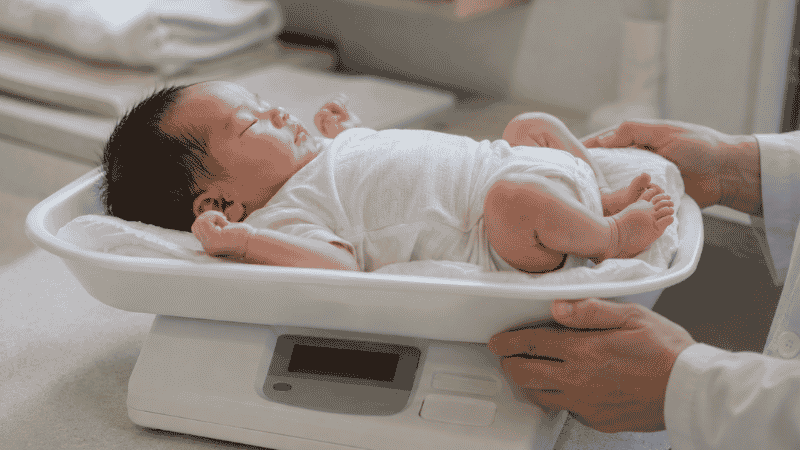
Everything was going so well. Your baby had settled into a rough rhythm — feeding at predictable intervals, sleeping reasonable stretches, generally content. And then, seemingly overnight, they turned into a different baby. Suddenly they want to nurse every hour. They’re fussier than you’ve ever seen. They’re sleeping more, or sleeping less, or both within the same 24-hour period. You’re exhausted and confused, wondering what went wrong.
Nothing went wrong. Your baby is having a growth spurt.
Baby growth spurts are one of those experiences that can feel alarming precisely because they disrupt whatever equilibrium you’ve managed to establish. But they’re completely normal — in fact, they’re a sign that your baby’s development is right on track. In the first year alone, your baby will grow approximately 10 inches in length and triple their birth weight. That kind of growth doesn’t happen smoothly and evenly. It happens in bursts.
This guide gives you the full picture: when baby growth spurts typically occur, what signs to look for, how to support your baby (and yourself) through them, and how to tell the difference between a growth spurt and something that needs medical attention.
Key Takeaways
- Babies typically experience growth spurts at approximately 2 to 3 weeks, 6 weeks, 3 months, 6 months, and 9 months — though timing varies between babies.
- During a growth spurt, your baby may feed significantly more frequently — this is not a sign of low milk supply. It is how your baby drives supply up to meet their new needs.
- Most growth spurts last 2 to 4 days, with some lasting up to a week. They resolve on their own.
- According to Cleveland Clinic, babies grow approximately 10 inches (25 cm) in their first year and triple their birth weight by 12 months — much of this growth happens in these concentrated bursts.
- Growth spurts do not cause pain in infants, despite increased fussiness. Growing pains are a different phenomenon that occurs later in childhood.
When Do Baby Growth Spurts Happen? The Typical Timeline
While every baby is unique and growth spurts don’t follow a precise schedule, there are windows when they most commonly occur. Knowing these in advance means you’re prepared — rather than blindsided — when the fussiness and hunger escalation arrives.
The First Growth Spurt: 2 to 3 Weeks
This one catches many parents completely off guard. You’ve just started to find your footing with a newborn, and suddenly your baby seems insatiable. This early growth spurt often coincides with a developmental shift in feeding — babies begin to feed more efficiently and also need more milk as their stomach capacity increases. For breastfeeding mothers, this is when your body gets its first major signal to increase supply.
6 Weeks: The Challenging One
The 6-week growth spurt is often the most intense in the newborn period and coincides with what many parents describe as “peak fussiness.” Cluster feeding — your baby nursing very frequently for several hours in the evening — is extremely common at this stage. This is also around the time when the honeymoon period of newborn care is well and truly over, which makes this growth spurt harder to weather emotionally.
3 Months: The Shift
By 3 months, many parents have established some sense of rhythm, and the 3-month growth spurt disrupts it. Babies at this stage are also going through significant neurological development — the world is becoming more interesting, sleep is shifting, and feeding patterns are changing. The growth spurt can make it hard to tell which changes are developmental and which are spurt-related. The answer is usually: both at once.
6 Months: The Solid Food Transition
The 6-month growth spurt often arrives right around the same time many parents are beginning to introduce solid foods. This means increased appetite may be met with new textures and tastes — a transition that can be both exciting and messy. Some babies increase feeding significantly during this spurt; others begin to show more interest in exploring solids.
9 Months: Heading Toward the First Birthday
The 9-month spurt is often subtler than earlier ones because babies are more mobile, more distracted, and more interested in the world. Feeding disruptions may be less dramatic, but you may notice increased sleep needs, clinginess, or a return to night waking that had improved.
What Are the Signs of a Baby Growth Spurt?
Growth spurts don’t announce themselves. But there are consistent patterns that — once you know what to look for — are recognizable.
Dramatically Increased Hunger
This is the most reliable signal. Your baby, who may have been feeding every 2 to 3 hours, suddenly wants to feed every 45 minutes to an hour. Breastfed babies cluster-feed — nursing in tight, frequent bursts — which can feel like an endless loop. Formula-fed babies may drain their bottles and look for more.
This increased hunger is purposeful. Your baby’s body needs more calories to fuel rapid growth, and the increased feeding is also — for breastfed babies — the mechanism by which they signal your body to produce more milk. This is supply and demand working exactly as designed.
Increased Fussiness and Irritability
During a growth spurt, babies are often harder to soothe than usual. They may be clingy, unsettled, or crying more than their baseline. This isn’t caused by pain — growth spurts do not cause physical discomfort in infants the way growing pains do in older children. The fussiness is thought to be related to the metabolic demands of rapid growth and possibly to the neurological changes that often accompany physical growth spurts.
Changes in Sleep — Both More and Less
This one is counterintuitive. You might expect a baby going through a growth spurt to sleep more (they’re tired from growing, after all). And some do — longer naps, earlier bedtimes. But others sleep worse: more night waking, shorter naps, difficulty settling. Both patterns are associated with growth spurts and both are temporary.
Apparent Developmental Leaps
Growth spurts often coincide with developmental leaps — periods when your baby is also making significant cognitive and neurological advances. You may notice your baby becoming more alert, more interested in their surroundings, or attempting new skills (reaching, rolling, babbling) in the days following a growth spurt. The fussy period often precedes these new abilities.
How Long Do Baby Growth Spurts Last?
Most growth spurts last 2 to 4 days. Some extend to a week. They do not typically last longer than a week — if your baby’s feeding and fussiness disruption continues beyond 7 to 10 days without improvement, that’s worth a conversation with your pediatrician.
The intensity is front-loaded: the first day or two tend to be the most demanding, with feeding frequency and fussiness at their peak. By days 3 and 4, most babies begin to settle back toward their previous patterns — often with noticeably better feeding efficiency and sometimes a longer sleep stretch than usual.
How to Support Your Baby During a Growth Spurt
The honest answer is that there isn’t much to do except respond, endure, and trust that it ends. But there are approaches that help.
Feed on Demand — Every Time
During a growth spurt, feeding on demand is the most important thing you can do. Don’t try to stretch feeds back to their previous intervals. Your baby is genuinely hungry, and the increased feeding serves two purposes: meeting immediate caloric needs and (for breastfed babies) driving milk production up to meet the new level of demand.
Trying to space out feeds during a growth spurt is the one approach that consistently backfires — it extends fussiness and, for breastfeeding mothers, can interfere with establishing the higher supply level your baby needs.
For Breastfeeding Mothers: Trust Your Supply
The most common fear during a growth spurt is that the baby’s increased hunger means you don’t have enough milk. This is almost never true during an otherwise established breastfeeding relationship. Your baby’s cluster feeding is the signal to your body to produce more — not evidence that there isn’t enough. Most mothers find that supply catches up within 1 to 2 days of consistent on-demand feeding.
The time to be concerned about supply is if your baby is not producing 6 or more wet diapers per day, is losing weight, or seems persistently unsatisfied after feeds that are not resolving with increased frequency. Those situations warrant a lactation consultation. A growth spurt without those signs does not.
Maximize Skin-to-Skin Contact
Skin-to-skin contact releases oxytocin, which calms both you and your baby, and for breastfeeding mothers, supports let-down and milk production. A baby carrier or wrap makes extended skin-to-skin time sustainable when you need your hands. Many parents find that a growth spurt is the time when babywearing saves their sanity.
Rest When You Possibly Can
A growth spurt is not the time to push through fatigue. If someone offers help — with feeding, with holding the baby, with anything — take it. The increased demand on a breastfeeding mother is physically real. Sleep deprivation impairs your ability to respond calmly and also, to some degree, affects milk production. Rest is not a luxury during a growth spurt; it’s a functional necessity.
Don’t Abandon Routines That Are Working
It can be tempting, during the chaos of a growth spurt, to abandon whatever pre-feed or pre-sleep routines you’ve established. Resist this where possible. The familiarity of a consistent routine can be calming for a baby who is already feeling unsettled, and maintaining some structure helps both of you return to baseline more smoothly once the spurt resolves.
What If It’s Been a Week and Nothing Has Improved?
If your baby has been significantly more fussy and hungry for more than 7 to 10 days with no sign of improvement, it’s worth considering whether something else is going on.
Check feeding first. For breastfed babies: is supply actually adequate? A lactation consultant can conduct a weighted feed to assess transfer. For formula-fed babies: has anything changed in preparation, brand, or volume?
Rule out illness. Increased fussiness combined with fever, changes in stool, reduced wet diapers, or any other symptom warrants a pediatric visit. Growth spurts don’t cause fever.
Consider developmental factors. At some ages — particularly around 4 months — what looks like an extended growth spurt may partly be the 4-month sleep regression, a distinct developmental phase with its own timeline and management approach.
Trust your instincts. If something feels wrong beyond the normal intensity of a growth spurt, call your pediatrician. You know your baby. A growth spurt that seems unusually prolonged, severe, or accompanied by symptoms that don’t fit the pattern deserves professional eyes.
Baby Growth Spurts vs. Illness: How to Tell the Difference
Because the symptoms overlap — fussiness, increased feeding, disturbed sleep — parents sometimes struggle to distinguish a growth spurt from the beginning of an illness.
Signs pointing to a growth spurt:
- Increased hunger is the dominant complaint
- Baby is fussy but can be soothed, especially by feeding
- No fever, no change in stool or urine output
- Baby has good periods between the worst fussiness
- Pattern resolves within a week
Signs that may indicate illness:
- Fever above 100.4°F (38°C) — especially in babies under 3 months, always a reason to call
- Significantly reduced wet diapers (fewer than 6 per day after day 4)
- Vomiting or diarrhea
- Baby seems lethargic, difficult to wake, or consistently unresponsive to soothing
- Unusual rash or change in skin color
- Inconsolable crying that doesn’t ease with feeding, holding, or any soothing
When in doubt: call your pediatrician. Growth spurts don’t cause fever. That’s the clearest dividing line.
Warning Signs: When to Call Your Pediatrician
Call your pediatrician if:
- Your baby has a fever above 100.4°F (38°C) — regardless of whether you suspect a growth spurt
- Fussiness has lasted more than 7 to 10 days with no improvement
- Your baby is not producing 6 or more wet diapers per day
- Your baby seems lethargic, unusually pale, or difficult to rouse
- You notice significant weight loss or your baby is not gaining weight as expected
- Crying is inconsolable for hours without any period of calm
- Something simply feels wrong — your instincts are valid
FAQ: What Parents Ask About Baby Growth Spurts
How do I know if my baby is having a growth spurt or just going through a fussy phase? The clearest signal of a growth spurt is significantly increased hunger. If your baby’s main complaint is that they want to eat more and more often, and this resolves within a week, a growth spurt is the most likely explanation. Pure fussiness without increased feeding drive may have other causes — gas, overtiredness, or developmental changes.
Can growth spurts affect my milk supply? They trigger an increase in supply, not a decrease. The cluster feeding that occurs during a growth spurt is your baby’s way of ordering more milk from your body. This can temporarily feel like there isn’t enough (because your baby is feeding more frequently than before), but if you feed on demand and rest, supply typically catches up within 1 to 2 days.
Do formula-fed babies have growth spurts too? Yes, absolutely. Growth spurts are not feeding-method dependent. Formula-fed babies may need larger volumes per feed or more frequent feeds during a spurt. Follow your baby’s hunger cues rather than strict volume guidelines during this period.
My baby slept great and now won’t stay asleep during what I think is a growth spurt. What helps? Sleep disruption during growth spurts is common and temporary. Lean into contact naps if your baby will only sleep held. Use a carrier for daytime naps if you need your hands. Focus on feeding on demand and trust that the sleep disruption typically resolves within the week as the spurt ends.
How much weight should my baby gain during a growth spurt? This varies widely. On average, babies gain about 5 to 7 ounces per week in the first few months. Growth spurts don’t necessarily produce dramatically higher single-week gains — the growth often catches up at subsequent measurements. Your pediatrician’s well-child visit weight checks are the most reliable way to confirm your baby is growing appropriately over time.
Is it normal for my baby to sleep a lot during a growth spurt? Yes. Increased sleep is one of the patterns associated with growth spurts, alongside increased fussiness. Some babies sleep more; others sleep less. Both are within the normal range for a growth spurt. If sleep increases are dramatic or your baby is difficult to rouse, that’s a different concern worth checking with your pediatrician.
On the Other Side of a Growth Spurt
Here’s what happens after every growth spurt: your baby emerges slightly different. More alert. Maybe with a new skill. Definitely with slightly longer legs and a slightly heavier feel in your arms. The fussy period that felt endless resolves, feeding settles, and sleep — gradually — finds its way back.
This is what growth looks like from the inside. Not smooth and linear, but concentrated and intense, followed by consolidation and calm. Each spurt is temporary. Each one is followed by a version of your baby that’s a little further along the extraordinary arc from newborn to toddler.
You’re doing well. Feed the hunger, rest when you can, and know that this phase ends — as every phase does.
What to Read Next
- Newborn Feeding Schedule: How Much & How Often, Week by Week — Growth spurts often disrupt established feeding patterns — this guide helps you understand what normal looks like at each stage
- How to Increase Milk Supply: Science-Backed Tips That Actually Work — If a growth spurt has you worried about supply, this guide separates the evidence from the myths
- Newborn Baby Care: The Complete Guide for First-Time Parents — Growth spurts are one part of the broader development picture — this guide covers everything in one place
References
- Cleveland Clinic. Growth Spurt. Updated August 2025. https://my.clevelandclinic.org/health/diseases/22070-growth-spurts
- American Academy of Pediatrics. How Your Newborn Grows. HealthyChildren.org, 2023. https://www.healthychildren.org/English/ages-stages/newborn/Pages/How-Your-Newborn-Grows.aspx
- World Health Organization. Child Growth Standards. WHO, 2023. https://www.who.int/tools/child-growth-standards
- Riordan J, Wambach K. Breastfeeding and Human Lactation. 5th ed. Jones & Bartlett Learning, 2016.
This article is for informational purposes only and does not constitute medical advice. Always consult your pediatrician with specific concerns about your baby’s growth, feeding, or development.