

Nobody tells you, before the baby arrives, that you will spend an enormous portion of the first year thinking about sleep. Not sleeping — thinking about it. Tracking it. Googling it at 3 a.m. Comparing it to other people’s babies. Wondering if what you’re experiencing is normal, whether you’re doing something wrong, whether it’s ever going to get better.
Baby sleep is genuinely one of the most confusing aspects of new parenthood, and not because parents are doing anything wrong. It’s confusing because infant sleep is biologically complex, developmentally dynamic, and wildly variable from one baby to the next. The ranges of “normal” are wider than most charts show. The advice is often contradictory. And the exhaustion that comes with being up multiple times a night makes it harder to think clearly about any of it.
This guide is the one I wish had existed when I was in my first year. It covers how baby sleep actually works, what to expect month by month, how to build an environment and routine that supports sleep, the regressions that disrupt it, and how to approach sleep training if and when you decide that’s right for your family. Every section links out to a deeper dive if you want more detail on a specific topic.
Start here. Go as deep as you need.
Key Takeaways
- Baby sleep is fundamentally different from adult sleep — shorter cycles, more time in light sleep, no established circadian rhythm in the newborn period. Understanding the biology makes the behavior make sense.
- Total sleep needs decrease gradually from 15.5 hours in the newborn period to around 13 hours by 12 months, shifting from fragmented around-the-clock sleep toward organized day and night.
- The 4-month sleep regression is the most significant sleep event of the first year — it’s caused by a permanent change in sleep architecture, not a temporary disruption.
- Safe sleep saves lives. The AAP’s 2022 guidelines — back sleeping, firm flat surface, room-sharing without bed-sharing — are the non-negotiable foundation of everything else.
- Consistent bedtime routine is the single most effective and universally applicable sleep tool. It works for newborns and twelve-month-olds alike.
How Baby Sleep Actually Works: The Science in Plain Language
Before you can make sense of why your baby sleeps the way they do, it helps to understand what’s actually happening neurologically.

Sleep Cycles Are Shorter Than Adults
Adult sleep cycles last roughly 90 minutes. Baby sleep cycles last 45 to 60 minutes — and they shorten even further in the newborn period. At the end of every cycle, everyone surfaces briefly toward lighter sleep. Adults have learned to roll over and fall back asleep automatically without fully waking. Babies haven’t learned this yet, which is why waking every 45 to 60 minutes is so characteristic of infant sleep — especially after the 4-month neurological shift.
Newborns Have Different Sleep Stages
Newborns alternate between two stages — active sleep (REM) and quiet sleep (non-REM) — and spend roughly half of their sleep in REM, which is active, lighter sleep. Around 3 to 4 months, the full adult sleep stages emerge, and cycles gradually approach adult length by toddlerhood. This is why the 4-month period is so disruptive — it’s a permanent neurological maturation, not a setback.
Circadian Rhythm Takes Time to Develop
Newborns don’t have a functioning circadian rhythm. They’re not producing melatonin on a light-dark cycle the way older babies and adults do. Their sleep is governed entirely by hunger — which cycles every 2 to 3 hours — rather than by time of day. This is why the newborn period feels like continuous chaos: it is, biologically. Circadian rhythm begins to emerge around 6 to 8 weeks and becomes more established by 3 to 4 months.
What This Means in Practice
Every confusing sleep behavior in the first year — the unpredictable newborn, the 4-month regression, the waking at every cycle boundary, the nap transitions — makes more sense through this biological lens. Your baby isn’t doing anything wrong. Their sleep system is developing on a schedule that doesn’t care about yours.
Baby Sleep by Age: What to Expect Month by Month
Sleep needs and patterns change substantially across the first year. Here’s the honest picture at each stage.
Newborn to 8 Weeks: Survival Mode
Total sleep: ~15.5 hours/day Naps: 4 to 8 short, unpredictable naps Wake windows: 45 to 60 minutes Night waking: Every 2 to 3 hours, driven by hunger
There is no schedule at this stage, and trying to impose one will only create frustration. Newborn sleep is governed by hunger, which cycles every 2 to 3 hours as long as their stomach capacity is small. The most useful approach: watch wake windows (no more than 60 minutes of awake time before the next sleep), start a very simple pre-sleep routine to plant the seed for later, and expose your baby to natural light during the day and darkness at night to support circadian development.
2 to 4 Months: The First Signs of Rhythm
Total sleep: ~14.5 to 15 hours/day Naps: 4 to 5 per day Wake windows: 60 to 90 minutes Night waking: Beginning to stretch — first long stretch often appears
Around 6 to 8 weeks, melatonin production becomes more consistent and you may notice your baby showing a preference for sleeping at certain times. The first longer stretch of night sleep — often 3 to 5 hours — frequently appears in this window. This is also when a consistent bedtime routine begins to have real effect.
By the time your baby reaches 4 months old, they will have finally sorted out their days and nights, making napping and night sleeps a bit easier. But this is also exactly when the 4-month regression arrives and disrupts whatever was working.
4 to 6 Months: The Regression Window
Total sleep: ~14 hours/day Naps: Transitioning from 4 to 3 naps Wake windows: 1.5 to 2.5 hours Night waking: Often worse before it gets better
The 4-month sleep regression is the most significant sleep event of the entire first year. It is not really a regression — it is a permanent maturation of your baby’s brain, where sleep reorganizes from the newborn two-stage pattern into the full adult stages. The acute disruption typically lasts 2 to 6 weeks, but the underlying change is permanent.
This is the age when working toward independent sleep skills matters most. A baby who can fall asleep at the start of sleep without external help is far more likely to reconnect their sleep cycles on their own at night.
6 to 9 Months: More Predictable, New Challenges
Total sleep: ~13.5 to 14 hours/day Naps: 2 to 3 per day Wake windows: 2 to 3 hours Night waking: Many families see significant improvement
By 6 months, sleep is often more organized than it’s been since birth. Many babies begin sleeping longer stretches at night. Two to three naps fit into the day with reasonable predictability. Between 4 and 6 months, most babies can go 6 to 8 hours without eating, but a lot of them still wake up for comfort.
The 8-to-10-month regression disrupts this period for many families. Separation anxiety — your baby now fully understands that you exist when you’re not in the room — and motor milestones like crawling and pulling up both affect sleep in this window.
9 to 12 Months: Heading Toward the First Birthday
Total sleep: ~13 hours/day Naps: 2 per day Wake windows: 3 to 4 hours Night waking: Most babies sleeping longer stretches, but variation remains wide
By 9 to 12 months, about 70% to 80% of babies sleep 10 to 12 hours straight. However, this can be broken by teething, sickness, or growth changes.
The 12-month regression often arrives right around the first birthday, tied to developmental leaps and the beginning of the nap transition process. Most babies are not ready to drop from two naps to one until 14 to 16 months — dropping the second nap too early is one of the most common causes of extended sleep chaos at this age.
Safe Sleep: The Foundation Everything Else Is Built On
Before schedules, before routines, before any sleep training approach — safe sleep is the non-negotiable baseline. Sleep-related infant death affects approximately 3,400 babies in the US annually, and the AAP’s guidelines exist because they work.
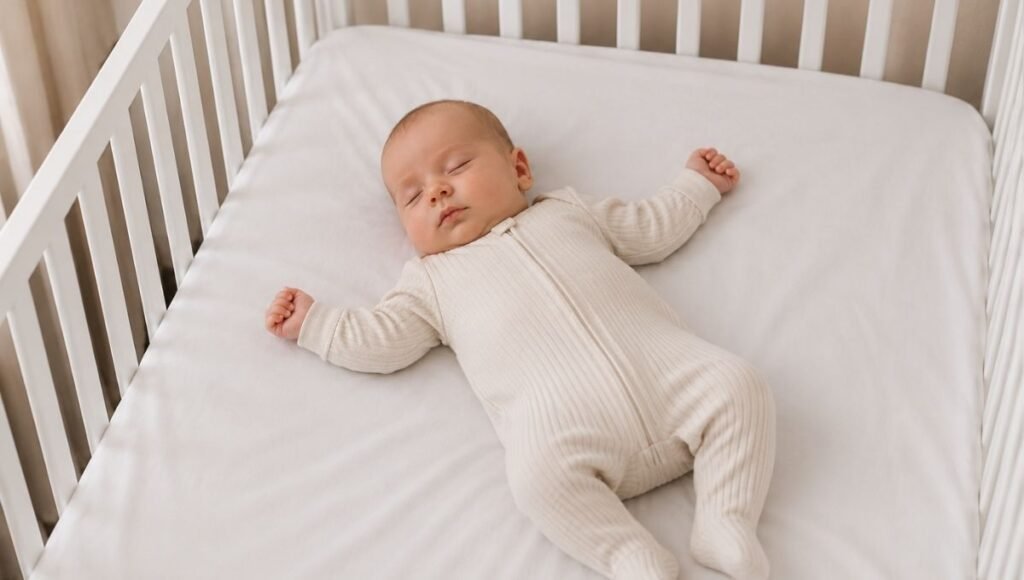
The core framework: Alone, Back, Crib
Alone means your baby sleeps in their own sleep space — no soft objects, no bumpers, no loose bedding. Room-sharing (your baby in their own surface in your room) is recommended for at least the first 6 months. Bed-sharing is not recommended.
Back means every sleep, every nap, every caregiver, until 12 months. Back sleeping has reduced SIDS rates by more than 50% since the “Back to Sleep” campaign launched in 1992. Once your baby can roll independently in both directions, you no longer need to reposition them.
Crib means a firm, flat sleep surface that meets CPSC safety standards — no inclined sleepers, no soft-sided surfaces, no products that have been recalled. A fitted sheet only. A sleep sack instead of a blanket.
What to remove from the sleep space: Crib bumpers (no safety benefit, documented suffocation risk), soft toys, pillows, positioners, and any inclined device.
For the complete safe sleep guide including the 2022 AAP updates, how to handle grandparents with different expectations, and the specific questions parents are afraid to ask, read: Safe Sleep for Babies: The Complete AAP-Based Guide
Building a Sleep Routine That Actually Works
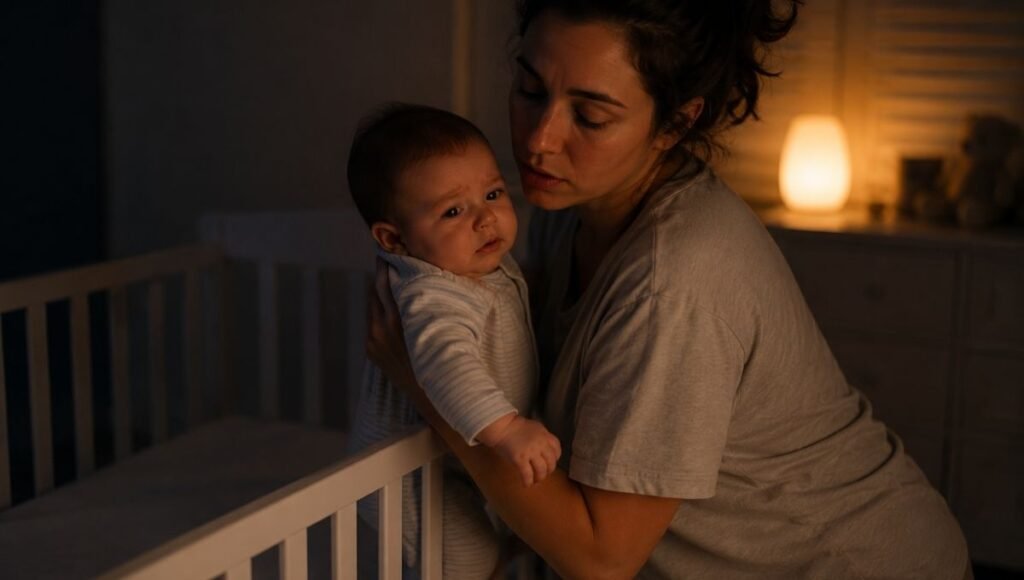
A consistent bedtime routine is the single most universally effective sleep tool — backed by research, appropriate from birth, and useful at every age through toddlerhood and beyond. A 2009 study published in the journal Sleep by Mindell and colleagues, involving 405 families, found that implementing a consistent nightly bedtime routine produced significant improvements in sleep onset, night waking, and maternal mood within just 2 weeks.
What makes a routine work:
The sequence matters more than the specific activities. The same 3 to 4 things, in the same order, every night, create an associative signal: this sequence means sleep is coming. Your baby’s nervous system begins to anticipate and prepare.
A simple routine that works at most ages:
- Bath (2 to 3 nights per week, or a warm washcloth wipe on other nights)
- Feed (breast or bottle — before the final steps, not last, so feeding isn’t the immediate cue for sleep)
- Dim the room
- Short book or song
- Place in sleep space drowsy but still slightly awake
The last step — placing your baby drowsy but awake — is what sleep experts call the cornerstone of independent sleep skills. A baby who falls asleep in their crib, rather than being transferred there already fully asleep, has the opportunity to learn what falling asleep independently feels like. This is what allows them to reconnect sleep cycles without your help.
Sleep Regressions: Every Age, Explained
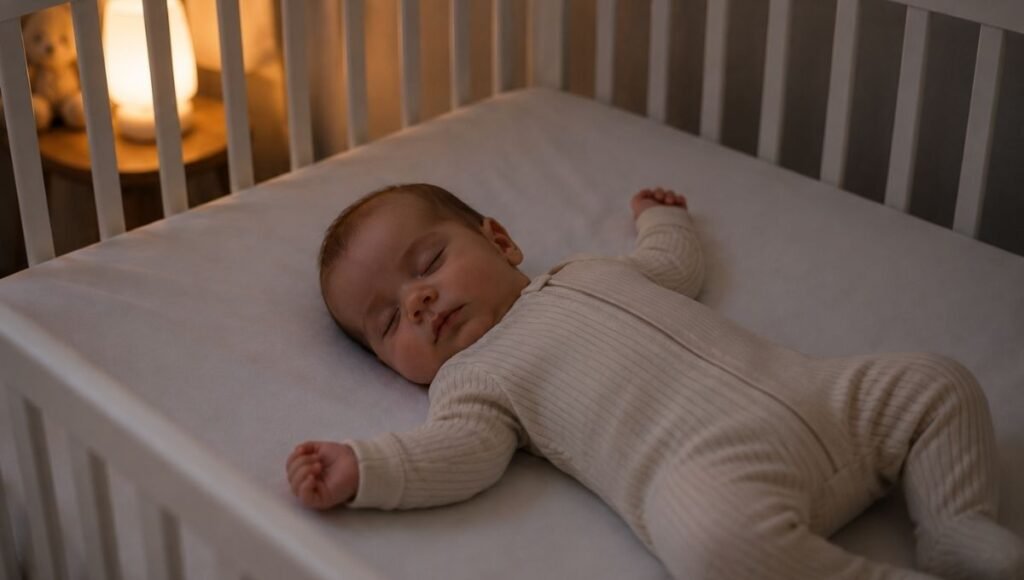
Sleep regressions are among the most disorienting experiences of the first year — not because they’re medically alarming, but because they arrive precisely when you feel like you’ve figured things out.
Every regression has a developmental cause. The biggest shifts happen around 4 months, 8-10 months, and 12 months. During these regressions or transitions, previously solid sleepers may suddenly wake more frequently or resist naps. These aren’t setbacks — they’re signs of brain development and new skill acquisition.
The key distinction: the 4-month regression involves a permanent change in sleep architecture that doesn’t resolve without developing independent sleep skills. All other regressions are temporary disruptions that resolve when the developmental period passes, typically within 2 to 6 weeks.
The major regression windows:
- Newborn period (0–12 weeks): Chaotic by biological design, not yet a true regression
- 4 months: The permanent shift — the most significant sleep event of the first year
- 8 to 10 months: Separation anxiety + motor milestones (crawling, pulling up)
- 12 months: Developmental leap + beginning of nap transition pressure
For a complete breakdown of every regression age with specific causes, duration, and what helps, read: Sleep Regression Ages: Every Stage Explained
For the 4-month regression specifically — why it’s different, and exactly how to navigate it — read: The 4-Month Sleep Regression: Why It Happens, How Long It Lasts & How to Cope
Baby Sleep Schedules: The Month-by-Month Reference
A sleep schedule gives you context for what’s developmentally typical at each age — nap counts, wake windows, total sleep, and approximate bedtime. It is a reference, not a contract.
Wake windows lengthen as stamina increases. A newborn can barely handle 45 minutes awake, while a one-year-old might stay up for 3-4 hours happily. Misjudging these windows causes overtiredness, making sleep harder rather than easier.
The three principles that make any schedule work:
Anchor wake time. A consistent morning wake time is the single variable that most reliably organizes everything else — nap timing, bedtime, and overall sleep pressure.
Watch wake windows. More useful than watching the clock in the early months, wake windows tell you when your baby is ready for sleep based on how long they’ve been awake, not what time it is.
Protect the sleep environment. Full darkness, consistent white noise, firm flat surface. Remove environmental variables that make sleep harder to achieve.
For the complete month-by-month schedule with sample routines and troubleshooting: Baby Sleep Schedule by Age: What to Expect Month by Month
When Do Babies Sleep Through the Night?
This is the question every new parent is quietly asking — and the answer is wider than the cultural narrative suggests.
At different stages, “sleeping through the night” means different things. For babies, sleeping through the night means five hours straight. Not 8 hours, not 10. The clinical definition is a 5-to-6-hour stretch — and many babies achieve this earlier than parents expect, often by 3 to 4 months.
A landmark study published in Pediatrics found that at 6 months, 57% of babies were still not sleeping 8 consecutive hours. At 12 months, 43% still weren’t. If your baby isn’t sleeping through the night at 6, 8, or even 10 months, you are solidly within the documented normal range.
What most consistently predicts earlier sleep consolidation: the ability to fall asleep independently at the start of sleep.
For the full research-backed picture on when and how sleep consolidates: When Do Babies Sleep Through the Night?
Sleep Training: If and When It Makes Sense
Sleep training is the process of helping your baby learn to fall asleep independently — without external help like nursing, rocking, or being held. It is a tool, not a requirement. Some families find that sleep naturally consolidates without formal intervention. Others benefit from a more structured approach.
When sleep training is appropriate: Most experts recommend waiting until at least 4 to 6 months. Before this age, babies are not developmentally ready to self-soothe consistently.
The research: Multiple large randomized controlled trials have found that sleep training methods — including cry it out and gentler approaches — are safe and effective, with no documented long-term negative effects on attachment, emotional development, or stress levels. A 5-year follow-up study found no measurable difference in outcomes between sleep-trained children and those who weren’t.
The methods, from most to least crying:
- Cry It Out (Extinction): Put baby down awake, leave the room, don’t return until morning. Works in 3 to 5 nights for most babies. Requires strong parental consistency.
- Graduated Extinction (Ferber Method): Check-ins at increasing intervals. More parental involvement, sometimes takes slightly longer.
- Chair Method: Sit beside the crib, gradually moving further away over 2 to 3 weeks.
- Pick Up, Put Down: Respond to every cry, but place baby back down before they fall asleep.
- No-Cry Approaches: Gradual reduction of sleep associations over weeks to months.
There’s a popular belief that cry it out is the fastest way to teach babies to sleep independently. But there’s no evidence that’s true. What that is depends on the parents and the baby. It’s a personalized formula.
For a complete, non-judgmental breakdown of every method with honest pros, cons, and who each one works best for: Sleep Training Methods Explained: Cry It Out, Gentle Alternatives & How to Choose
Warning Signs: When to Talk to Your Pediatrician About Sleep
Most sleep challenges in the first year don’t require medical attention — they require time, consistency, and the right framework. But some situations warrant a conversation with your pediatrician:
- Your baby has not begun to show any day/night differentiation by 8 to 10 weeks
- You notice unusual breathing during sleep — pauses, labored breathing, consistent snoring, or snorting
- Your baby seems excessively difficult to rouse or sleeps dramatically more than age-appropriate ranges
- Sleep disruption continues beyond 6 weeks after a regression with no improvement
- Your baby is not gaining weight appropriately — frequent night waking can sometimes indicate inadequate daytime feeding
- Your own mental health is significantly affected by sleep deprivation — postpartum depression and anxiety are real, are worsened by sleep loss, and deserve their own care
FAQ: Baby Sleep Questions Parents Ask Most
How much sleep does a baby need? Total sleep needs decline gradually from about 15.5 hours per day in the newborn period to approximately 13 hours by 12 months. This shifts from fragmented around-the-clock sleep to organized nighttime sleep with 2 to 4 daytime naps.
When should I start a sleep schedule? You can begin laying the groundwork — consistent pre-sleep routine, watching wake windows — from the very first weeks. A clock-based schedule becomes more realistic and effective from around 4 to 6 months, when circadian rhythm is established enough to support it.
Is it normal for my baby’s sleep to get worse before it gets better? Yes, and it follows a predictable pattern. The 4-month regression, the 8-to-10-month regression, and the 12-month regression all typically disrupt sleep that had been improving. Each disruption has a developmental cause and a finite duration.
Does sleep training affect attachment? Research consistently shows it does not. Multiple large studies, including 5-year follow-ups, have found no difference in attachment, emotional development, or stress levels between sleep-trained children and those who weren’t.
My baby only sleeps on me. What do I do? This is one of the most common new parent experiences and reflects a sleep association — your baby has learned to fall asleep in a specific context (being held) and now needs that context to return to sleep between cycles. The path forward is gradually shifting toward independent sleep: drowsy-but-awake placement, consistent routine, and patience with the process. Most families find meaningful improvement within 2 to 4 weeks of consistent effort.
The First Year Is a Lot. Sleep Gets Better.
Baby sleep in the first year is not a problem to be solved. It’s a developmental process to be supported — one that unfolds on your baby’s biological timeline, not on the schedule anyone told you to expect.
The chaos of the newborn period resolves. The 4-month regression, hard as it is, creates the sleep architecture that makes all future sleep possible. The regressions that follow are temporary. The skills your baby builds — falling asleep independently, connecting sleep cycles, settling after brief waking — are cumulative. Each one makes the next stage easier.
You will get through this. Every parent before you has. And when you’re on the other side of it, you’ll have learned more about your specific baby than any guide could have told you in advance.
Explore Every Sleep Topic in Depth
- Safe Sleep for Babies: The Complete AAP-Based Guide — The foundation: 2022 AAP guidelines, what to remove from the sleep space, and the questions parents are afraid to ask
- The 4-Month Sleep Regression: Why It Happens, How Long It Lasts & How to Cope — The most significant sleep event of the first year, fully explained
- When Do Babies Sleep Through the Night? — The research-backed answer, including the data that changes how you think about it
- Baby Sleep Schedule by Age: What to Expect Month by Month — Month-by-month reference with sample schedules and troubleshooting
- Sleep Regression Ages: Every Stage Explained — Every regression from newborn through 12 months, with causes, duration, and what helps
- Sleep Training Methods Explained: Cry It Out, Gentle Alternatives & How to Choose — Every method from most to least crying, with honest pros, cons, and the research
References
- American Academy of Pediatrics. Safe Sleep. HealthyChildren.org, updated 2022. https://www.healthychildren.org/English/ages-stages/baby/sleep/Pages/A-Parents-Guide-to-Safe-Sleep.aspx
- Moon RY, et al. Sleep-Related Infant Deaths: Updated 2022 Recommendations. Pediatrics, 2022. doi:10.1542/peds.2022-057990
- Mindell JA, et al. A nightly bedtime routine: Impact on sleep in young children and maternal sleep and mood. Sleep, 2009. doi:10.1093/sleep/32.5.599
- Pennestri MH, et al. Uninterrupted Infant Sleep, Development, and Maternal Mood. Pediatrics, 2018. doi:10.1542/peds.2017-4330
- Gradisar M, et al. Behavioral interventions for infant sleep problems: A randomized controlled trial. Pediatrics, 2016. doi:10.1542/peds.2015-1486
- Blueberry Pediatrics. The Ultimate Guide to Baby Sleep Cycles and Milestones: Birth to 12 Months. May 2026. https://www.blueberrypediatrics.com/health-tips/the-ultimate-guide-to-baby-sleep-cycles-and-milestones-birth-to-12-months
This article is for informational purposes only and does not constitute medical advice. Always consult your pediatrician with specific concerns about your baby’s sleep, health, or development.