

Still remember the moment I opened a major retailer’s registry builder for the first time. I was 22 weeks pregnant, sitting at my kitchen table with a cup of decaf, feeling reasonably organized. Then the suggested list loaded. There were 247 items. Some of them I had never heard of. One was specifically described as a “wipes warmer with nightlight and UV sanitization.”
I closed my laptop and wondered, Do parents really need all of this?
If you’ve been there — or if you’re there right now — this guide is for you. Not a list of 247 products. Not a ranking of every bottle brand on the market. A genuinely useful breakdown of what you’ll actually use in those early weeks, what can wait, and what you can confidently skip entirely.
Here’s exactly what we’ll cover:
- ✔ What to register for before baby arrives
- ✔ What you can add later once you know your baby better
- ✔ What most families never end up using
- ✔ How many of each item you actually need
- ✔ How to save real money on your registry
- ✔ How to make it work in a small space
Let’s build a registry that reduces your stress rather than adding to it.
Quick Decision
If you’re not sure what deserves a spot on your registry, use this simple rule of thumb before adding another item.
| Priority | What to Register |
|---|---|
| ✅ Register Before Baby Arrives | Car seat, safe sleep space, diapers, wipes, feeding supplies, basic clothing, thermometer |
| 🟡 Register If Your Budget Allows | Baby monitor, play gym, bouncer, diaper pail, nursing pillow |
| ⏳ Wait Until You Know Your Baby | Baby swing, bottle warmer, wearable pump, specialty bottles, baby food maker |
| ❌ Usually Safe to Skip | Wipe warmer, crib bumpers, sleep positioners, too many newborn outfits |
When in doubt, register for the essentials first—you can always add convenience items later once you know what works best for your baby and your family.
Baby Registry 101: When Should You Start and How Much Do You Really Need?
Before you start adding products, it’s worth taking a step back. Knowing when to build your registry, how many items to include, and how to organize your list can save you time, money, and unnecessary stress later.
Why Most Parents Start Around the Second Trimester
The sweet spot for starting your baby registry is around 20 to 24 weeks — early enough that you have time to research, late enough that you’ve had your anatomy scan and have a clearer sense of your pregnancy. Most baby showers are scheduled for weeks 32 to 36, so starting at 20 weeks gives you a comfortable 10-week runway to build, edit, and share your list.
<cite index=”44-1″>A complete registry typically has 100 to 150 items for first-time parents. This includes small items like diaper cream and nail clippers as well as big items like a crib and stroller.</cite> If yours is shorter than 50 or longer than 200, it’s worth revisiting.
How Many Registry Items Is “Normal”
The answer depends on where you’re registering and what you’re counting. A registry of 70 to 100 items across a range of price points gives guests at every budget something to choose from — from a $12 pack of burp cloths to a $400 stroller contribution. <cite index=”44-1″>On average, guests purchase about 40 to 60% of a baby registry — which is why the completion discount is so important. Use it to buy the remaining essentials at a discount.</cite>
Most major registries (Amazon, Target, Babylist) offer a completion discount of 10 to 15% on unpurchased items in the final weeks before your due date.
Thinking in Categories Instead of Products
The most useful mental shift: stop thinking product-by-product and start thinking about your baby’s daily routine. What happens at 2 a.m. when your baby is hungry? What happens at 7 a.m. when there are three dirty diapers in a row? What happens when you need to leave the house? When you build your registry around real daily scenarios rather than a master product list, you end up with things you’ll actually reach for.
The Ultimate Baby Registry Checklist by Everyday Routine
Instead of working through a long shopping list, think about how you’ll care for your baby throughout the day. From sleep and feeding to diaper changes and outings, organizing your registry around everyday routines makes it easier to prioritize the essentials and avoid buying things you may never use.
Sleep Time Essentials
| Item | Essential or Nice to Have | Quantity |
|---|---|---|
| Firm, flat crib or bassinet | Essential | 1 |
| Firm crib mattress (AAP-approved) | Essential | 1 |
| Fitted crib sheets | Essential | 3–4 |
| Swaddles (muslin or velcro) | Essential | 4–6 |
| Sleep sacks (wearable blanket) | Essential | 2–3 per size |
| White noise machine | Essential | 1 |
| Baby monitor | Essential | 1 |
| Bedside bassinet | Nice to have | 1 |
| Blackout curtains | Nice to have | 1 set |
| Rocking chair or glider | Nice to have | 1 |
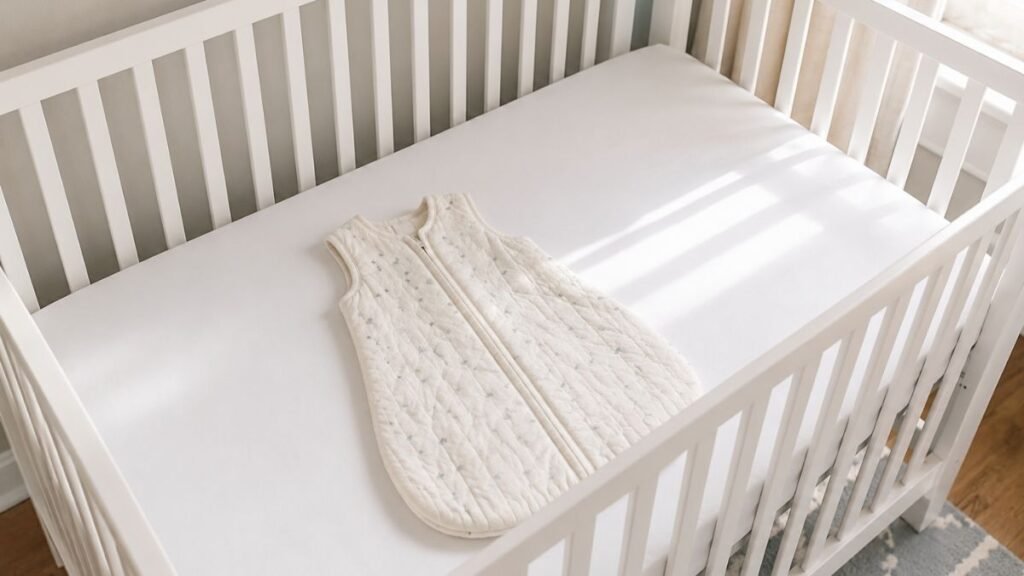
Notes: The crib mattress is not the place to save money. A firm, flat mattress that fits the crib with no more than two fingers of gap at the sides is non-negotiable for safe sleep. Loose blankets, pillows, bumper pads, and sleep positioners do not belong in the sleep space under AAP guidelines. A sleep sack is the safe blanket alternative.
Feeding Essentials
Breastfeeding:
| Item | Essential or Nice to Have | Quantity |
|---|---|---|
| Breast pump | Essential (often covered by insurance — check first) | 1 |
| Nursing bras | Essential | 3–4 |
| Nursing pads (disposable or reusable) | Essential | 1 box or 6–8 pairs |
| Nipple cream (lanolin or alternatives) | Essential | 1–2 |
| Nursing pillow | Nice to have | 1 |
| Hands-free pumping bra | Nice to have | 1–2 |
| Milk storage bags | Nice to have if pumping | 1 box |
| Haakaa / silicone milk collector | Nice to have | 1 |
Bottle Feeding / Combo Feeding:
| Item | Essential or Nice to Have | Quantity |
|---|---|---|
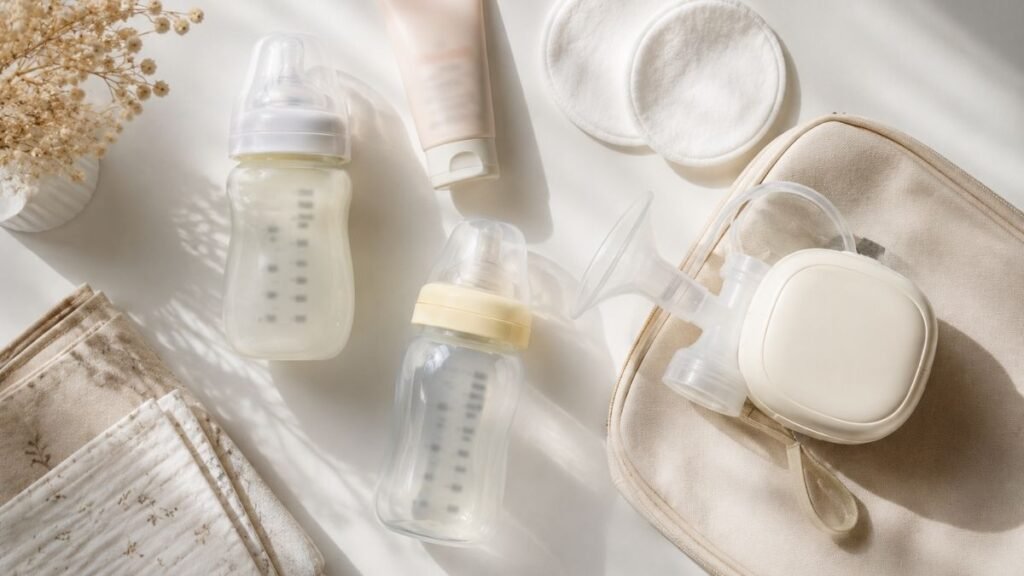
| Bottles (2–3 different brands) | Essential | 4–6 total |
| Bottle brush | Essential | 1–2 |
| Drying rack | Essential | 1 |
| Formula (if not breastfeeding) | Essential | 1–2 cans starter |
| Bottle sterilizer | Nice to have | 1 |
| Bottle warmer | Optional | 1 |
A note on bottles: <cite index=”44-1″>Babies can be surprisingly picky about nipple shapes. Register for 4 to 6 bottles from 2 to 3 different brands to find what your baby prefers. Don’t stockpile until you know which one works.</cite>
Diapering & Hygiene
| Item | Essential or Nice to Have | Quantity |
|---|---|---|
| Diapers — Newborn | Essential | 1–2 packs (not too many) |
| Diapers — Size 1 | Essential | 2–3 packs |
| Diapers — Size 2 | Add to registry | 1–2 packs |
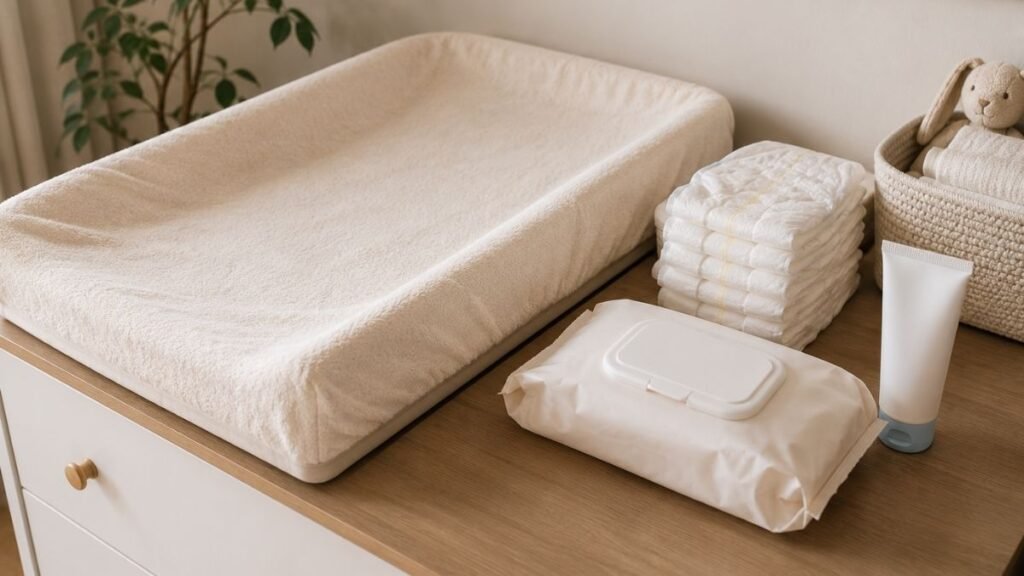
| Fragrance-free wipes | Essential | 3–4 packs/boxes |
| Zinc oxide diaper cream | Essential | 2 tubes |
| Changing pad with cover | Essential | 1 |
| Portable changing pad | Nice to have | 1 |
| Diaper pail | Nice to have | 1 |
| Diaper caddy/organizer | Nice to have | 1 |
| Infant bathtub | Essential | 1 |
| Hooded towels | Essential | 2–3 |
| Soft washcloths | Essential | 6–8 |
| Fragrance-free baby wash/shampoo | Essential | 1–2 |
| Nail file or baby nail trimmer | Essential | 1 |
| Nasal aspirator (Frida NoseFrida) | Essential | 1 |
Getting Dressed
| Item | Essential or Nice to Have | Quantity |
|---|---|---|
| Newborn onesies | Essential | 4–6 |
| 0–3M onesies | Essential | 6–8 |
| 0–3M sleepers/footies | Essential | 4–6 |
| Newborn hats | Essential | 2–3 |
| Scratch mitts | Essential | 2–3 pairs |
| Socks | Essential | 6–8 pairs |
| Seasonal outerwear | If applicable | 1 |
<cite index=”37-1″>Most newborn sizes top out around 8 pounds. If you have a bigger baby, they may need 0-3 month sizes from the start. Focus on 0-3 months since those clothes will fit babies up to around 12 or 13 pounds.</cite>
Travel & Leaving the House
| Item | Essential or Nice to Have | Quantity |
|---|---|---|
| Infant car seat | Essential | 1 |
| Stroller (compatible with car seat) | Essential | 1 |
| Baby carrier or wrap | Essential | 1 |
| Diaper bag | Essential | 1 |
| Stroller blanket | Nice to have | 1 |
| Car window shades | Nice to have | 2 |
Health & Safety Basics
| Item | Essential or Nice to Have | Quantity |
|---|---|---|
| Rectal thermometer | Essential | 1 |
| Baby-safe pain reliever (infant acetaminophen) | Have on hand | 1 |
| Humidifier (cool mist) | Nice to have | 1 |
| Outlet covers | Essential before crawling | 1 pack |
| Baby-safe laundry detergent | Essential | 1 bottle |
Baby Comfort & Play
| Item | Essential or Nice to Have | Quantity |
|---|---|---|
| Bouncer seat | Nice to have | 1 |
| Play gym / activity mat | Nice to have | 1 |
| Pacifiers (2–3 different styles to test) | Nice to have | 2–3 |
| Board books | Nice to have | 4–6 |
| Baby swing | Optional | 1 |
| Soft toys | Nice to have | 2–3 |
How Many Do You Actually Need? A Simple Quantity Guide
This is the section most registry guides get wrong — they either give you a vague “a few” or a number so high you’ll never use them all.
Diaper Consumption by Size
| Diaper Size | Baby Weight Range | Average Per Day | How Long It Lasts |
|---|---|---|---|
| Newborn | Up to 10 lbs | 8–12 | 1–4 weeks |
| Size 1 | 8–14 lbs | 8–10 | ~6–10 weeks |
| Size 2 | 12–18 lbs | 8–9 | ~8–12 weeks |
| Size 3 | 16–28 lbs | 6–8 | Many months |
Registry tip: Register for 1 to 2 packs of newborn and 3 to 4 packs of Size 1. Add larger sizes to your registry but don’t stock up until you know your baby’s growth pace. Babies can skip a size or stay in one size longer than average.
Clothing Quantities
| Item | Recommended Quantity | Reality Check |
|---|---|---|
| Newborn onesies | 4–6 | Skip if baby is predicted large |
| 0–3M onesies | 6–8 | This is the most-used size |
| Sleepers | 4–6 per size | You’ll use these daily |
| Fancy outfits | 1–2 per size | People will gift these anyway |
| Socks | 8–10 pairs | They disappear constantly |
I have a friend who washed newborn onesies every other day because she had bought 20 of them. She used exactly 6. Her baby was born weighing 8 lbs 10 oz and wore newborn size for exactly 11 days. Don’t be that person. Register for a few and focus on the 0-3M range.
Burp Cloths, Swaddles, and Bibs
| Item | Minimum | Comfortable Amount |
|---|---|---|
| Burp cloths | 6 | 10–12 |
| Swaddle blankets | 4 | 6–8 |
| Bibs | 4 | 6–8 |
| Pacifiers | 2 | 3–4 (test different shapes) |
Registry Essentials vs. Nice-to-Haves
Instead of a product list, here’s a decision framework:
Must Register Before Baby Arrives
These are the things you’ll need from Day 1. Don’t show up at home without them:
- Infant car seat (hospital requires this to discharge)
- Safe sleep surface with firm flat mattress
- Fitted sheets and swaddles
- Diapers and wipes
- Onesies and sleepers
- Fragrance-free wash and thermometer
- Feeding supplies matching your intended method
Helpful But Can Wait
These make life easier but aren’t day-one emergencies:
- Bouncer or swing (test what your baby likes first)
- Baby monitor (buy after you’ve settled at home and assessed your space)
- High chair (you won’t need this until 4 to 6 months)
- Play gym (useful starting around 6 to 8 weeks)
Skip Unless You Know You’ll Need It
These require knowing your baby’s temperament and your lifestyle first:
- Baby food maker (a blender works fine when the time comes)
- Bottle warmer (warm water works; many babies accept room temp)
- Diaper pail (a regular trash can with a lid is fine for many families)
- Wearable pump (useful for working moms specifically)
The Anti-Checklist: Baby Products Most Families Never End Up Using
Bottle warmer: Why people buy it: It sounds convenient. Warm milk seems nicer. Why families often regret it: Most babies don’t care about temperature. A bowl of warm water achieves the same result without an appliance that takes up counter space, needs to be cleaned, and uses electricity. Better alternative: Run the sealed bottle under warm tap water for 2 minutes.
Wipe warmer: Why people buy it: Cold wipes seem like they’d startle a sleeping baby. Why families often regret it: <cite index=”43-1″>Warmers dry out baby wipes faster, so you’ll have to buy more than you otherwise would. It also gets your baby accustomed to warm wipes, which is hard to maintain while on-the-go.</cite> Better alternative: Your hands warm a wipe in about 5 seconds.
Baby shoes for newborns: Why people buy them: They are objectively the most adorable things that exist. Why families often regret it: Babies don’t walk. Shoes fall off constantly. Socks or soft booties do the same job for a fraction of the price. Better alternative: Two packs of socks. Save the shoes money for when they’re actually walking.
Crib bumpers: Why people buy them: They look sweet and seem protective. Why families regret it: The AAP explicitly advises against them. They’re a documented suffocation risk with no safety benefit. Many parents who register for them never use them once they read the guidelines. Better alternative: Nothing. The empty crib is the safe crib.
Sleep positioners or wedges: Why people buy them: Reflux concerns, flat head anxiety, wanting baby to “stay in place.” Why families regret it: The AAP does not recommend them. Sleep surfaces should be firm and flat. Wedges change that. Better alternative: For reflux concerns, discuss positioning during wake time with your pediatrician.
20+ newborn outfits: Why people buy them: They’re tiny and adorable and you want your baby dressed perfectly. Why families regret it: Newborns wear the same 5 onesies on rotation. The cute outfits are put on, spit-up on within 10 minutes, and never worn again. Better alternative: Register for the basics. Let people gift the cute stuff at the shower.
Registry for Mom: Don’t Forget the Person Recovering After Birth
This is the section that gets one paragraph in most registry guides and should get its own full H2. The postpartum period is a physical recovery from a major medical event — and most baby registries are built entirely for the baby.
Postpartum Recovery
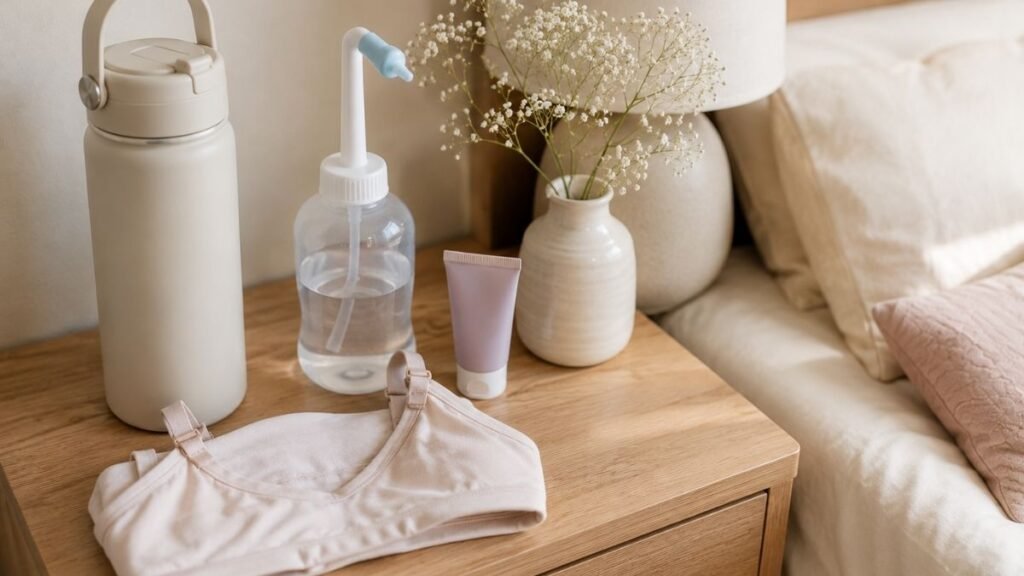
- Peri bottle (hospital gives you one, but having a backup at home is useful)
- Postpartum ice packs / perineal cooling pads
- Sitz bath kit
- Stool softeners (your OB will recommend; add to your list before you need them)
- Comfortable, high-waisted underwear in a larger size than usual
Breastfeeding Support
- 3 to 4 nursing bras in your estimated postpartum size (go up a cup)
- Nursing pads for leaking — disposable for early weeks, reusable later
- Nipple cream (lanolin-based or alternative)
- Hands-free pumping bra (game-changing for working moms)
Comfort Items
- A large insulated water bottle — nursing makes you intensely thirsty
- Healthy, easy-to-eat snacks accessible without using both hands
- A good reading light or book light for nighttime feeding sessions
Mental Load Helpers
- Meal delivery gift cards — more useful than most baby gadgets
- Grocery delivery subscription (Instacart, Amazon Fresh)
- House cleaning service for the first month
Baby shower guests often want to do something practical for the parents. A meal delivery card or a cleaning service contribution is genuinely more useful than a fifth set of burp cloths. Let people know these are on the list.
Small Apartment or Tight Budget? Here’s a Smarter Registry
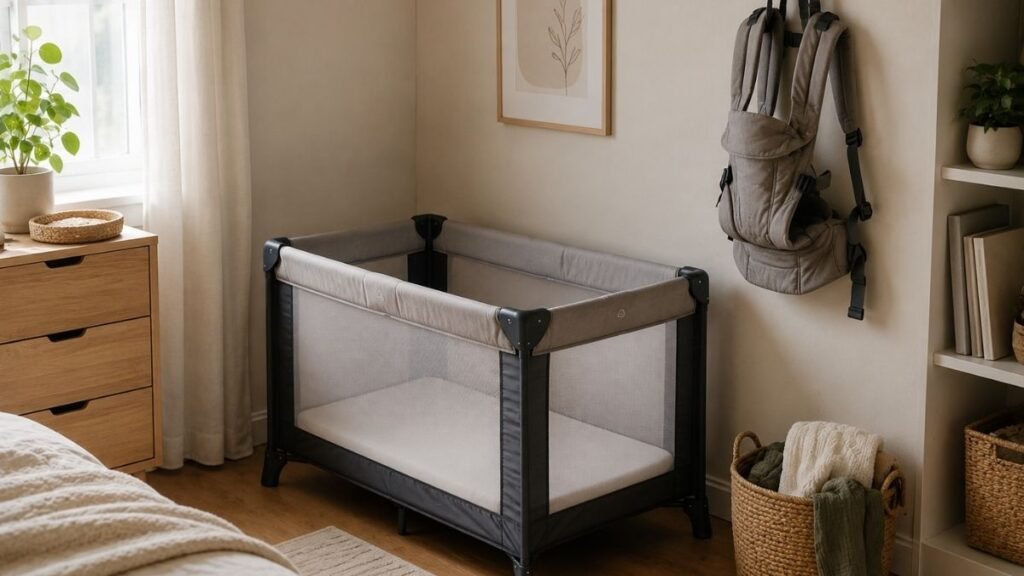
When I moved into my apartment before my first baby, the “nursery” was a corner of our bedroom. There was no room for a dedicated changing table, no room for a dresser-height storage tower, and definitely no room for a swing and a bouncer and a rock-and-play.
Here’s how to build a registry that works in real space.
Multi-Purpose Gear First
- A portable play yard (Pack ‘n Play) can serve as crib, bassinet, travel bed, and play space — four products in one
- A dresser with a changing pad on top replaces a dedicated changing table while adding storage
- A baby carrier replaces a stroller for urban, small-space living where a full-size stroller is impractical
Foldable and Collapsible Options
- Foldable baby bath (stores flat under the sink)
- Collapsible play gym that packs away between sessions
- Folding high chair that hangs on the table (no floor footprint)
Convertible Furniture
- Convertible crib that transitions to a toddler bed — costs more upfront, lasts years longer
- Growth-adjustable high chair (Stokke Tripp Trapp, OXO Tot) — goes from infant to adult chair
Borrow Instead of Buy
- Swings and bouncers: borrow from a friend to test before committing. Some babies love them; some don’t.
- Baby carriers: borrow different styles to find what you and your baby prefer before buying
Where Spending More Actually Saves Money
Some items are worth the higher upfront cost because of longevity:
- Car seat: A convertible seat works from newborn through toddler. Buying an infant seat and then a convertible seat later is more expensive total.
- Quality carrier: A well-made structured carrier outlasts a cheap one significantly.
- Convertible crib: More expensive than a standard crib, but you won’t buy a toddler bed.
Which Baby Items Are Safe to Buy Secondhand?
| Item | Secondhand OK? | Notes |
|---|---|---|
| Baby clothes | ✅ Yes | Wash before use |
| Burp cloths and swaddles | ✅ Yes | Wash before use |
| High chair | ✅ Yes | Check for recalls |
| Baby bouncer or swing | ✅ Yes | Check for recalls, test straps |
| Play gym | ✅ Yes | Inspect for damage |
| Board books | ✅ Yes | Perfect secondhand |
| Baby carrier | ✅ Maybe | Inspect stitching and buckles carefully |
| Crib | ⚠️ Caution | Must meet current safety standards; no drop-side cribs |
| Crib mattress | ❌ No | New mattress recommended; linked to increased SIDS risk if used |
| Car seat | ❌ No | No way to verify accident history; expiration dates matter |
| Breast pump parts | ❌ No | Tubing and membranes should be new; motors can be registered through insurance |
| Bottle nipples | ❌ No | Replace with new |
Smart Registry Tips to Save Hundreds of Dollars
Completion Discount: Most major registries (Amazon, Target, Babylist, Buy Buy Baby) offer a completion discount — 10 to 15% off unpurchased registry items — in the final 4 to 8 weeks before your due date. Add everything you want to the registry even if you plan to buy it yourself. Then use the completion discount when the time comes.
Welcome Boxes: Amazon Baby, Target Circle, and Babylist all offer free welcome boxes or gift cards when you create a registry. These often include sample products worth $20 to $50.
Group Gifting: <cite index=”44-1″>Your parents, in-laws, and family members may want to contribute to a big-ticket item rather than buying 10 small things.</cite> Add your car seat, stroller, and crib to the registry with group gifting enabled — these items are natural candidates for group contributions.
Registry Sync: Babylist is a universal registry platform that lets you add items from any store — Amazon, Target, local boutiques, anywhere — into a single list. This gives guests one link instead of managing multiple registries.
Cash Funds: If you’d rather have flexibility, add a cash fund (Babylist supports this) for specific categories like diapers, childcare, or a family experience. Many guests genuinely prefer giving money toward something they know you’ll use.
Timing Purchases: Don’t purchase everything at once. Buy newborn sizes and stage-one items before birth. Buy larger clothing sizes, high chairs, and play equipment closer to when you’ll need them — you’ll understand your baby’s preferences better and may find sales.
Avoiding Duplicate Gifts: Create a registry that’s specific enough (brand, size, color) that guests don’t guess and buy the wrong version. Vague registry items — “baby clothes” — lead to duplicates of things you don’t need.
Your Baby Registry Doesn’t Have to Be Perfect
The first time I added items to my registry, I second-guessed every single one. Is this the right brand? Are there too many? Not enough? Should I read 47 reviews before adding a $14 burp cloth?
Here’s the thing: you can always add later. You can return things. You can exchange the duplicate gift. You can order diapers in a different size the moment you realize you bought too many newborns.
No registry is complete before the baby arrives — because you don’t fully know what your baby will like, how they’ll eat, or what your home will feel like with them in it. The parents who are most at peace with their registry are usually the ones who registered for the essentials, gave guests enough options, and then updated it as they learned more.
Babies don’t notice the brand. They don’t care about the aesthetic. They want to be warm, fed, clean, and held. Most of what you register for is for your logistics, not theirs.
Build the registry that helps you. Edit it as you go. Don’t let it become another source of prenatal anxiety.
FAQ
When should I start my baby registry, and when should I share it? Start building around 20 to 24 weeks. Share it when you announce your shower — typically when guests receive invitations around weeks 28 to 32. If family asks before your shower date, share it then. You can keep editing it after you share.
How many newborn clothes does a baby actually need? Honestly? Four to six newborn onesies and four to six 0-3M sleepers will get you through the early weeks. Register for a small number of newborn items — you don’t know how big your baby will be — and focus heavily on the 0-3M size range. People will gift cute clothes at the shower anyway.
Is it okay to add expensive baby gear to my registry? Absolutely. Add the car seat. Add the stroller. Add the crib. These are exactly the items guests want to contribute to through group gifting. Most registries now support group contributions where multiple people chip in toward one expensive item.
Which baby products are safe to buy secondhand? Clothes, books, bouncers, swings, high chairs, and play gyms are generally fine secondhand. Car seats and crib mattresses should always be new. See the full secondhand guide above.
What should I do if I receive duplicate baby gifts? Return one, exchange for a different size or quantity, or convert the store credit toward something on your completion list. Most major baby retailers allow returns within 90 days with a gift receipt. Don’t feel obligated to keep both.
Should I register for diapers in every size? Register for a few packs of Newborn and Size 1 before baby arrives. Add Size 2 and 3 to the registry, but ask for them after birth once you know how quickly your baby is growing. Newborn size fits roughly 0 to 10 lbs — many babies skip it entirely.
Can I create more than one baby registry? Yes. Many families create both an Amazon registry and a Babylist registry (or Target registry), which gives guests more flexibility on where to shop. Babylist lets you pull in items from any store, which is the easiest single-link option.
What if my baby arrives before I finish my registry? It happens more than you’d think. Completion discounts kick in close to your due date, so you can still purchase remaining items at a discount after birth. Your pediatrician, lactation consultant, and honest friends with babies are excellent sources for filling in the gaps once you know your baby.
💛 Kindyly’s Registry Note
Over the years, we’ve noticed that the happiest new parents rarely have the biggest registries—they have the most practical ones. Babies grow, preferences change, and many “must-have” products turn out to be unnecessary for your family.
If you’re unsure whether to add something, ask yourself one simple question:
“Will this make caring for my baby safer, easier, or more comfortable during the first three months?”
If the answer is yes, it probably deserves a place on your registry. If not, it’s perfectly okay to wait. Most baby products can be purchased later, but peace of mind is much harder to buy.
💛 Kindyly Tip
If you’re unsure whether something belongs on your registry, ask yourself one question:
“Will I use this every week during the first three months?”
If the answer is no, it probably doesn’t belong in your essentials list.
What to Read Next
- Safe Sleep for Babies: The Complete AAP-Based Guide — Before you finalize your sleep setup on the registry, make sure everything you’ve chosen meets the 2022 AAP safe sleep guidelines
- Newborn Baby Care: The Complete Guide for First-Time Parents — Once the registry is built and baby is home, this is your go-to guide for the first weeks
- Breastfeeding and Pumping Schedule: Realistic Plans That Protect Your Milk Supply — If you’re registering for a pump and nursing supplies, this guide helps you figure out what you’ll actually use
Every family begins parenthood differently, and no registry will ever be one-size-fits-all. Choose what supports your baby’s safety, your family’s lifestyle, and your own peace of mind. The goal isn’t to own everything—it’s to feel confident with what truly matters.
Thank you for trusting Kindyly. We’re here to help you navigate parenthood with practical guidance, evidence-based advice, and a little more confidence every step of the way.