

You’re standing in the formula aisle — or scrolling through it at midnight — and you are overwhelmed. There are at least fifteen options. Some say “gentle.” Some say “sensitive.” Some cost $45 a can and some cost $18. One has a picture of a brain on it. One says it’s “closest to breast milk.” One is organic and one is European and you have no idea what any of it actually means for your baby.
And underneath all the label-reading is a quieter question, the one that’s harder to say out loud: am I making the right choice for my baby?
Here’s what I want to tell you before we get into any of this: the formula decision is genuinely less complicated than the marketing makes it appear. Every formula sold in the United States must meet strict FDA nutritional standards — which means the baseline nutrition your baby gets from any FDA-approved formula is essentially the same. The differences between formulas are real but narrower than the price gaps suggest.
This guide cuts through the marketing to tell you what actually matters when choosing a formula for your newborn, what the different types are and when each one is appropriate, how formula compares to breast milk, and how to know when — and whether — to switch.
Key Takeaways
- <cite index=”39-1″>The AAP recommends that iron-fortified formula be used for all infants who are not breastfed, or who are only partially breastfed, from birth to one year of age.</cite> This is the single most important guideline in formula selection.
- <cite index=”40-1″>Thanks to strict nutrition regulations, any formula sold in the U.S. must contain all the essential nutrients your baby needs in their first year to help them grow.</cite> The biggest differences between formulas are in protein types and additional ingredients — not in core nutrition.
- <cite index=”41-1″>Almost all babies do well on cow’s milk-based formulas.</cite> Specialty formulas are for specific medical situations, not general preference.
- <cite index=”40-1″>Most babies do fine switching between formula brands when needed.</cite> You don’t need to transition gradually if you need to switch.
- Expensive does not mean better. Store-brand formulas meet the same FDA nutritional standards as name brands and cost significantly less.
Formula vs. Breast Milk: The Honest Comparison

Before we talk about which formula to choose, it’s worth addressing the comparison that’s on many parents’ minds — especially those who are supplementing breastfeeding, or who started formula-feeding after trying to breastfeed and feeling like they “failed.”
Breast milk and formula are both valid ways to nourish your baby. They are not equal in every respect — but formula is not inferior in the ways that matter most for your baby’s day-to-day health and development.
What breast milk has that formula doesn’t: Breast milk contains living immune cells, antibodies, and human milk oligosaccharides (HMOs) that adapt in real time to your baby’s needs and your environment. These components support immune function in ways that formula cannot fully replicate. Breastfed babies have somewhat lower rates of certain infections, ear infections, and respiratory illnesses in the research literature. These are real differences.
What formula has that breast milk doesn’t: Formula composition is precisely controlled and consistent. You know exactly what’s in it. It doesn’t vary based on maternal diet, stress, hydration, or time of day. Any caregiver can feed the baby, which matters enormously for parental mental health and relationship equity.
The bottom line: Both support healthy growth and development. The research on long-term outcomes — IQ, emotional development, adult health — shows much smaller differences than the cultural narrative around “breast is best” implies, especially when confounding factors are accounted for. A baby who is well-fed, loved, and thriving is doing well regardless of what’s in the bottle.
If you’re combining breastfeeding and formula feeding: this is extremely common and entirely fine. There’s no minimum breastfeeding threshold below which it stops being beneficial — any breast milk provides some immune benefit. Feed your baby in the way that works for your family.
The 4 Main Types of Baby Formula: What They Are and Who They’re For
Cow’s Milk-Based Formula — The Default Starting Point
<cite index=”41-1″>Cow’s milk-based formulas are made with cow’s milk protein that has been changed to be more like breast milk. They contain lactose (a type of sugar in milk) and minerals from the cow’s milk, plus vegetable oils and vitamins and minerals.</cite>
This is the right starting point for the vast majority of full-term, healthy newborns. The cow’s milk protein is modified to have a whey-to-casein ratio closer to breast milk, making it more digestible than regular cow’s milk. Most standard formulas — Similac 360 Total Care, Enfamil NeuroPro, Earth’s Best Organic, store-brand equivalents — fall into this category.
Who it’s for: Most babies. Start here unless your pediatrician has a specific reason to recommend otherwise.
Partially Hydrolyzed Formula (“Gentle” or “Sensitive”)
These formulas have cow’s milk protein partially broken down — “pre-digested” to some degree — which some babies with mild sensitivity to standard formula find easier to tolerate. They’re marketed heavily for gas, fussiness, and colic.
The important caveat: <cite index=”41-1″>fussiness and colic are common problems for all babies. Most of the time, cow’s milk formulas are not the cause of these symptoms. This means you likely do not need to switch to a different formula if your baby is fussy.</cite>
Who it’s for: Babies with documented sensitivity to standard cow’s milk protein — persistent gas, fussiness, or digestive discomfort that doesn’t improve after 1 to 2 weeks on standard formula. Not for every fussy baby.
Extensively Hydrolyzed / Hypoallergenic Formula
The protein is broken down much more completely — to the point where most babies with cow’s milk protein allergy (CMPA) can tolerate it without reaction. These formulas (Nutramigen, Alimentum, PurAmino) are significantly more expensive and have a notably different taste and smell.
Who it’s for: Babies with diagnosed cow’s milk protein allergy, severe eczema related to food protein, or persistent bloody stools. This is a medical formula, prescribed or recommended by a pediatrician — not a general upgrade. <cite index=”41-1″>Babies who are allergic to cow’s milk may also be allergic to soy milk.</cite>
Soy-Based Formula
Made with soy protein rather than cow’s milk protein. <cite index=”39-1″>The AAP believes there are few circumstances in which soy formula should be chosen instead of cow’s milk-based formula.</cite> Soy formula is appropriate for babies with galactosemia (a rare metabolic disorder) or for families who choose to avoid animal products. <cite index=”39-1″>There is no evidence to support the belief that soy formula might prevent or ease the symptoms of colic or fussiness.</cite>
Who it’s for: Specific medical indications or strict vegetarian/vegan families. Not a solution for general fussiness or perceived milk sensitivity.
How to Read a Formula Label: What Actually Matters
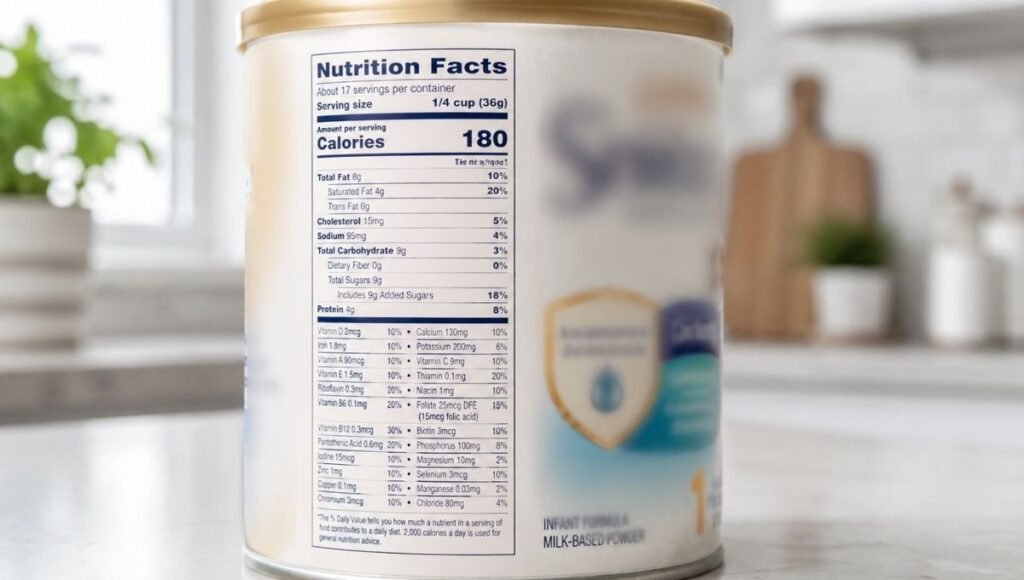
Walk into any formula aisle and you’ll encounter a vocabulary designed to trigger purchasing decisions. Here’s what the terms actually mean.
Iron-fortified — Non-negotiable. <cite index=”44-1″>Iron-fortified infant formulas are recommended. Most commercial infant formulas sold in the United States contain iron.</cite> <cite index=”39-1″>Low-iron formulas should not be used.</cite> If you see a formula marketed as “low iron,” do not buy it regardless of other claims.
DHA and ARA — <cite index=”39-1″>Most formulas have DHA (docosahexaenoic acid) and ARA (arachidonic acid) added to them — fatty acids believed to be important for brain and eye development.</cite> These are found in breast milk and are standard in virtually all modern formulas. They’re a baseline, not a premium feature.
“Gentle,” “Sensitive,” “Easy to Digest” — Marketing language for partially hydrolyzed protein formulas. May help some babies; not necessary for most.
Probiotics — <cite index=”39-1″>Some formulas are fortified with probiotics. There is no strong evidence of benefit from the use of these formulas.</cite> They’re not harmful, but they’re not proven either.
“Closest to breast milk” — Regulatory language prevents any formula from making this claim directly, but it’s implied everywhere. The reality: all formulas are significantly different from breast milk in ways that matter (no living cells, no adaptive antibodies), and no formula is meaningfully “closer” to breast milk than another in the ways that actually affect your baby’s health outcomes.
Organic — Organic formula meets USDA organic standards for its ingredients, which means no synthetic pesticides or fertilizers in the agricultural inputs. This is a values decision, not a nutrition decision. The macronutrient and micronutrient content is regulated to the same standard as non-organic formula.
European formula — European formula meets EU standards, which differ somewhat from FDA standards in areas like DHA sourcing and sugar types. European formulas are not more nutritious; they’re different-but-equivalent. Some parents prefer them for specific reasons. They’re not FDA-approved, which is a relevant consideration.
Store Brand vs. Name Brand: The Answer Is Simpler Than You Think

<cite index=”40-1″>Any formula sold in the U.S. must contain all the essential nutrients your baby needs in their first year to help them grow.</cite> This means store-brand formulas — Kirkland (Costco), Member’s Mark (Sam’s Club), Up & Up (Target), Parent’s Choice (Walmart) — meet the same FDA nutritional standards as Similac and Enfamil.
The cost difference is substantial. Name-brand formula can cost 30 to 50% more than store-brand equivalents for the same core nutrition.
The practical answer: Start with a store-brand cow’s milk-based iron-fortified formula. If your baby tolerates it well — gaining weight, settling after feeds, no persistent digestive distress — you’ve found your formula. There is no nutritional reason to pay more for a name brand.
If your baby has specific issues that require a specialty formula, your pediatrician will guide you toward the appropriate product regardless of brand.
When (and How) to Switch Formulas
Formula-switching anxiety is one of the most common experiences in new parent forums. The mental model many parents have is that formula switching is risky and disruptive. The actual guidance is more reassuring.
<cite index=”40-1″>Most babies do fine switching between formula brands when needed, according to the CDC. It’s not necessary to transition gradually, especially if your little one may be allergic to their current formula.</cite>
Valid reasons to consider switching:
- Persistent digestive distress (gas, fussiness, hard stools) that continues after 2 weeks on the current formula
- Signs of possible cow’s milk protein allergy: bloody stools, significant skin rash (eczema), persistent vomiting beyond normal spit-up
- Formula unavailability (the 2022 formula shortage normalized switching brands out of necessity)
- Cost — switching to an equivalent store-brand formula is a completely legitimate reason
Not valid reasons to switch:
- Normal newborn fussiness, which occurs regardless of formula type
- General hope that a different formula will “fix” unsettled behavior without a specific, documented digestive issue
- Marketing claims about one formula being “closer to breast milk” or “gentler”
<cite index=”40-1″>Switching formulas can be stressful, but it’s a good idea to consider trying a new formula if your baby is always fussy, needs more iron, or has certain food allergies. Talk to your child’s doctor before making a switch — they can help you come up with a plan.</cite>
How Much Formula Does a Newborn Need?

<cite index=”41-1″>Start newborns with 2 to 3 ounces (60 to 90 milliliters) of formula per feeding, for a total of 16 to 24 ounces per day. The baby should be up to at least 4 ounces (120 milliliters) per feeding by the end of the first month.</cite>
A useful rule of thumb: <cite index=”41-1″>on average, the baby should consume about 2½ ounces (75 milliliters) of formula for every pound (453 grams) of body weight.</cite>
So a 7-pound newborn needs roughly 17 to 18 ounces of formula per day, divided across 8 to 10 feeds.
Watch for fullness cues, not the bottom of the bottle. Formula-fed babies are at higher risk of overfeeding because the flow is continuous and it can be tempting to encourage them to finish what’s in the bottle. Slow down, watch for cues that your baby is satisfied — pulling away from the nipple, relaxing their body, stopping active sucking — and don’t push them to finish.
Warning Signs: When to Call Your Pediatrician
Contact your pediatrician promptly if your formula-fed baby shows:
- Blood in the stool — red streaks or a pink tinge in the diaper, which can indicate cow’s milk protein allergy
- Significant vomiting — projectile vomiting that shoots out rather than dribbles (normal spit-up is different from this)
- Severe, persistent rash — particularly eczema that spreads or doesn’t respond to basic treatment
- Failure to gain weight — if your baby is not gaining weight appropriately on their current formula
- Refusal to feed combined with significant discomfort
- Any concern about signs of allergic reaction after introducing a new formula
<cite index=”44-1″>If you have questions about choosing an infant formula for your baby, or want to switch infant formula brands or types, talk to your pediatrician.</cite>
FAQ: What Parents Actually Ask About Baby Formula
Is expensive formula better than cheap formula? No — not in terms of core nutrition. Every formula sold in the US meets the same FDA minimum nutritional standards. Store-brand formulas provide equivalent nutrition to name brands at 30 to 50% lower cost. Price reflects marketing and brand investment, not nutritional quality.
What formula is closest to breast milk? No formula is close to breast milk in the ways that matter most — breast milk contains living immune cells and adaptive antibodies that no formula can replicate. Among formulas, they all meet similar nutritional standards. This marketing claim doesn’t correspond to a meaningful nutritional difference.
Can I switch formula brands without transitioning gradually? Yes. Most babies handle brand switches without a gradual transition period. If you’re switching from standard cow’s milk formula to a specialty formula (hydrolyzed or soy), your pediatrician may have specific guidance, but brand-to-brand switches within the same category are generally straightforward.
Does formula cause constipation? Formula-fed babies tend to have firmer stools than breastfed babies — this is normal. True constipation (hard, pellet-like stools with visible straining and distress) can occur but is not inevitable. <cite index=”39-1″>The amount of iron in infant formula does not contribute to constipation or upset stomach,</cite> despite common concern about iron.
Is organic formula worth it? Organic formula meets the same FDA nutritional standards as conventional formula. The “organic” designation refers to how the agricultural ingredients were grown — without synthetic pesticides or fertilizers. This is a values decision. If the cost is manageable and it matters to you, it’s a valid choice. It is not nutritionally superior to conventional formula.
What about European formula? European formulas meet EU standards, which differ from FDA standards in some areas. They are not FDA-approved, which is a regulatory consideration. Some parents prefer them for specific reasons (different sugar sources, DHA sourcing). They are not more nutritious than US formulas. If you choose European formula, ensure you’re purchasing from a reputable source to avoid counterfeit products.
The Formula You Can Actually Find and Afford Is the Best Formula
After everything — the label analysis, the type comparison, the brand vs. store-brand debate — here’s the thing that actually matters most: the best formula for your newborn is the one they tolerate, that you can consistently access, and that fits your budget.
A parent who is stressed about formula costs or who is spending hours comparing products is not better positioned to care for their baby than a parent who picked the store-brand iron-fortified cow’s milk formula, confirmed their baby was gaining weight, and moved on.
The formula aisle is overwhelming by design. The nutritional differences between most formulas are much smaller than the marketing gap. Start simple. Watch your baby. Trust your pediatrician. And know that feeding your baby — in whatever way works for your family — is exactly the right thing to do.
What to Read Next
- Newborn Feeding Schedule: How Much & How Often, Week by Week — Whether you’re formula feeding or combination feeding, this guide covers how often and how much your newborn needs at each stage
- Newborn Spitting Up a Lot: What’s Normal, What’s Not & What Helps — Spit-up is common in formula-fed babies — here’s how to tell what’s normal and what warrants attention
- Baby Gas Relief: Why Your Newborn Is So Gassy and What Actually Helps — Formula-fed babies often experience more gas than breastfed babies — this covers what helps
References
- American Academy of Pediatrics. Choosing an Infant Formula. HealthyChildren.org, updated 2023. https://www.healthychildren.org/english/ages-stages/baby/formula-feeding/pages/choosing-an-infant-formula.aspx
- Centers for Disease Control and Prevention. Choosing an Infant Formula. Updated April 2026. https://www.cdc.gov/infant-toddler-nutrition/formula-feeding/choosing-a-formula.html
- Consumer Reports. Baby Formula Buying Guide. Updated March 2026. https://www.consumerreports.org/babies-kids/baby-formula/buying-guide/
- MedlinePlus / National Library of Medicine. Infant Formulas. https://medlineplus.gov/ency/article/002447.htm
- Kleinman RE, et al. Recommended Iron Levels for Nutritional Formulas for Infants. Journal of Pediatrics, 2015. doi:10.1016/j.jpeds.2015.09.001
This article is for informational purposes only and does not constitute medical advice. Always consult your pediatrician with specific questions about formula choice, switching, or your baby’s feeding needs.