
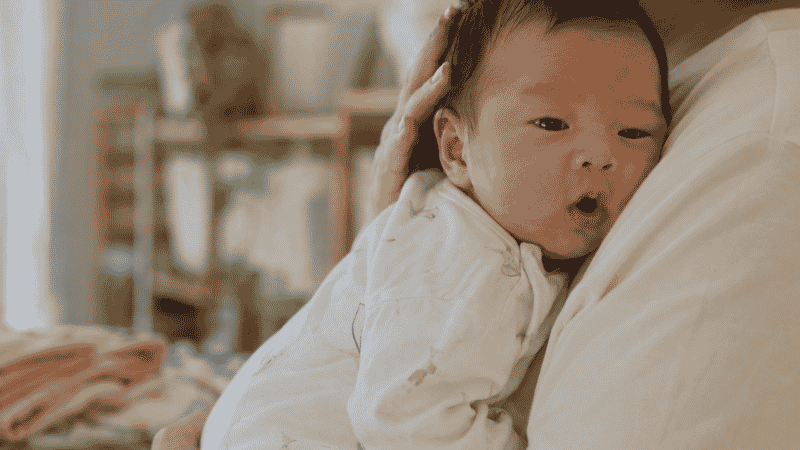
Your baby just finished nursing. They’re warm, milk-drunk, contentedly drowsy — and then it starts. Hic. Hic. Hic. Their whole tiny body jolts with each one, and you watch their face scrunch in surprise at the interruption.
Your first instinct is probably to do something. Fix it. Stop it. Make sure they’re okay.
Here’s what you need to hear first: newborn hiccups are almost always completely harmless. In fact, your baby has been hiccupping since before they were born — fetal ultrasounds can detect hiccups as early as 9 to 10 weeks gestation. By the time your baby arrived earthside, hiccupping was already something they’d been doing for months. It’s one of the most normal things a newborn does.
That said, watching your baby hiccup repeatedly can feel uncomfortable, and if it happens after every feeding or seems to go on for a long time, the questions pile up fast. This guide answers all of them: what causes newborn hiccups, what actually helps stop them, how to prevent them from happening so often, and the specific signs that warrant a call to your pediatrician.
Key Takeaways
- Newborn hiccups are completely normal and often begin in the womb — as early as 9 to 10 weeks gestation.
- They are caused by an immature diaphragm reacting to stimulation — usually from feeding too quickly, swallowing air, or a full stomach pressing against the diaphragm.
- Most bouts of baby hiccups resolve on their own within 5 to 10 minutes without any intervention.
- The most effective preventive measures are feeding before your baby becomes very hungry, burping during feeds, and keeping your baby upright for 20 to 30 minutes after feeding.
- Hiccups that persist for several hours, interfere with feeding or sleep, or are accompanied by distress, coughing, or arching deserve a conversation with your pediatrician.
Why Do Newborns Get Hiccups? The Simple Science
A hiccup is an involuntary spasm of the diaphragm — the dome-shaped muscle that sits below the lungs and controls breathing. When something irritates or stimulates the diaphragm, it contracts suddenly. Air rushes in, the epiglottis (a flap at the top of the airway) snaps shut, and that sharp “hic” sound is made.
In newborns, hiccups happen so frequently because the diaphragm and the nervous system that controls it are still developing. The reflex that triggers hiccupping is highly sensitive in early infancy — easily set off by the most ordinary things. As the digestive and nervous systems mature over the first months of life, hiccup frequency naturally decreases.
What Actually Triggers Baby Hiccups
Most newborn hiccups are connected to feeding in some way:
Swallowing air. When babies feed — especially if they’re feeding fast, have a shallow latch, or are drinking from a bottle at an angle — they swallow air along with milk. Air bubbles in the stomach can press against the diaphragm and trigger spasms.
Overfeeding. A very full stomach expands upward and puts direct pressure on the diaphragm below it. This is one of the most common reasons babies hiccup immediately after a feeding.
Feeding when overly hungry. A baby who has become very hungry and upset before a feed tends to eat frantically — gulping milk and swallowing significant amounts of air in the process.
Temperature changes. Warm breast milk followed by a cooler formula supplement, or vice versa, can occasionally trigger the diaphragm reflex in sensitive babies.
Gastroesophageal reflux (GER). When stomach contents flow back up the esophagus — which passes through the diaphragm — the resulting irritation can cause frequent hiccupping. This is a less common cause, but worth knowing about if your baby hiccups very frequently alongside other reflux signs.
How to Stop Baby Hiccups: What Actually Works
The good news is that most hiccup episodes don’t need to be stopped — they stop on their own within a few minutes. If your baby is hiccupping but seems unbothered and comfortable, waiting it out is genuinely the best approach.
But if the hiccups are interrupting a feeding, or your baby seems bothered, here are the techniques with the best evidence behind them:
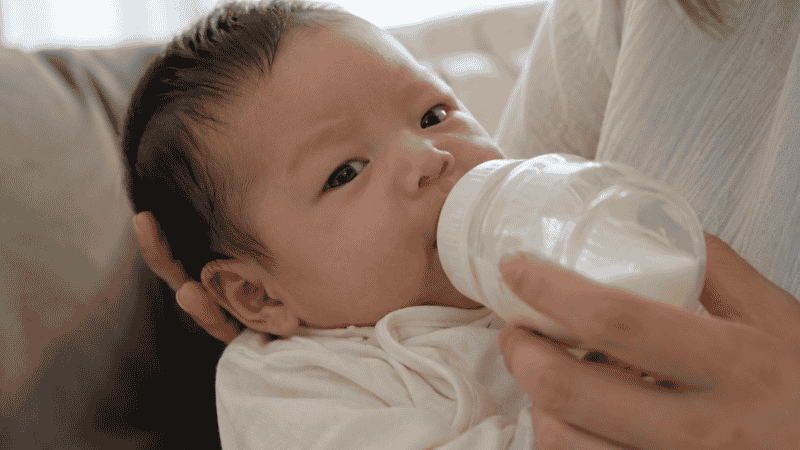
Burp Your Baby
This is the first thing to try, and it works because it addresses the most likely cause — trapped air creating pressure on the diaphragm. You don’t need to wait for a full, audible burp; gentle patting for 1 to 2 minutes is often enough to shift things.
Three effective burping positions:
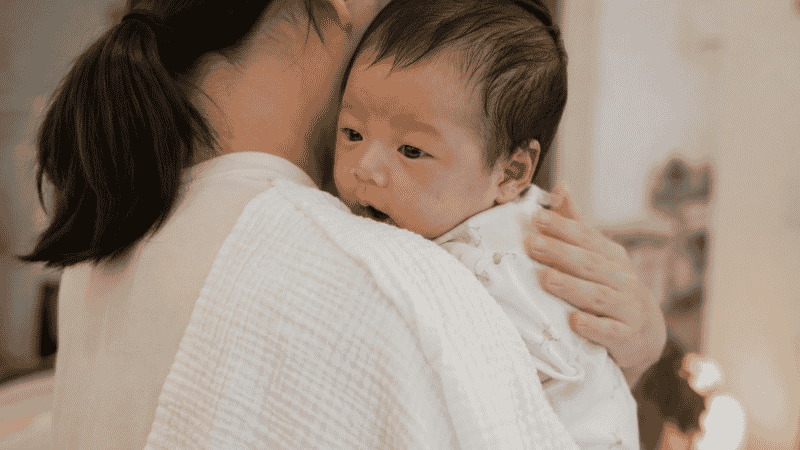
- Over the shoulder: Hold your baby upright with their chin on your shoulder, support their bottom with one hand, and gently pat their back with the other.
- Sitting up on your lap: Sit your baby on your lap, lean them slightly forward, support their chest and chin with one hand, and pat the back with the other.
- Face-down across your lap: Lay your baby across your thighs face-down, head slightly higher than their chest, and gently rub or pat the back.
If hiccups started during a feeding, pause the feed, burp, wait for the hiccups to settle, and then continue.
Offer a Pacifier
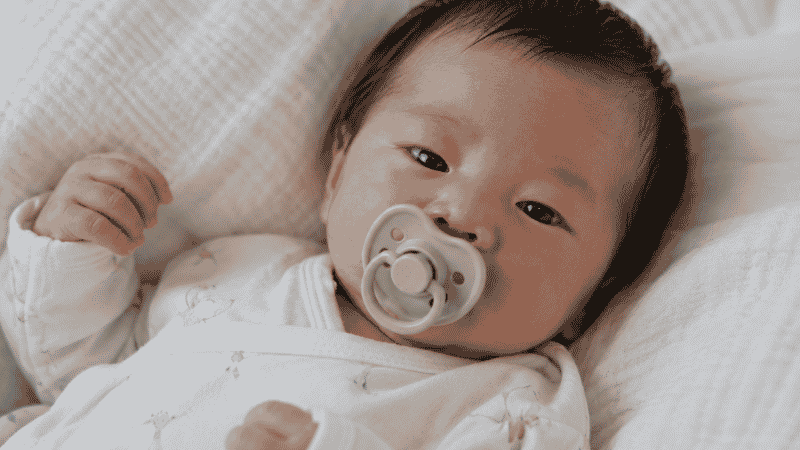
If your baby isn’t hungry and hiccups have started independently (not during or right after a feed), a pacifier can help. The rhythmic sucking motion engages the diaphragm in a controlled, calming way that can interrupt the hiccup reflex. This is particularly useful for the hiccup episodes that happen outside of feeding times.
Hold Your Baby Upright
Gravity helps. Keeping your baby in an upright position — whether you’re holding them against your chest, sitting them supported on your lap, or using a baby carrier — allows any air in the stomach to rise and be released more easily, and reduces pressure on the diaphragm. Aim for 20 to 30 minutes after each feeding.
Continue Feeding Calmly
If hiccups happen during a nursing session and your baby is still interested in eating, it’s safe to continue. Slow the pace, ensure a deeper latch, and let your baby set the rhythm. The continued swallowing motion during nursing can sometimes help resolve hiccups naturally.
What NOT to Do for Baby Hiccups
Some folk remedies are well-intentioned but genuinely not appropriate for newborns:
Don’t startle your baby. Startling is sometimes used for adult hiccups, but for a newborn it’s both ineffective and unkind — startling activates the stress response and can cause crying, which makes everything harder.
Don’t hold their nose or press on their mouth. These approaches compromise your baby’s airway and are never appropriate.
Don’t give water. Babies under 6 months should not receive water — it’s not needed and can be harmful to their electrolyte balance. Water does not help with hiccups in infants.
Be cautious with gripe water. Gripe water is marketed as a remedy for colic, gas, and hiccups. It’s generally considered safe in small amounts, but the evidence for its effectiveness is limited and inconsistent. Some formulations contain alcohol or herbs that aren’t recommended for young infants. If you want to try it, check with your pediatrician first and choose an alcohol-free version specifically formulated for babies.
How to Prevent Newborn Hiccups from Happening So Often
If your baby hiccups after most feeds, small adjustments to your feeding routine often make a significant difference.
Feed Before Your Baby Becomes Frantically Hungry
A baby who has worked themselves into crying hunger is going to feed frantically — gulping, gasping, swallowing significant air. Starting the feed when hunger cues are still in the early stages (rooting, mouthing, increased alertness) rather than the late stage (crying) makes for a calmer, more controlled feed with less air swallowed.
Ensure a Deep Latch if Breastfeeding
A shallow latch — where your baby is latching onto the nipple rather than a full mouthful of breast — means more air enters with each suck. A lactation consultant can help assess latch if hiccups and gassiness are frequent. Signs of a good latch: your baby’s lips are flanged outward, you can hear steady swallowing, and nursing is not painful after the first few seconds.
Pace Bottle Feeding
If you’re bottle feeding, keep the bottle at a low angle so the nipple is only partially filled with milk rather than completely full of liquid. This gives your baby more control over the flow and reduces gulping. Pause every 2 to 3 ounces to burp. A slow-flow nipple is appropriate for most newborns — if your baby is gulping, sputtering, or frequently pulling off the bottle, the flow rate may be too fast.
Keep Your Baby Calm During Feeds
Feed in a quiet, low-stimulation environment when possible. A baby who is distracted, overstimulated, or feeding in a very noisy space tends to eat less efficiently and swallow more air.
Avoid Vigorous Activity Immediately After Feeding
Bouncing, tummy time, or active play immediately after a feeding increases the chance of air movement in the stomach triggering the diaphragm. Keep activity gentle for the first 20 to 30 minutes after a feed.
Baby Hiccups and Reflux: Understanding the Connection
Most baby hiccups are benign. But if your baby hiccups very frequently — especially in combination with other signs — gastroesophageal reflux (GER) may be involved.
When stomach acid or partially digested milk flows back up the esophagus, it can irritate the esophageal lining. Because the esophagus passes through the diaphragm on its way to the stomach, this irritation can directly trigger the diaphragm to spasm. The result is hiccups that seem to happen regardless of feeding adjustments.
Signs that hiccups may be related to reflux:
- Frequent hiccupping even when your baby hasn’t just eaten
- Hiccups accompanied by arching the back during or after feeds
- Fussiness or apparent pain during feeding
- Spitting up frequently, especially if it seems forceful or distressing
- Poor weight gain
If several of these are present together, speak to your pediatrician rather than waiting to see if things improve on their own.
When Hiccups Stop on Their Own — and When to Act
The vast majority of newborn hiccup episodes stop within 5 to 10 minutes without any intervention. As your baby grows and their nervous system matures — typically by 3 to 4 months — you’ll likely notice hiccups becoming less frequent.
The simple reassurance: hiccups in the first months are almost never a sign that something is wrong. They don’t cause your baby pain (the discomfort adults associate with hiccups comes from the prolonged stress on the esophagus, which in infants is minimal). If your baby is hiccupping and seems otherwise comfortable, you genuinely don’t need to do anything.
Warning Signs: When to Call Your Pediatrician
Contact your pediatrician if:
- Hiccups last for several hours without resolving
- Hiccups are interfering with feeding — your baby can’t feed comfortably due to the hiccupping
- Hiccups are consistently interrupting sleep
- Your baby seems distressed, uncomfortable, or in pain during hiccup episodes
- Hiccups are accompanied by coughing, choking, or spitting up significantly
- Hiccups are still happening frequently after your baby’s first birthday — frequent hiccups past 12 months are less typical and worth mentioning
- You notice blue or gray coloring around the lips during a hiccup episode (this is rare but warrants immediate attention)
- You suspect reflux based on the combination of signs described above
FAQ: What Parents Ask Most About Newborn Hiccups
Are newborn hiccups painful? Almost certainly not. Unlike adult hiccups — which can become uncomfortable when prolonged — infant hiccups don’t cause the same esophageal irritation. Most babies hiccup without any apparent distress. If your baby seems comfortable and is feeding normally, the hiccups are not hurting them.
Why does my baby get hiccups after every single feeding? Frequent post-feeding hiccups usually point to air swallowing — from a fast latch, a too-fast bottle nipple, or feeding when very hungry and gulping. Try slowing the feeding pace, ensuring a deeper latch, burping midway through feeds, and keeping your baby upright for 20 to 30 minutes after eating. Most babies see improvement within a few days of consistent changes.
Can I feed my baby while they have hiccups? Yes. Hiccups don’t prevent feeding, and continuing to feed can sometimes actually help resolve them. If your baby is willing to latch or take the bottle during hiccups, there’s no reason to wait.
My baby hiccups in their sleep. Should I wake them? No. Hiccups during sleep are common and don’t warrant waking your baby. They will typically resolve on their own without disturbing your baby’s sleep significantly. If they do wake your baby, gently soothe without feeding unless hunger cues suggest otherwise.
Do hiccups mean my baby has reflux? Not necessarily. Most baby hiccups are caused by simple air swallowing or a full stomach — not reflux. Reflux is worth considering only if hiccups are very frequent and accompanied by other signs: back-arching, apparent pain during feeding, frequent forceful spit-up, or poor weight gain.
Is gripe water safe for newborn hiccups? Gripe water has limited evidence for effectiveness and some formulations contain ingredients not appropriate for young infants. If you want to try it, choose an alcohol-free version and confirm with your pediatrician first. For most newborns, burping, paced feeding, and keeping baby upright are more reliable and completely safe approaches.
When will my baby stop getting hiccups so often? Hiccup frequency typically decreases naturally as the diaphragm and nervous system mature — most parents notice a significant reduction around 3 to 4 months of age. By the end of the first year, hiccups become much less frequent for most babies.

The Short Answer
Newborn hiccups are a normal, expected part of early infancy — a reflex your baby has been practicing since before birth. They’re almost never harmful, usually self-resolving, and manageable with simple feeding adjustments when they happen frequently.
The most useful thing you can do is slow down the feeding pace, burp regularly, and keep your baby upright after meals. Beyond that, let the hiccups run their course — and know that this phase genuinely does get easier as your baby grows.
What to Read Next
- Newborn Baby Care: The Complete Guide for First-Time Parents — Hiccups are just one part of the newborn care picture — this guide covers everything from bathing to safe sleep in one place
- Newborn Spitting Up a Lot: What’s Normal, What’s Not & What Helps — If hiccups and spit-up often happen together after feeds, this guide covers what’s behind the spit-up and how to reduce it
- Newborn Feeding Schedule: How Much & How Often, Week by Week — Understanding how much and how often to feed your newborn helps prevent the overfeeding and gulping that trigger hiccups
References
- American Academy of Pediatrics. Baby Burping, Hiccups & Spit-Up. HealthyChildren.org, 2024. https://www.healthychildren.org/English/ages-stages/baby/feeding-nutrition/Pages/baby-burping-hiccups-and-spit-up.aspx
- Cleveland Clinic. Here’s What to Do When Your Baby Has the Hiccups. Health Essentials, 2021. https://health.clevelandclinic.org/heres-what-to-do-when-your-baby-has-the-hiccups
- Straussman S, Bhimji SS. Hiccups. StatPearls, National Library of Medicine, 2023. https://www.ncbi.nlm.nih.gov/books/NBK430930/
- Pregnancy Birth & Baby (Australian Government). Hiccups. https://www.pregnancybirthbaby.org.au/hiccups
This article is for informational purposes only and does not constitute medical advice. Always consult your pediatrician with specific concerns about your newborn’s health or feeding.