

Your baby has been fussier than usual for three days. They’re drooling through every outfit. They’re gnawing on their fist like it’s the most important thing in the world. And they have a low fever that appeared overnight.
Your first thought: teeth.
Your second thought: but is it really teeth? Or is something else going on?
This is one of the most common parenting dilemmas in the first year — because teething symptoms are real, but they’re also wildly over-attributed. Parents regularly blame teething for things it doesn’t actually cause. And in doing so, they sometimes miss signs of genuine illness that need attention.
This guide gives you the full, honest picture: what baby teething symptoms are real and what are myths, when teething typically starts, how to soothe your baby safely, what to skip (including some remedies that are genuinely dangerous), and the specific signs that mean it’s time to call your pediatrician.
Key Takeaways
- Most babies begin teething around 6 months, though the range is 3 to 12 months — all of which is normal.
- True teething symptoms include drooling, swollen tender gums, chewing on objects, and mild fussiness. These are real and manageable.
- Teething does NOT cause high fever (above 100.4°F / 38°C), diarrhea, vomiting, or respiratory symptoms — these signs point to illness, not teeth.
- The safest and most effective teething remedies are chilled (not frozen) teething rings, gum massage, and chilled damp washcloths — all are AAP-aligned and cost very little.
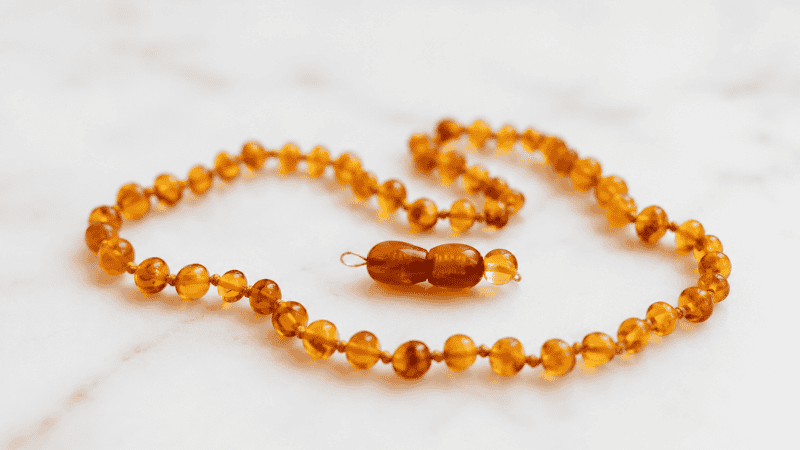
- Amber teething necklaces are not recommended by the FDA or AAP due to documented strangulation and choking deaths. They should not be used.
When Do Babies Start Teething?
The classic answer is around 6 months — and for many babies, that’s accurate. But teething can begin as early as 3 months and as late as 12 months, and both extremes fall within the normal range. A baby with no visible teeth at 10 months is not developmentally behind. Neither is a 4-month-old who is clearly showing early teething signs.
The full set of 20 primary (baby) teeth typically emerges over the first 2 to 3 years of life. The lower central incisors (bottom middle teeth) usually arrive first, followed by the upper central incisors, then lateral incisors, first molars, canines, and second molars. But the order varies between babies — some skip around — and the timeline matters less than the overall trajectory.
General teething order:
- Lower central incisors: 6 to 10 months
- Upper central incisors: 8 to 12 months
- Upper lateral incisors: 9 to 13 months
- Lower lateral incisors: 10 to 16 months
- First molars: 13 to 19 months
- Canines: 16 to 22 months
- Second molars: 25 to 33 months
Real Baby Teething Symptoms: What to Actually Expect
The research on which symptoms are genuinely caused by teething — versus coincidentally present because babies get sick frequently in the same period — is clearer than most parents realize. Here’s what the evidence actually supports.
Drooling — Often Significant
Teething stimulates saliva production. A lot of it. Many teething babies drool through multiple bibs per day. This excess saliva is the body’s response to gum irritation — it helps keep the gum surface moist and aids in the mechanical process of tooth eruption.
The drooling itself isn’t harmful, but the saliva that pools on the skin around the mouth, neck folds, and chin can cause a mild drool rash — irritated, slightly red patches from the constant moisture. Wiping gently (not rubbing) and applying a barrier cream like petroleum jelly around the chin and mouth can prevent this.
Chewing, Gnawing, Biting
A baby who suddenly wants to chew on everything — their fist, your fingers, their toys, the edge of their crib — is responding to gum pressure. The counterpressure of chewing provides relief, which is why this behavior is so consistent across teething babies. Providing safe objects to chew on is one of the most effective teething remedies for exactly this reason.
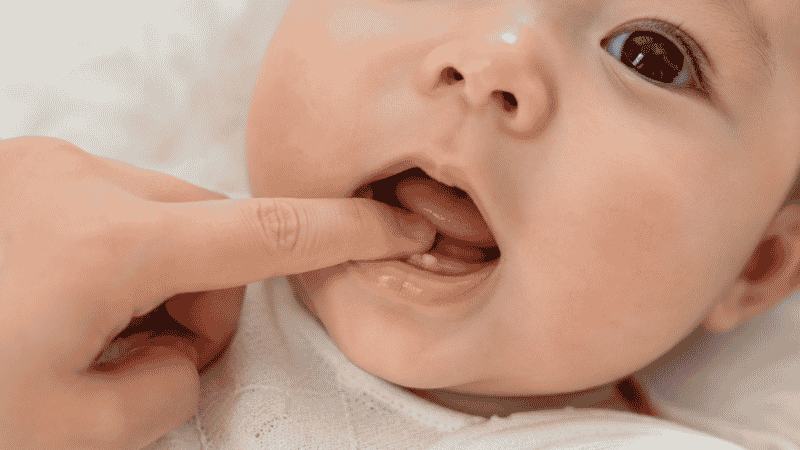
Swollen, Tender Gums
Before a tooth erupts, the gum tissue swells and becomes tender as the tooth pushes through. You can often see redness and puffiness at the site where a tooth is about to emerge. In some babies, you’ll see a small bluish-purple bubble (called a teething cyst or eruption cyst) — this is simply fluid trapped beneath the gum as the tooth approaches the surface and is harmless, usually resolving on its own.
Mild Fussiness and Irritability
Some teething pain is real. The gum pressure and tenderness cause genuine discomfort, particularly in the 3 to 5 days before and after a tooth breaks through. According to the AAP’s HealthyChildren.org, this discomfort is usually mild rather than severe, and most teething babies have periods of comfort between the fussier periods.
Slightly Elevated Temperature
A very mild temperature increase — just slightly above normal, below 100.4°F (38°C) — is sometimes associated with teething, likely related to local gum inflammation. This is different from a true fever.
What Teething Does NOT Cause: The Myths That Matter
This section is important. These symptoms are frequently attributed to teething — and incorrectly so. When a parent sees diarrhea and assumes “just teething,” a genuine illness may be missed.
Teething does not cause:
- High fever above 100.4°F (38°C). According to Children’s Hospital Los Angeles and the AAP, high fever is not a teething symptom. It’s a sign of illness. Any fever above 100.4°F in a baby under 3 months is always a medical emergency. In older babies, a fever above 100.4°F alongside other symptoms warrants a call to your pediatrician — not reassurance that it’s “just teething.”
- Diarrhea. The AAP is explicit: teething does not change how your baby’s gut works. Diarrhea that persists for more than a day should be evaluated, not attributed to teeth.
- Vomiting. Not a teething symptom. If your baby is vomiting, something else is happening.
- Significant runny nose or cough. Coincidental timing with respiratory illness is common because babies in this age range are picking up more colds, but the teeth themselves aren’t causing the cold.
- Severe, inconsolable crying. Teething discomfort is generally mild. If your baby is crying intensely and cannot be soothed by any teething remedies, something other than teething is likely the cause.
The reason this matters: babies in the 6-to-24-month teething window are also in a period of increased illness exposure (daycare, more social contact, immune system still developing). It’s easy and comforting to attribute symptoms to teething. But doing so can delay appropriate medical care.
How to Soothe a Teething Baby: Remedies That Actually Work
Chilled (Not Frozen) Teething Rings
This is the most recommended teething remedy across the AAP, Mayo Clinic, and the American Dental Association. A firm rubber teething ring chilled in the refrigerator provides both the counterpressure of chewing and the soothing effect of cold on inflamed gum tissue.
The “not frozen” distinction matters. Frozen teething rings become too hard and can bruise or damage tender gum tissue. Refrigerator-cold — not freezer-cold — is the right temperature. Check the ring before each use for cracks, loose parts, or signs of wear.
Avoid liquid-filled teething rings. If they crack or break, the liquid inside may be unsafe for your baby to ingest.
Gum Massage
Wash your hands thoroughly, then use a clean finger to apply gentle, firm pressure directly to the swollen gum where the tooth is erupting. Two minutes of sustained pressure can meaningfully reduce the discomfort — this is the same principle as pressure relief in adults. You can do this as often as your baby tolerates it.
Some parents use a clean damp gauze pad instead of a bare finger, which can feel gentler and also helps maintain oral hygiene.
Chilled Damp Washcloth
Dampen a clean washcloth, fold it, and chill it in the refrigerator. Let your baby chew on the cool, textured cloth. The combination of cold, pressure, and texture is effective for many babies. As with teething rings: refrigerator-cold, not frozen.
Breastfeeding or Bottle Feeding
The sucking motion during feeding is naturally soothing and can provide short-term relief during teething discomfort. If your baby wants to nurse more frequently during a teething period, responding to this need is appropriate.
Over-the-Counter Pain Relief — When Appropriate
If your baby is clearly in significant pain and other methods aren’t providing enough relief, infant acetaminophen (Tylenol) or — for babies over 6 months — infant ibuprofen (Motrin, Advil) can be used. Always use the correct dose for your baby’s weight, follow the package guidelines, and confirm the appropriate dose with your pediatrician if uncertain.
What to Skip: Teething Remedies That Are Unsafe
This section is non-negotiable. Several commonly used teething products have documented safety risks that outweigh any potential benefit.
Benzocaine and lidocaine gels. The FDA has warned that products containing benzocaine or lidocaine (sold as Orajel, Anbesol, Baby Orajel, and similar) are not safe for teething infants. Benzocaine can cause methemoglobinemia, a serious condition that reduces the blood’s ability to carry oxygen. Lidocaine overdose from teething gels has caused infant deaths. These products should not be used on teething babies.
Amber teething necklaces. The FDA and the AAP both explicitly warn against amber teething necklaces. The FDA has received reports of infant deaths from strangulation and choking caused by these products. They have no scientifically documented benefit — the mechanism claimed (amber releasing succinic acid into the skin) has not been validated by any peer-reviewed research. Do not use them.
Homeopathic teething tablets. These have been the subject of FDA safety warnings, particularly products that were found to contain inconsistent amounts of belladonna (a toxic plant). The FDA has issued multiple warnings about these products. Avoid them.
Rubbing alcohol or liquor on the gums. A traditional folk remedy that is genuinely dangerous. Alcohol is toxic to infants even in small amounts absorbed through the gum tissue. Never do this.
Frozen teething items. Whether a teething ring, a washcloth, or a vegetable — frozen is too hard and can bruise and damage tender infant gum tissue. Chilled is the correct temperature.
Surviving Teething at Night
Teething discomfort is often worse at night, for the same reason many kinds of pain feel worse at night — there are fewer distractions, and lying flat can increase the sensation of gum pressure. A baby who has been manageable during the day may be significantly more unsettled at night during an active teething period.
What helps at night:
- Offer a chilled teething ring before bed as part of the pre-sleep routine
- Extra comfort and closeness — your presence and touch are genuinely soothing
- If your baby wakes in clear discomfort, a dose of infant acetaminophen at bedtime (per your pediatrician’s guidance) on the worst nights
- Maintain sleep routines as consistently as possible — familiarity is calming when your baby is uncomfortable
What to avoid at night:
- Offering a bottle of milk or juice to soothe overnight when your baby has teeth — this increases cavity risk significantly. If milk is used for comfort, follow it with a wipe of the gums.
Baby’s First Tooth: Starting Oral Hygiene
The American Academy of Pediatric Dentistry (AAPD) recommends scheduling your baby’s first dental visit no later than 12 months of age — ideally around the time the first tooth appears.
Once the first tooth emerges, it needs to be cleaned. Use a soft-bristled infant toothbrush with a tiny smear of fluoride toothpaste (about the size of a grain of rice) twice daily. Fluoride toothpaste from the time the first tooth erupts has strong evidence for preventing early childhood cavities.
Warning Signs: When Teething Requires a Pediatrician Call
Call your pediatrician if:
- Fever above 100.4°F (38°C) — this is illness, not teething
- Diarrhea lasting more than 24 hours
- Vomiting
- Your baby is inconsolable and cannot be soothed by any teething remedies
- Refusal to feed across multiple sessions
- The gum area looks infected — increasing redness, swelling, or discharge from the gum site (not just normal pre-eruption swelling)
- A large, painful-looking eruption cyst that doesn’t seem to be resolving — most are harmless and resolve without intervention, but a pediatric dentist can assess if you’re concerned
- No teeth at all by 18 months — worth mentioning at a well-visit
FAQ: What Parents Ask About Baby Teething
How do I know if my baby is teething or sick? The clearest distinction is temperature. Teething does not cause a true fever (above 100.4°F / 38°C). If your baby has a fever alongside fussiness, that’s illness until proven otherwise. Also consider: teething discomfort should be at least somewhat relieved by cold and chewing. If nothing provides any relief, something else may be going on.
Can teething cause a fever? A very mild temperature elevation (below 100.4°F) is sometimes associated with teething due to local gum inflammation. A true fever — above 100.4°F — is not caused by teething and should be evaluated by your pediatrician.
How long does teething pain last? Each individual tooth eruption typically causes the most acute discomfort in the 3 to 5 days before and just after the tooth breaks through the gum. Once the tooth is through, comfort generally returns. The process then repeats with the next tooth, which may erupt within weeks or months.
Is it safe to let my baby chew on frozen vegetables? Pediatricians sometimes suggest a cold (refrigerator-temperature, not frozen) carrot or cucumber for babies who have already started solids, under close supervision. Frozen vegetables are too hard and carry a risk of bruising gum tissue and breaking off chunks that could be a choking hazard.
Do amber teething necklaces work? No, and they are a documented safety hazard. The FDA has received reports of infant deaths from strangulation and choking caused by amber teething necklaces. There is no scientific evidence that they provide any relief. Do not use them.
My baby’s gums look bruised or blue near a new tooth. Is that normal? This is most likely an eruption cyst — a small collection of fluid that forms as the tooth approaches the surface. It looks alarming (bluish-purple, sometimes quite visible) but is almost always harmless and resolves on its own as the tooth erupts. Mention it at your next pediatric visit for confirmation.
Teething Is Hard — But It Ends
Every tooth is temporary discomfort in exchange for a permanent gain. The drool, the fussiness, the nights of broken sleep — they’re real, and they’re hard. But each tooth that comes through is a little victory, and the process becomes more familiar with each one.
The most important thing you can take away from this guide: trust the safe remedies (chilled rings, gum massage, pain relief when needed), and don’t attribute every difficult symptom to teething. Keep the distinction clear — real teething symptoms, and symptoms that need a pediatrician’s attention — and you’ll navigate this phase with confidence.
What to Read Next
- Baby Growth Spurts: When They Happen, What They Feel Like & How to Survive Them — Teething and growth spurts sometimes coincide — this guide helps you tell them apart
- Newborn Baby Care: The Complete Guide for First-Time Parents — The bigger picture of baby development and care across the first year
- Baby Dry Skin: Why It Happens, What Actually Helps & What to Stop Doing — Teething drool rash is a skin concern that this guide addresses alongside general baby skin dryness
References
- American Academy of Pediatrics. Teething Pain. HealthyChildren.org, 2023. https://www.healthychildren.org/English/ages-stages/baby/teething-tooth-care/Pages/Teething-Pain.aspx
- Mayo Clinic. Teething: Tips for Soothing Sore Gums. Updated December 2024. https://www.mayoclinic.org/healthy-lifestyle/infant-and-toddler-health/in-depth/teething/art-20046378
- Children’s Hospital Los Angeles. A Parent’s Guide to Teething. Updated March 2026. https://www.chla.org/blog/advice-experts/your-infant-teething-know-signs-and-symptoms
- U.S. Food and Drug Administration. Safely Soothing Teething Pain and Sensory Needs in Babies and Older Children. FDA, 2023. https://www.fda.gov/consumers/consumer-updates/safely-soothing-teething-pain-and-sensory-needs-babies-and-older-children
- American Dental Association. Teething. MouthHealthy.org. https://www.mouthhealthy.org/all-topics-a-z/teething
This article is for informational purposes only and does not constitute medical advice. Always consult your pediatrician or pediatric dentist with specific concerns about your baby’s teething or oral health.