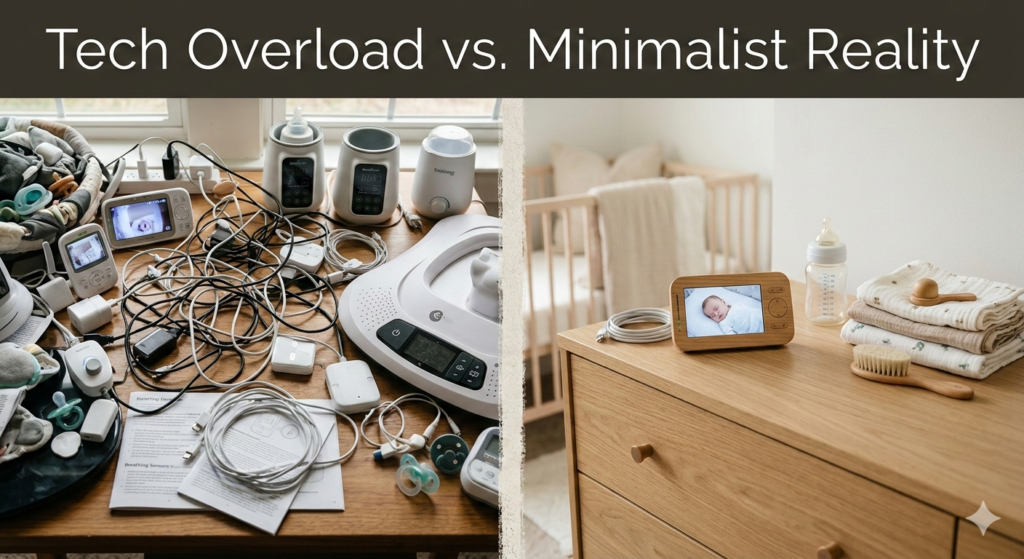
Let’s be real: the moment that pregnancy test turns positive, the targeted ads start hunting you down. Suddenly, your social feed is flooded with “must-have” gadgets that promise to make your baby sleep longer, cry less, and look like a Pinterest model. But here is the cold, hard truth from those of us in the trenches—most of it is total rubbish. Finding the right newborn essentials shouldn’t mean turning your home into a plastic-filled warehouse.
At Kindyly, we’ve talked to thousands of parents who admitted that 60% of their baby registry ended up in the back of a closet or on Facebook Marketplace within three months. In 2026, minimalist baby gear isn’t just a trend; it’s a survival strategy for your sanity and your wallet.
The Regret List: 15 “Essentials” You Should Probably Skip
If it’s on this list, take a deep breath and hit “delete” on that cart. These are the classic baby items you don’t need, no matter how cute the packaging is.
1. The “High-Tech” Dust Collectors
- Smart Diaper Sensors: You don’t need an app to tell you a diaper is heavy. Your nose is the best sensor ever invented.
- Expensive Wipe Warmers: They are breeding grounds for bacteria and turn your baby into a “warm wipe diva” who screams during every public diaper change.
- Baby Probiotic Makers: Unless specifically prescribed, most high-end specialized prep machines are just glorified kettles that take up massive counter space.
2. The Nursery Space-Wasters
- Dedicated Changing Tables: Use a secure pad on a dresser you already own. A standalone table becomes a very expensive laundry shelf in six months.
- Crib Bumpers: Not only are they unnecessary, but the American Academy of Pediatrics (AAP) has flagged them as a major safety risk for SIDS.
- Diaper Genies: They require expensive proprietary refills. A small, lidded trash can emptied daily works better and smells less.
3. The “Cute but Useless” Clothing
- Newborn Shoes: Babies don’t walk. They kick shoes off into the abyss of the stroller. Stick to socks or footed sleepers.
- Tiny Formal Wear: That miniature tuxedo or lace dress? They’ll wear it for 15 minutes, spit up on it, and grow out of it by Tuesday.
- Baby Robes: They look adorable for one photo, but trying to keep a robe on a squirming, slippery newborn is an Olympic sport.
The True Cost of “Just in Case” Shopping
When you buy into the “just in case” mentality, you aren’t just losing money; you’re losing peace. Our data shows that the average first-time parent spends roughly $1,200 on items that are never used more than twice.
| The “Rubbish” Item | Average Cost | The Better Alternative |
| Smart Bottle Sterilizer | $150 | Boiling water or dishwasher |
| Newborn Sized Shoes | $25 | 100% Cotton socks |
| Specialized Baby Bath Tub | $45 | A clean kitchen sink or mesh insert |
| Total Waste Saved | **$220+** | Invest in quality, not quantity |
The Kindyly Rule of 3: What Actually Matters
So, what should actually be on your newborn essentials checklist? We follow the “Rule of 3.” If it doesn’t fit into these three pillars of survival, it’s probably clutter.
H3: Safe Sleep Gear
You only need a firm mattress, a tight-fitting sheet, and a high-quality swaddle or sleep sack. Skip the pillows, quilts, and stuffed animals—they aren’t safe for newborns anyway.
H3: Functional Hygiene
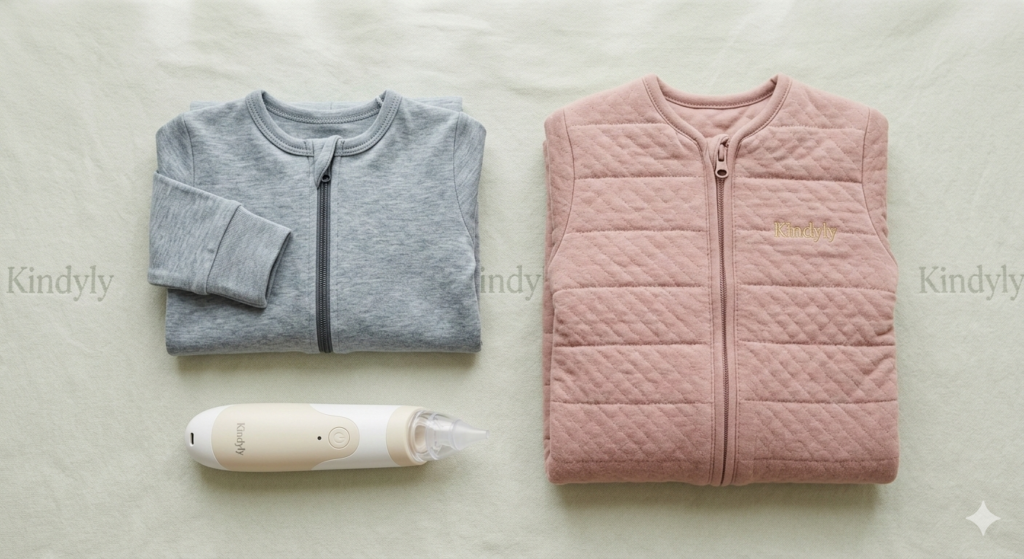
Stock up on the “boring” stuff: a digital thermometer, a high-quality nasal aspirator (the manual ones are actually better), and non-toxic baby skincare.
H3: Real-Life Clothing
Focus on 7-10 “zippered” onesies. Avoid snaps at 3:00 AM unless you enjoy solving puzzles in the dark.
FAQ: Surviving the Registry Pressure
Q: But what if I’m gifted these “rubbish” items? Don’t feel guilty! If it has a gift receipt, exchange it for diapers or store credit. If not, donate it. A clutter-free home is the best gift you can give yourself.
Q: Are second-hand items okay? Mostly! Clothes, wooden furniture, and plastic toys are great second-hand. However, never buy a second-hand car seat or crib mattress due to safety and hygiene risks.
Final Word: Trust Your Gut, Not the Ads
Your baby doesn’t care about the brand of your stroller or the color-coordinated nursery. They care about you. By cutting out the rubbish, you’re making room—literally and mentally—for the things that matter.
Ready to build a registry that actually works? Shop our [Kindyly Minimalist Essentials Collection], where every item is parent-tested, safety-vetted, and guaranteed to be used every single day.