Let’s be honest: walking into a toy store (or scrolling through a limitless online marketplace) in 2026 can feel like entering a neon-colored battlefield. Between the flashing lights, the loud electronic music, and the bold “educational” claims on every box, it’s hard to know what your little one actually needs.
As a health-conscious parent, you’ve probably noticed that the “toy mountain” in your living room often goes untouched, while your baby is more interested in a stray wooden spoon or a crinkly piece of paper. This is because baby-toys aren’t just objects; they are the primary tools through which infants discover the laws of physics, the joy of cause-and-effect, and the boundaries of their own bodies. In this comprehensive guide, we’ll dive deep into the science of play and help you curate a collection of non-toxic baby-toys that grows with your child—without the clutter.
The Philosophy of Play: Why Less is More with Baby-Toys
If you’ve ever felt “mom-guilt” for not buying the latest high-tech gadget that promises to teach your 6-month-old Mandarin, take a deep breath. The truth is, the best baby-toys are often the simplest ones.
Passive Toys vs. Active Babies (The 90/10 Rule)
A golden rule in developmental psychology is that a toy should be 10% toy and 90% baby.
- Active Toys: These are toys that sing, dance, and light up at the push of a button. While they look fun, the baby becomes a passive observer. They push a button, and the toy performs.
- Passive Toys: Think of a simple wooden block, a silk scarf, or a silicone ring. These baby-toys do nothing until the baby makes them something. This is where true creativity, problem-solving, and neural pathways are born.
The Science of “Deep Play”
In the first year of life, a baby’s brain forms millions of neural connections every second. Overstimulation is a real threat to this development. When a room is cluttered with too many loud baby-toys, a child’s cortisol (stress hormone) levels can rise, leading to shorter attention spans.
- Data Point: A landmark 2025 study from the University of Toledo confirmed that toddlers with only 4 toys in their environment engaged in higher-quality play, showed more varied use of each toy, and stayed focused 2.5x longer than those with 16 or more toys.
Milestone Matching: The Best Baby-Toys for Every Stage
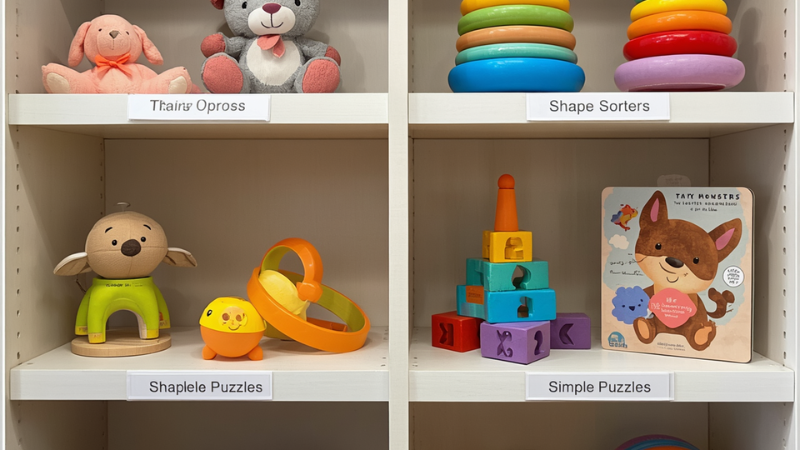
Shopping for baby-toys is much easier when you understand the developmental “job” your baby is currently working on. Here is a detailed breakdown of what to look for:
Table 1: Baby-Toys Development Quick Reference
| Age Range | Developmental Focus | Recommended Baby-Toys | Why It Works |
| 0–3 Months | Visual Tracking & Auditory | High-contrast cards, soft wrist rattles | Stimulates the optic nerve and neck muscles. |
| 3–6 Months | Grasping & Mouthing | Silicone teething rings, textured fabric books | Develops hand-eye coordination and tactile exploration. |
| 6–12 Months | Cause & Effect, Pincer Grasp | Stacking cups, wooden blocks, “busy” boards | Encourages problem-solving and fine motor precision. |
| 12–18 Months | Gross Motor & Imagination | Push toys, simple puzzles, silk scarves | Supports walking and early symbolic play. |
ensory Discovery (0–3 Months)
At this stage, newborns are near-sighted. They see best at a distance of 8 to 12 inches.
- The “Black and White” Secret: Newborns lack full color vision. High-contrast baby-toys help them distinguish shapes, which builds the foundation for reading and spatial awareness later.
- Pro-Tip: Place a high-contrast book during 5 minutes of tummy time. This keeps them focused and prevents the “tummy time tantrums.”
The Grasping Era (3–6 Months)
Once babies find their hands, everything goes straight to the mouth. This is “mouthing,” a vital part of sensory exploration.
Case Study: “I noticed my 4-month-old was frustrated with heavy plastic rattles. I swapped them for a lightweight silicone ‘O-ball,’ and he was suddenly able to hold it for 10 minutes. The right weight makes all the difference.” — Sarah, Mom of Two.
Non-Toxic Priorities: Since these baby-toys spend 90% of their time in your baby’s mouth, you must vet the materials (more on this below).
The Safety First Checklist: Navigating Non-Toxic Baby-Toys
In 2026, we are more aware than ever of “forever chemicals” like PFAS and microplastics. Here is how to vet your baby-toys like a professional safety inspector.
Table 2: Material Comparison for Baby-Toys
| Material | Pros | Cons | Best For… |
| Solid Wood | Naturally antimicrobial, eco-friendly, durable. | Can be heavy; cannot be submerged in water. | Blocks, rattles, stacking toys. |
| Medical Silicone | Hypoallergenic, dishwasher safe, soft on gums. | Attracts lint/dust; check for “fillers.” | Teethers, bath toys, spoons. |
| Organic Cotton | Machine washable, soft, no pesticides. | Takes time to dry; can harbor dust mites if not washed. | Soft books, comfort blankets. |
| Bio-Plastics | Lower carbon footprint than oil-based plastic. | Can be brittle; harder to verify all additives. | Sand toys, larger vehicles. |
Chemical Red Flags in Baby-Toys
- Lead & Cadmium: Still found in cheap, imported paint. Always look for “Water-based, non-toxic finishes.”
- BPA & Phthalates: These disrupt hormones. Even if a toy says “BPA-Free,” check if it’s also BPS-free.
- The “Smell Test”: If a toy has a strong chemical or “sweet” smell, it is off-gassing VOCs (Volatile Organic Compounds). If you can smell it, your baby is breathing it.
The “Toilet Paper Roll” Choking Test
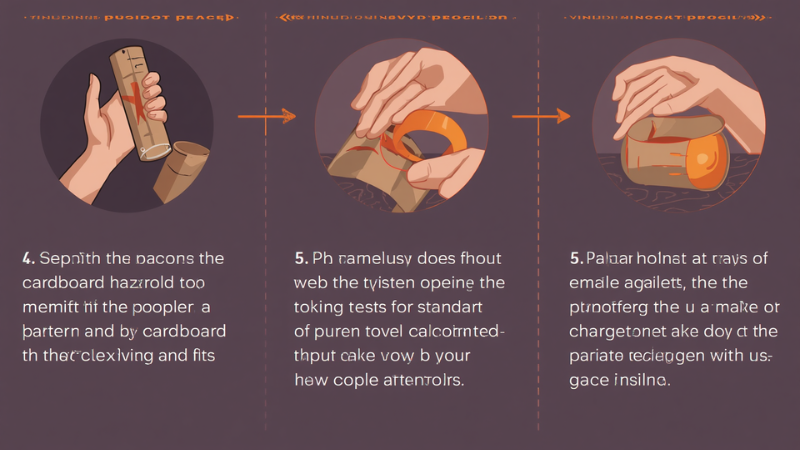
Choking is the leading cause of toy-related injury. A simple DIY test: If a toy or part of a toy fits through a standard toilet paper roll (approx. 1.25 inches), it is too small for a child under 3 years old.
Practical Tips for a Calm Playroom: The Rotation Method
You don’t need a bigger house; you just need a better system. The Toy Rotation Strategy is a game-changer for parental sanity.
H3: How to Start Your Rotation (Step-by-Step)
- The Great Audit: Gather every single one of your baby-toys. If it’s broken, missing pieces, or makes an annoying sound that makes you want to hide in the pantry—toss it or donate it.
- Categorize by Skill: Group toys into “Physical” (balls), “Cognitive” (puzzles), and “Sensory” (textured items).
- The “Golden Eight”: Choose only 5 to 8 toys to leave out on a low, open shelf.
- The Sunday Swap: Every Sunday evening, put away the current toys and bring out 5-8 “new” ones from your storage bin.
The Result: On Monday morning, your baby will react to their “old” baby-toys with the excitement of a kid on Christmas morning. This prevents “choice paralysis” and encourages deeper, more focused play.
FAQ: Your Top Questions Answered
Q: How to choose age-appropriate baby-toys?
A: Look for the “Age Grade” (e.g., 6m+) on the box, but more importantly, watch your baby’s milestones. If they are constantly throwing things, they are seeking “gross motor” input—give them soft balls. If they are poking at tiny details, they are ready for fine-motor baby-toys like busy boards.
Q: Are wooden baby-toys really better than plastic?
A: From a sensory perspective, yes. Wood has a natural “give,” a unique grain, and a pleasant weight. Plastic is often thermally “dead” and provides less sensory feedback. However, for bath time, high-quality silicone is superior to wood.
Q: How many baby-toys does a newborn actually need?
A: Honestly? None for the first 4 weeks. Your face, your heartbeat, and your voice are the most “educational” things in their world. By 2 months, 2-3 high-contrast items are more than enough.
Conclusion: Play is the Work of the Child
At the end of the day, the most expensive baby-toys in the world cannot replace the value of your presence. Whether you’re building a tower of blocks just to watch them knock it down (a vital lesson in gravity!) or shaking a rattle to elicit that first gummy smile, these moments are the foundation of their world.
The Gentle Advice: Tonight, take 5 minutes to sit on the floor at your baby’s eye level. Look at their baby-toys from their perspective. Is it a cluttered, overwhelming mess, or a curated space for discovery? Choose quality over quantity, and watch their curiosity—and your peace of mind—thrive.