Let’s be honest: walking into a toy store in 2026 can feel like entering a neon-colored battlefield. Between the flashing lights, the “educational” promises, and the overwhelming mountain of plastic, it’s hard to know what your little one actually needs.
As a health-conscious parent, you want baby toys that aren’t just fun, but are safe, durable, and genuinely supportive of those incredible developmental leaps. Whether you’re preparing a nursery or looking for the perfect baby shower gift, this guide will help you navigate the world of play with confidence and purpose.
The “Non-Toxic” Revolution: What to Look for in Baby Toys
In 2026, we’ve moved past just looking for a “BPA-Free” sticker. To ensure a chemical-free nursery, you need to understand the materials that spend the most time in your baby’s mouth.
Natural Materials vs. Bio-Plastics
While plastic is everywhere, the “gold standard” for baby toys remains organic, Earth-grown materials.
- Solid Wood: Look for FSC-certified maple or beech. These are naturally antimicrobial and don’t contain the microplastics found in many cheap alternatives.
- Medical-Grade Silicone: Unlike PVC, 100% food-grade silicone won’t leach endocrine disruptors when heated or gnawed on.
- The “Smell Test”: If a toy has a strong “chemical” or “sweet” plastic smell, it’s likely off-gassing VOCs (Volatile Organic Compounds).
Real Mom Experience: “I bought a cheap plastic play gym online, and the smell was so strong it gave me a headache. I realized if I could smell it, my 3-month-old was breathing it in. I swapped it for a solid pine gym with water-based paint—the peace of mind was worth every penny.” — Jessica, Mom of Two.
Safety Certifications Decoded
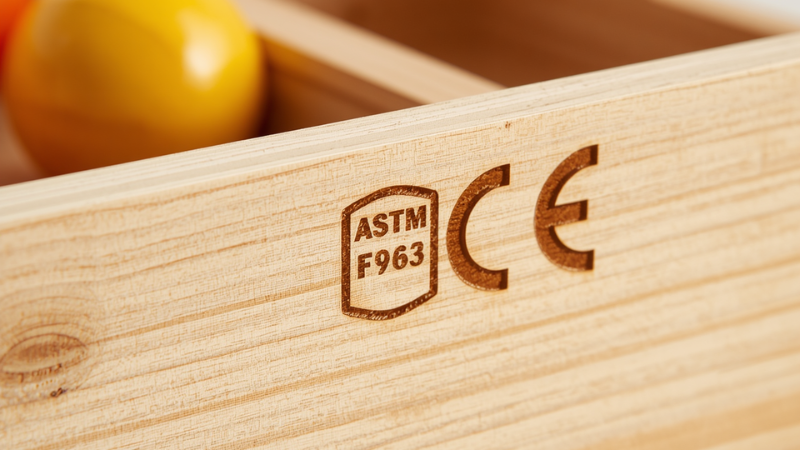
Before you buy, flip the box over. You want to see ASTM F963 (the US gold standard) or the European EN71 mark.
- The “Torque” Test: These certifications ensure the toy can withstand “toddler strength.” They test to make sure small parts won’t snap off and become choking hazards under pressure.
Milestone Play: Matching Baby Toys to Developmental Stages
To avoid a toy box full of neglected plastic, it helps to shop by stage rather than just age.
0–3 Months: High Contrast and Auditory Focus
At this stage, a baby’s vision is limited to about 8 to 12 inches.
- Must-Haves: High-contrast black and white cards, soft wrist rattles.
- The Science: High-contrast patterns stimulate the optic nerve. A study in the Journal of Child Development suggests that early visual stimulation can accelerate visual pathway maturation.
3–6 Months: The “Everything in the Mouth” Phase
- Must-Haves: Textured silicone teething rings, lightweight “O-balls.”
- Pro-Tip: Put silicone baby toys in the freezer for 20 minutes (aim for about 32°F/0°C). The cold provides natural vascular constriction that numbs sore gums during teething.
6–12 Months: Cause, Effect, and Mobility
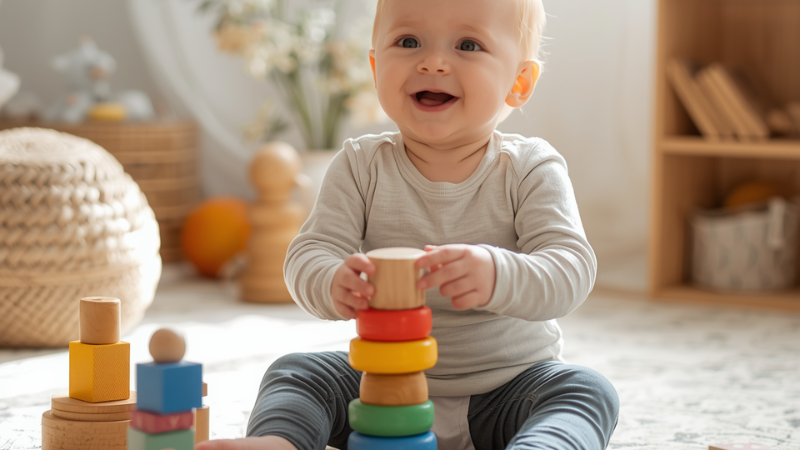
- Must-Haves: Stacking cups, wooden blocks, simple “busy boards.”
- The Milestone: At around 9 months, babies develop “Object Permanence.” Hide a toy under a cloth and let them “find” it. This builds cognitive persistence and problem-solving skills.
Maintenance 101: How to Clean Baby Toys Safely
The number one question parents ask is: how to clean baby toys? Between drool and floor-time, toys become germ magnets, but you don’t want harsh bleach near your baby’s face.
The 2026 Non-Toxic Cleaning Matrix
| Material | Best Cleaning Method | Temperature/Details |
| Solid Wood | 50/50 White Vinegar & Water | Spray & Wipe. Never submerge; wood swells and cracks at >15% moisture. |
| Silicone | Dishwasher (Top Rack) | 140°F (60°C) is the sweet spot for killing 99% of bacteria. |
| Plush/Fabric | Laundry Machine | Use a mesh bag. Wash at 104°F (40°C) with fragrance-free soap. |
| Bath Toys | Vinegar & Steam | Avoid bleach. Seal “squeeaker holes” with hot glue before first use. |
Pro-Tip for Sanitizing: If your baby has just recovered from a cold, use a Steam Cleaner. Steam reaches 212°F (100°C), sanitizing hard surfaces in seconds without leaving chemical residues.
FAQ: Your Top Baby Toy Questions Answered
Q: How to clean baby toys safely without using toxic chemicals?
A: Stick to natural acids! A mix of distilled white vinegar and water is a powerful antimicrobial. For a deeper clean, a handheld steam cleaner is a fantastic chemical-free investment for any 2026 nursery.
Q: How many toys does a baby actually need?
A: Less is more! A famous study from the University of Toledo found that babies with fewer toys (around 4–6) engaged in higher quality, more creative play than those with a cluttered environment.
Q: Is it okay to buy second-hand baby toys?
A: Yes, but be cautious with plastic. Avoid plastic baby toys made before 2010, as they may contain higher levels of lead or phthalates that are now restricted. Always check for peeling paint or loose “button” eyes.
Conclusion: Play is the Work of the Child
Choosing the right baby toys isn’t about the price tag; it’s about the purpose. In a world of flashing screens, the best toys are the ones that are “10% toy and 90% baby.”
Gentle Advice: Tonight, take 10 minutes to sit on the floor with your little one. Watch what they gravitate toward. If they prefer the crinkle of the wrapping paper over the toy inside, don’t sweat it—they’re just being a tiny scientist! Focus on safety, keep it simple, and enjoy the magic of discovery.