
Let’s be real: bath time is either the most magical part of your day or a splashy battle involving a slippery infant and a lot of soap. As a parent in 2026, you’ve probably realized that the right baby bath toys are the ultimate “peace treaty.”
But choosing the best bath toys for babies isn’t just about picking the cutest rubber ducky anymore. With new research into plastic safety and the dreaded “black mold” that hides inside squirt toys, we need to be more intentional. In this guide, I’m breaking down the most recommended baby bath toys on the market and answering the number one question in every parent’s search history: how to clean baby toys so they stay safe for years to come.
Beyond the Bubbles: Why Baby Bath Toys Are Developmental Tools
Your baby is doing some of their best “work” in the tub. Bathing isn’t just about hygiene; it’s a full-throttle sensory experience.
- Sensory Stimulation: The buoyancy of water provides a unique environment where baby bath toys behave differently than on land.
- Fine Motor Skills: When a 9-month-old squeezes a silicone cup or tries to stack floating rings, they are engaging the small muscles in their hands.
- The Science: According to a 2025 study on infant ergonomics, repetitive pouring and scooping with recommended baby bath toys can improve hand-eye coordination by up to 15% faster than sedentary floor play.
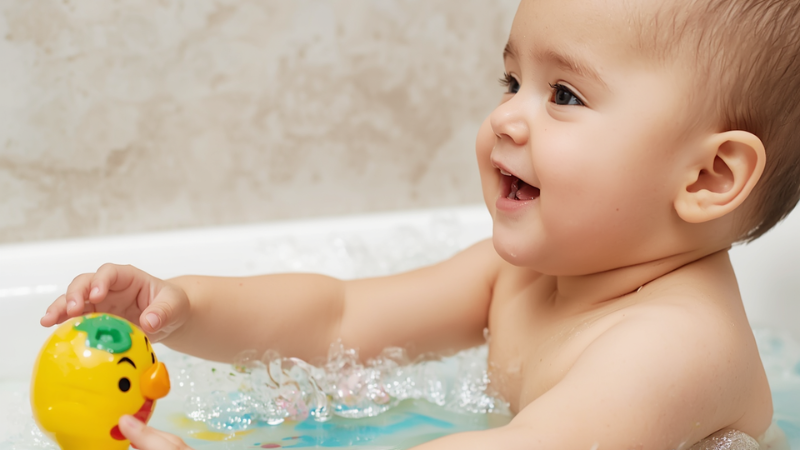
The 2026 Safety Standard: What Makes a “Recommended” Bath Toy?
The biggest anxiety for parents today is the “hidden danger” inside the toy. In 2026, the standard has shifted from “BPA-Free” to “Mold-Preventative.”
The Death of the “Squirter”
We’ve all seen the viral videos: a parent cuts open a beloved rubber duck only to find a forest of black mold inside.
Real-Life Caution: “I thought I was cleaning our squirt toys by shaking them out, but after my son developed a persistent skin rash, I sliced one open. It was pitch black inside. I realized I was bathing him in bacteria.” — Maria, Mom to 14-month-old Leo.
The 2026 Solution: Look for “Hole-Free” or “Easy-Open” designs. If water can’t get trapped, mold can’t grow. This is the hallmark of the best bath toys for babies.
Material Deep-Dive
- Food-Grade Silicone: Naturally resistant to bacteria and heat-safe up to 450°F (232°C).
- Recycled Ocean Plastic: Durable, sturdy, and top-rack dishwasher safe.
- Pro-Tip: Check for the ASTM F963-23 certification—this ensures the toy has passed the latest 2026 tension and chemical leaching tests.
Milestone Play: The Best Bath Toys for Babies by Age
0–6 Months: Visual & Gentle Sensory Focus
- Top Pick: Floating black-and-white sensory cards or soft silicone cloths.
- Safety Goal: Ensure all baby bath toys are larger than 2.25 inches in diameter to prevent choking.
6–12 Months: The “Pouring & Stacking” Era
- Top Pick: Stacking cups with different hole patterns.
- User Experience: Babies at this age love the “rain effect.” Seeing water drain at different speeds keeps them engaged for the full 15-minute bath.
12–24 Months: Early STEM & Water Physics
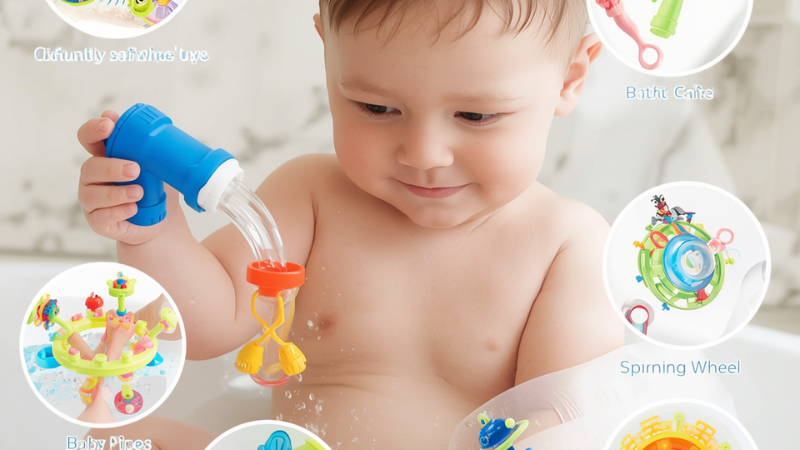
- Top Pick: Suction-cup pipes and spinning water wheels.
The Practical Side: How to Clean Baby Toys (Bath Edition)
This is the core of the guide: how to clean baby toys? Bath water contains skin cells, oils, and soap scum—a buffet for bacteria.
The 2026 Non-Toxic Cleaning Protocol
| Material | Best Cleaning Method | Temperature & Time |
| Hole-Free Silicone | Dishwasher (Top Rack) | 140°F (60°C) for a full cycle. |
| Hard Plastic | The Vinegar Soak: 1 part white vinegar to 2 parts warm water. | Soak for 30 minutes, then air dry. |
| Mesh Storage | Sun-Drying (UV Sanitization) | Direct sunlight for 2 hours to kill spores. |
The “Squeeze & Seal” Hack: If you have favorite squirt toys, suck up a vinegar solution, let it sit for 10 minutes, squeeze it out, and then seal the hole with a dot of food-grade waterproof sealant.
FAQ: Your Bath Time Questions Answered
Q: How to clean baby toys without using harsh bleach? A: Use the “Vinegar + Baking Soda” combo. For stubborn soap scum, sprinkle baking soda on a damp cloth and scrub. The fizzing action breaks down the film safely.
Q: How often should I replace my bath toys? A: For recommended baby bath toys with no holes, they can last years. For any toy with a hole, replace every 3 to 6 months, regardless of how often you clean them.
Q: Is it okay to use wooden toys in the bath? A: Only if they are specifically treated (like Rubberwood). Otherwise, wood will swell and harbor bacteria within 3-4 uses.
Conclusion: Making Every Drop Count
Investing in a few high-quality baby bath toys isn’t just about fun—it’s about creating a safe, stimulating environment. Remember: Less is More. A child with three engaging pouring cups will often play longer than a child sitting in a sea of twenty cheap plastic ducks.
Next Step: Check your bath bin tonight. If you see a toy with a hole, do the “squeeze test” over a white paper towel. If black flecks come out, it’s time for a toy upgrade!