
If you’ve ever stood in a pitch-black kitchen at 3:12 AM, swaying side-to-side to soothe a screaming newborn while trying to test bottle temperature on your wrist, you know that “every second counts” is an understatement.
In those blurry moments, when your brain is half-asleep and your baby is at a full-volume meltdown, the “scream-to-steam” gap feels like an eternity. You just want to get that bottle ready before the neighbors—or the toddler—wake up.
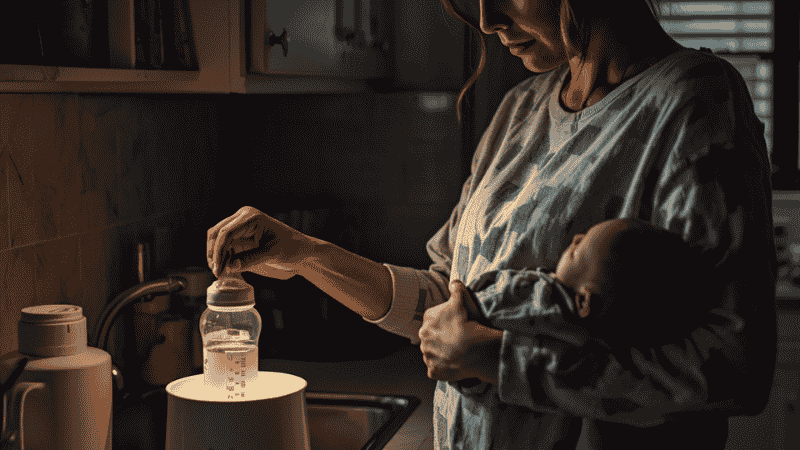
That’s where a solid bottle warmer stops being just another piece of plastic on your counter and becomes a literal life-preserver. It’s about more than just warm milk; it’s about shortening the time between “hungry cry” and “peaceful sleep.”
Temperature 101: The Battle Against “Hot Spots”
In the beginning, I thought I could just “wing it” with a mug of hot water. But when you’re dealing with a hungry infant, “winging it” leads to uneven heating and a lot of guessing.
The goal is that sweet spot of 98.6°F—mimicking the natural warmth of breast milk. If you go too hot, you risk burning a tiny mouth or, even worse, destroying the precious antibodies in your “liquid gold.” A good warmer takes the guesswork out of the equation so you aren’t standing there shaking a bottle and praying it’s not a lava lamp in the middle.
Real-Life Survival: The “Twin Dad” Perspective
I remember talking to my friend Mark, who had twins last year. He and his wife tried the “mug of water” method for exactly three nights before they nearly lost their minds. By the time the first twin was fed and burped, the second one was in a red-faced, breathless panic because their bottle was still sitting in lukewarm water.
“We finally grabbed a dual bottle warmer,” Mark told me, looking like a man who had seen some things. “Being able to drop two bottles in and have them hit the exact same temp at the same time? It turned a forty-minute nightmare into a ten-minute transition. It was the first time I felt like I was actually winning the 2 AM battle.”
Things That Can Make This Easier (Helpful Tools)
Every kitchen setup is different, but here are some options I’ve found actually make the “zombie walk” easier:
- For the Nutrient-Conscious Parent: A “slow-warm” water bath model—like the Philips Avent Fast Bottle Warmer—is a dream. It gently circulates the water instead of blasting the bottle with steam. It’s much kinder to the living enzymes in breast milk.
- For the “I Need It Five Minutes Ago” Baby: If your little one has zero patience, a steam-based bottle warmer like the Dr. Brown’s Deluxe is built for speed. When the crying hits 90 decibels, speed is the only metric that matters.
- For the Parents Who Refuse to Stay Home: If you’re the type to head to the park or go on road trips, a portable bottle warmer like the Baby’s Brew fits right in the diaper bag and runs on a battery.
The Mistakes We All Make: Microwaves and “The Gunk”
It is so tempting to just shove a bottle in the microwave for fifteen seconds. I get it. But please, don’t. Microwaves are notorious for creating “hot spots” that you won’t feel on the outside of the bottle but will absolutely scald your baby’s throat.
The other thing? The Gunk. If you use tap water in your warmer, you’ll eventually see a white, crusty mineral buildup.
Parent-to-Parent Tip: Once a week (or whenever you remember), run a cycle with half white vinegar and half water. It keeps the machine from slowing down. Nothing is more frustrating than a “4-minute warmer” taking 8 minutes because the heating element is covered in scale.
Safety First: What to Watch Out For
While a bottle warmer is a massive help, there are a few safety non-negotiables to keep your little one safe:
- Plastic Leaching: If you are using plastic bottles, avoid the highest steam settings. High heat can accelerate the breakdown of plastics. Consider switching to glass or silicone bottles if you prefer high-heat warming.
- The Wrist Test: Even with a “smart” warmer, always do a quick shake and a drop on your inner wrist. It’s the final fail-safe.
- Water Reservoir Safety: Standing water can grow mold or bacteria. Empty and dry your warmer every night to keep the mist clean.
- When to Consult a Pediatrician: If your baby suddenly starts refusing bottles they previously liked, or if they seem to have excessive gas or reflux after a warmed bottle, it’s worth a chat with your doctor. Sometimes, the temperature or the flow of a warmed nipple can change how a baby swallows air.

FAQ: Stuff I Wish I Knew Sooner
Can I leave a bottle in the warmer to stay warm? Tempting, but no. Bacteria loves warm milk. If a bottle sits in a warmer for more than 15-20 minutes, it’s safer to toss it.
Does it work for those tiny food jars? Usually, yes! Most come with a little basket. It’s way better than microwaving a jar of carrots and ending up with an “exploding puree” situation.
Why is the milk still cold at the bottom? Heat rises, and some warmers are shallow. After the timer goes off, give the bottle a very gentle swirl to distribute the warmth. Just don’t shake breast milk like a cocktail!
Can I re-warm a half-finished bottle? The rule of thumb is “use it or lose it” within an hour of the first sip. Re-warming can introduce germs from your baby’s saliva back into the milk.
Is distilled water necessary? It’s not required, but using distilled water in your bottle warmer will almost entirely stop that “white crusty” buildup from forming, saving you from constant descaling.
[Building a freezer stash? Read our guide on the Best Breast Milk Storage Bags.]
A Final Thought for the Tired Parent
Whether you go for the high-tech digital version or a simple travel sleeve, the best bottle warmer is the one that gives you five extra minutes of peace. You’re doing the hard work of nourishing a tiny human at all hours of the night—don’t be afraid to use a tool that makes the “scream-to-steam” gap just a little bit smaller.
Now, go prep those bottles, set the warmer, and please—try to get some sleep. You’ve got this.